Artwork
Untitled
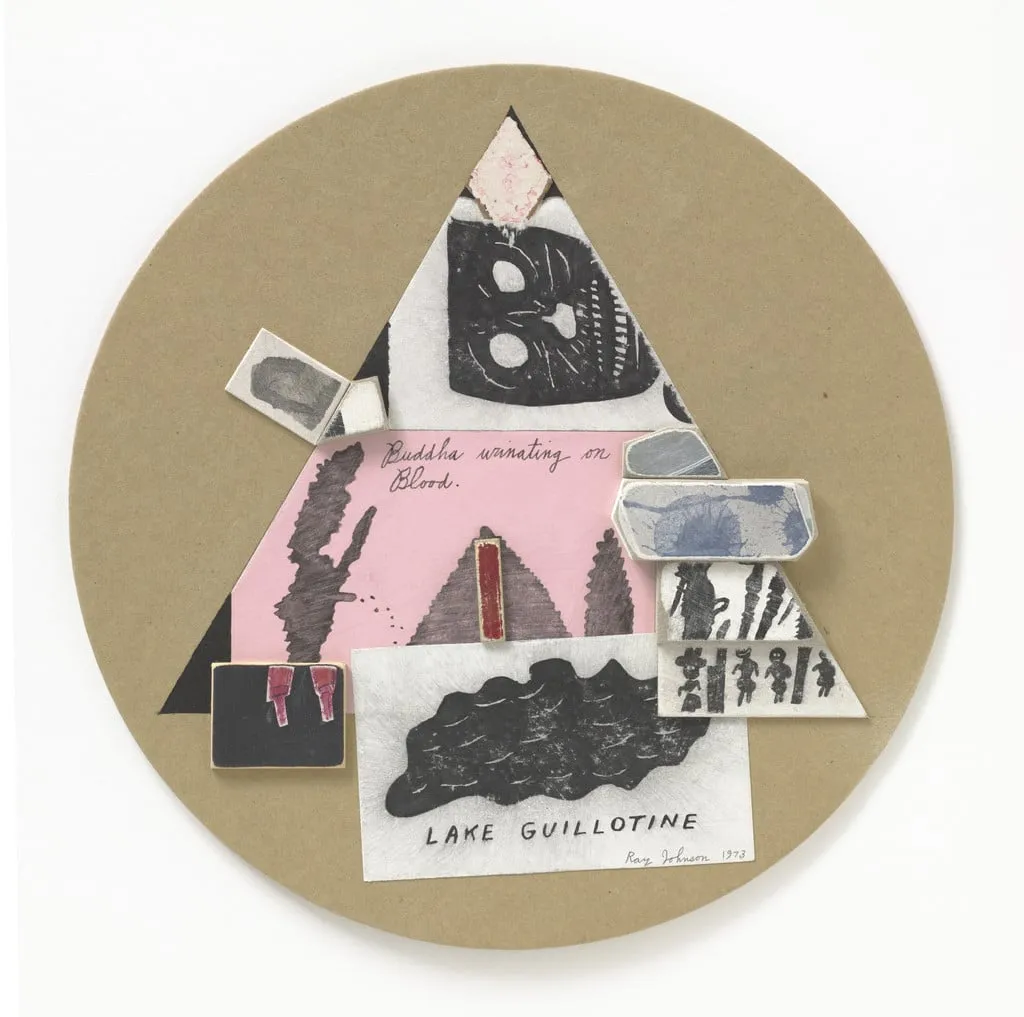
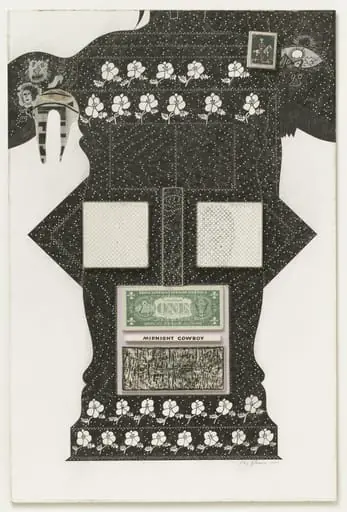
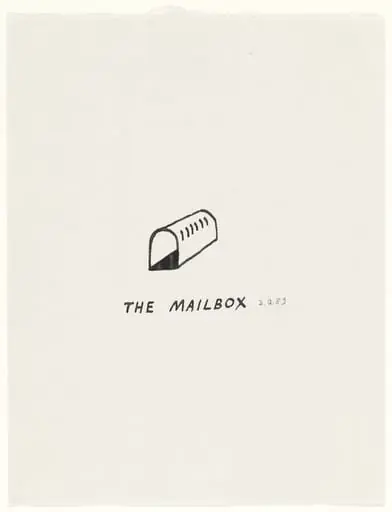
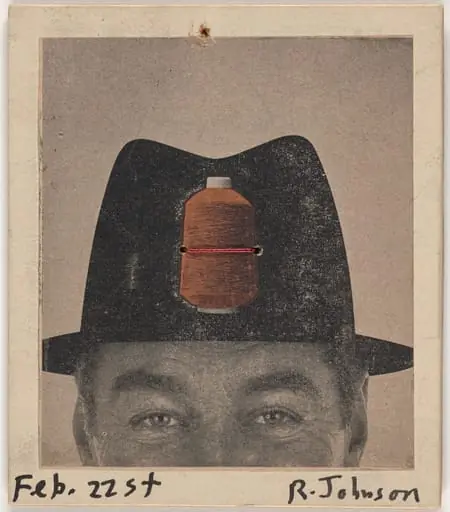
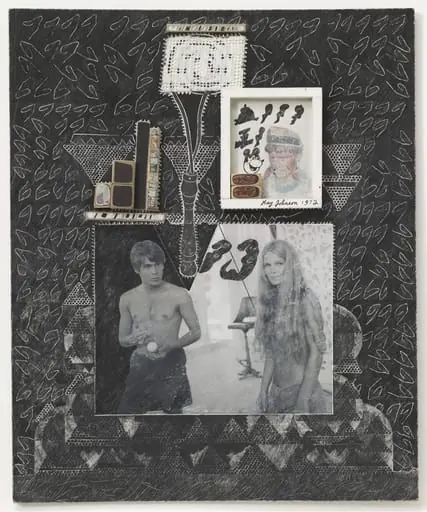
Untitled is a watercolor drawing by Ray Johnson. It dates from 1973 and is held in the collection of the Museum of Modern Art.
About this work
Overview
Created in 1973, this untitled work by Ray Johnson consists of an assemblage of printed and colored papers, paperboard, ink, gouache, and watercolor applied to a paperboard support. The composition forms a circular collage that combines fragments of text, abstract shapes, and figurative sketches, resulting in a layered visual field that invites close inspection.
Subject & Meaning
These disparate elements function as a visual puzzle, juxtaposing spiritual, violent, and everyday motifs to provoke ambiguous associations.
The piece incorporates handwritten phrases such as “Buddha weeping on Blood” and “Lake Guillotine,” alongside a sketch of a lake with jagged waves, a black triangle with white circles, a small drawing of legs, and a blue‑tinted rectangle suggesting a muted landscape. These disparate elements function as a visual puzzle, juxtaposing spiritual, violent, and everyday motifs to provoke ambiguous associations.
Technique & Style
Johnson assembled the work by cutting, arranging, and adhering various paper elements, then applying ink, gouache, and watercolor to integrate the fragments. The collage’s circular format and the interplay of stark black‑and‑white drawings with colored paper create a tension between graphic precision and painterly washes, characteristic of his experimental approach to mixed‑media drawing.
History & Provenance
The untitled assemblage entered the collection of the Museum of Modern Art, where it remains on view. Its acquisition reflects MoMA’s interest in Johnson’s contributions to post‑war American art, particularly his role in developing mail‑art and collage practices that challenged conventional notions of authorship and medium.
Artist & collection

Artist
Raymond Edward "Ray" Johnson was an American artist. Known primarily as a collagist and correspondence artist, he was a seminal figure in the history of Neo-Dada and early Pop art and was described as "New York's most…