Artwork
Lady Charlotte Susan Maria Bury
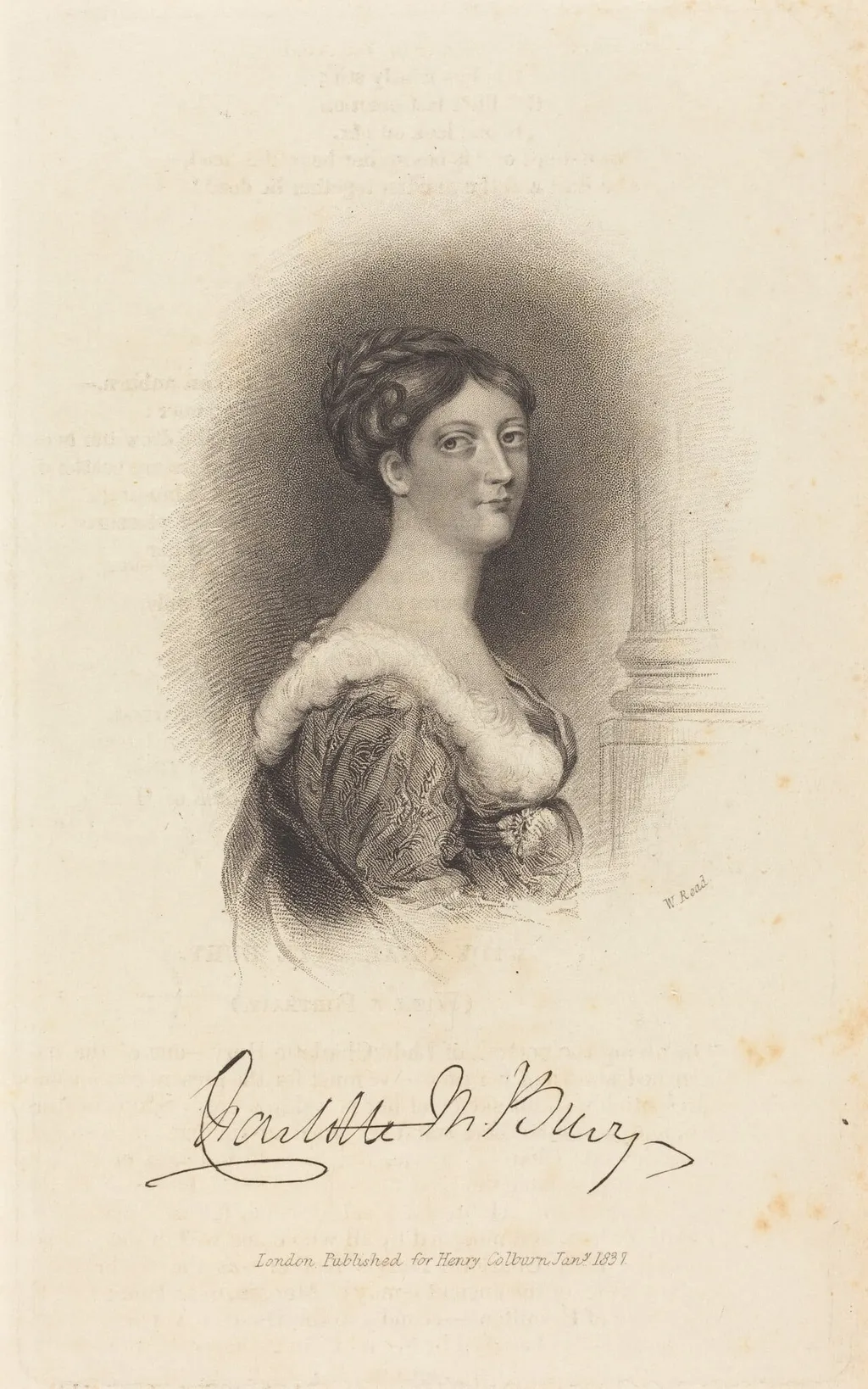
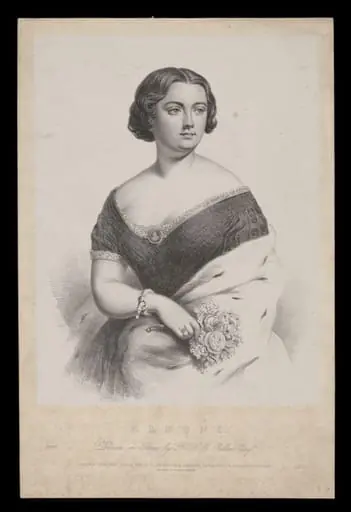
Lady Charlotte Susan Maria Bury is an ink print by the Romanticist artist W. Read. It dates from 1837 and is held in the collection of the National Gallery of Art.
About this work
The signature at the bottom reads *Lady Charlotte Susan Maria Bury*, and the print was made in London in 1837.
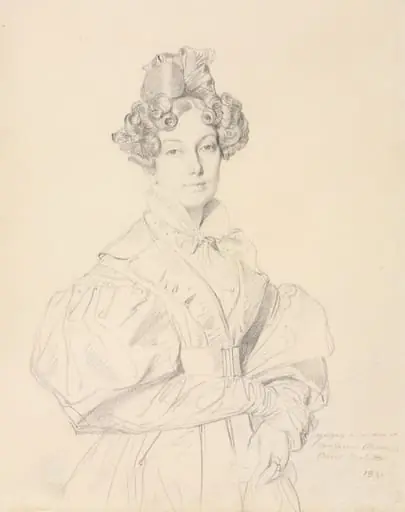
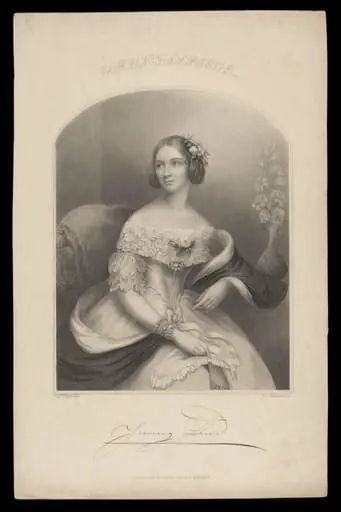
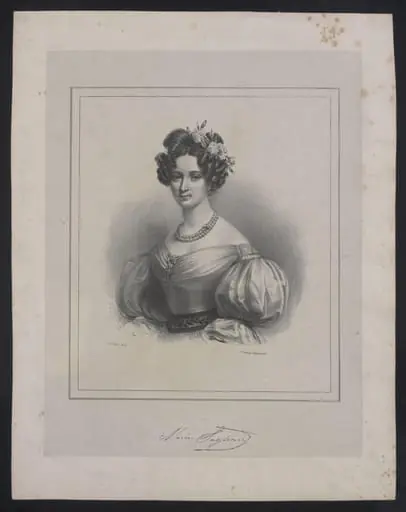
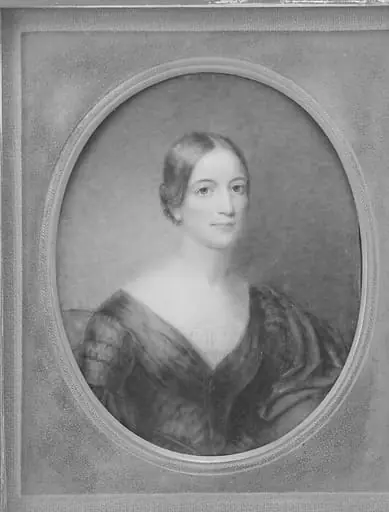
This is a black-and-white portrait of a woman with dark, wavy hair pulled back. She’s wearing a high-necked dress with lace sleeves, and her arms are crossed loosely over her chest. Behind her, there’s a faint outline of a pillar or column, and the background is mostly empty.
The artist used fine lines and shading to give the image depth, focusing on her face and hands. The signature at the bottom reads *Lady Charlotte Susan Maria Bury*, and the print was made in London in 1837.
Next, look up engraving to see how artists like this one used needles and ink to create detailed prints.
Overview
Lady Charlotte Susan Maria Bury is a stipple engraving print created by W. Read in 1837, depicting a portrait of the titular subject in a formal, high-necked dress against a sparse background.
Subject & Meaning
The engraving portrays Lady Charlotte Susan Maria Bury with dignified composure, her dark, wavy hair pulled back, and arms crossed loosely over her chest. A faint, suggested pillar behind her adds a hint of architectural context.
Technique & Style
Employing stipple engraving techniques, W. Read achieved depth through fine lines and nuanced shading, prioritizing detail in the subject's face and hands. The overall effect is one of restrained elegance.
History & Provenance
Signed at the bottom as *Lady Charlotte Susan Maria Bury*, this print was produced in London in 1837. The stipple engraving process involved etching dots and lines into a metal plate with needles to transfer the image onto paper using ink.
Context
Created during the early Victorian era, this engraving reflects the period's penchant for formal, detailed portraiture. The use of stipple engraving was common for reproducing portraits in this time due to its ability to capture subtle textures and tones.
Legacy
While specific lasting impacts of this engraving are not widely documented, it contributes to the broader legacy of stipple engraving in 19th-century portraiture, showcasing the technique's versatility in capturing nuanced, high-society likenesses.
Artist & collection