Artwork
Amenajări de irigații în Bărăgan
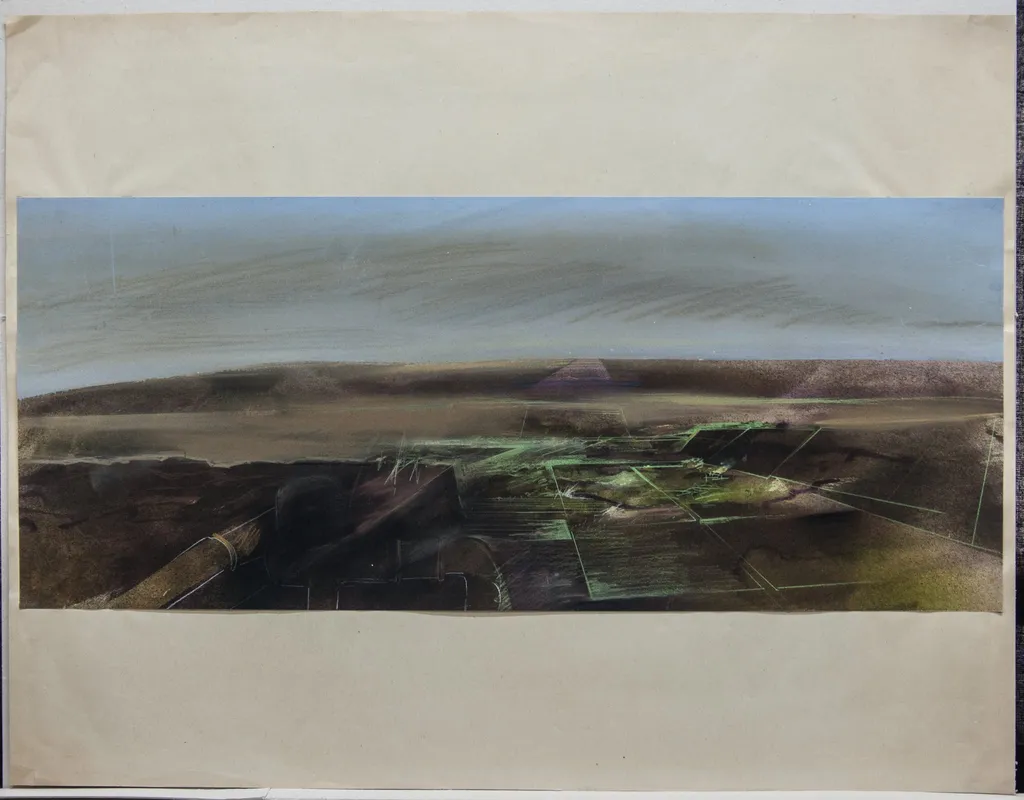
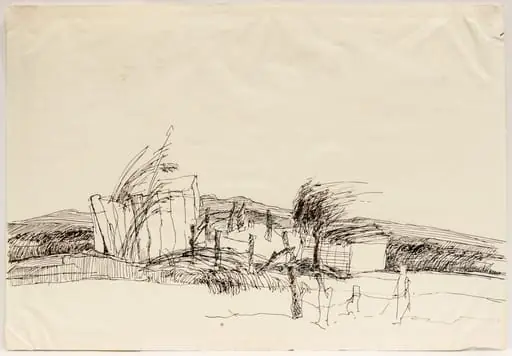
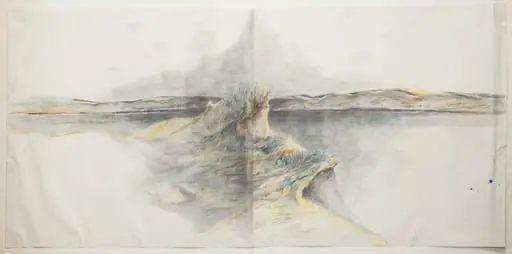
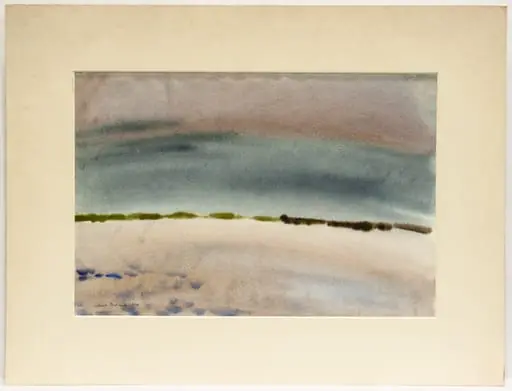
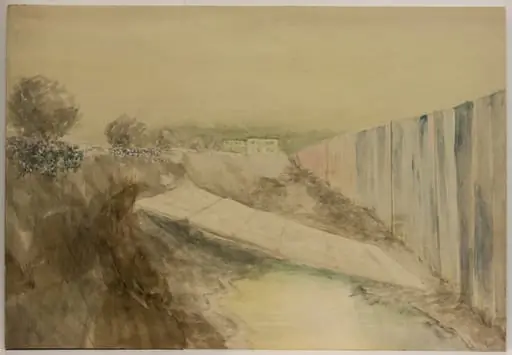
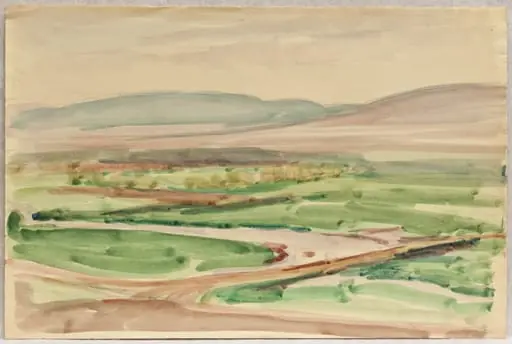
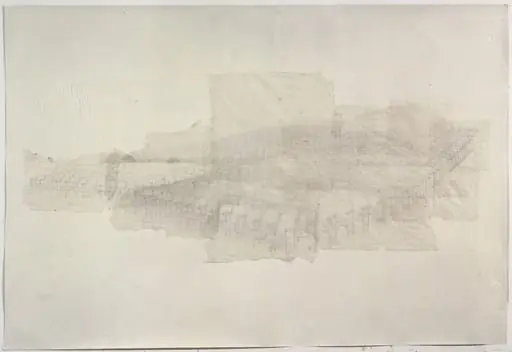
Amenajări de irigații în Bărăgan is a print by Alexandru Recepovici. It dates from 1950 and is held in the collection of the Gavrila Simion Eco-Museum Research Institute Tulcea.
About this work
Overview
It is part of the collection at the Museum of Ethnography, where it serves as a visual record of mid-century land-reclamation efforts in the region.
Amenajări de irigații în Bărăgan is a circa 1950 graphic work by Alexandru Recepovici, depicting the transformation of Romania’s Bărăgan steppe through agricultural infrastructure. Rendered in delicate linear strokes, the image captures the subtle imprint of human intervention on a vast, arid plain. It is part of the collection at the Museum of Ethnography, where it serves as a visual record of mid-century land-reclamation efforts in the region.
Subject & Meaning
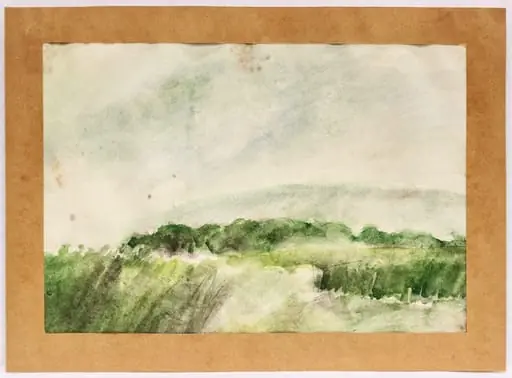
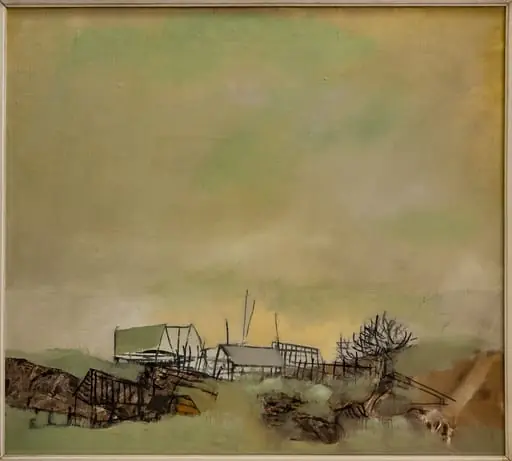
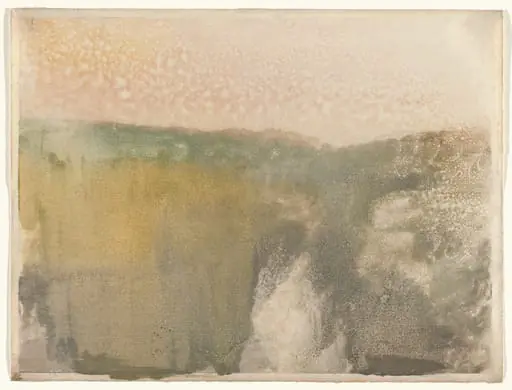
The image portrays a network of faint, meandering channels etched into a barren landscape, suggesting the presence of irrigation systems designed to bring water to dry farmland. The sparse vegetation and cracked earth imply the fragility of this intervention. Rather than celebrating progress, the work conveys a quiet, almost melancholic acknowledgment of human attempts to alter a harsh environment with limited success.
Technique & Style
Recepovici employs a restrained, linear approach, using thin, sketch-like marks to suggest the geometry of irrigation ditches. The palette is minimal—pale blue sky, brown earth, faint green patches—emphasizing austerity. The absence of figures or machinery focuses attention on the land itself, rendering the infrastructure as a ghostly trace rather than a dominant structure, reinforcing a sense of impermanence.
History & Provenance
Created around 1950, the work emerged during a period of state-led agricultural modernization in Romania. It was likely produced as part of a documentary or educational initiative tied to land reform efforts in the Bărăgan region. The piece entered the Museum of Ethnography’s collection, where it remains as a material artifact of mid-century state planning and rural transformation.
Context
In the early 1950s, the Romanian government prioritized the irrigation and cultivation of the Bărăgan steppe to increase food production and settle displaced populations. This work reflects the broader ideological push to reshape the landscape through engineering, even as the region’s natural conditions resisted such efforts. The image captures the tension between ambition and ecological constraint.
Legacy
Though not widely exhibited, the work endures as a quiet testament to a specific moment in Romania’s rural development. Its understated aesthetic distinguishes it from more propagandistic depictions of agricultural progress. Today, it offers a sobering visual archive of how state projects interacted with—and often struggled against—the realities of the land.
Artist & collection
Artist
Museum
Gavrila Simion Eco-Museum Research Institute Tulcea
Continue through works from the same source collection.