Artwork
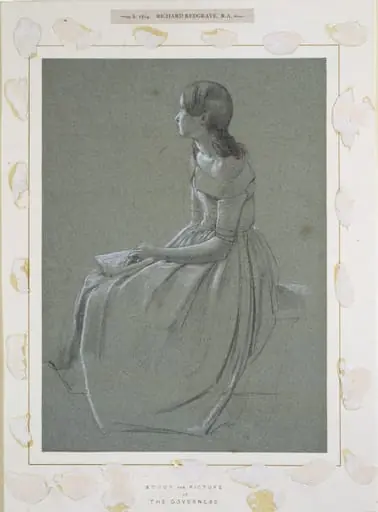
Study of a young woman seated
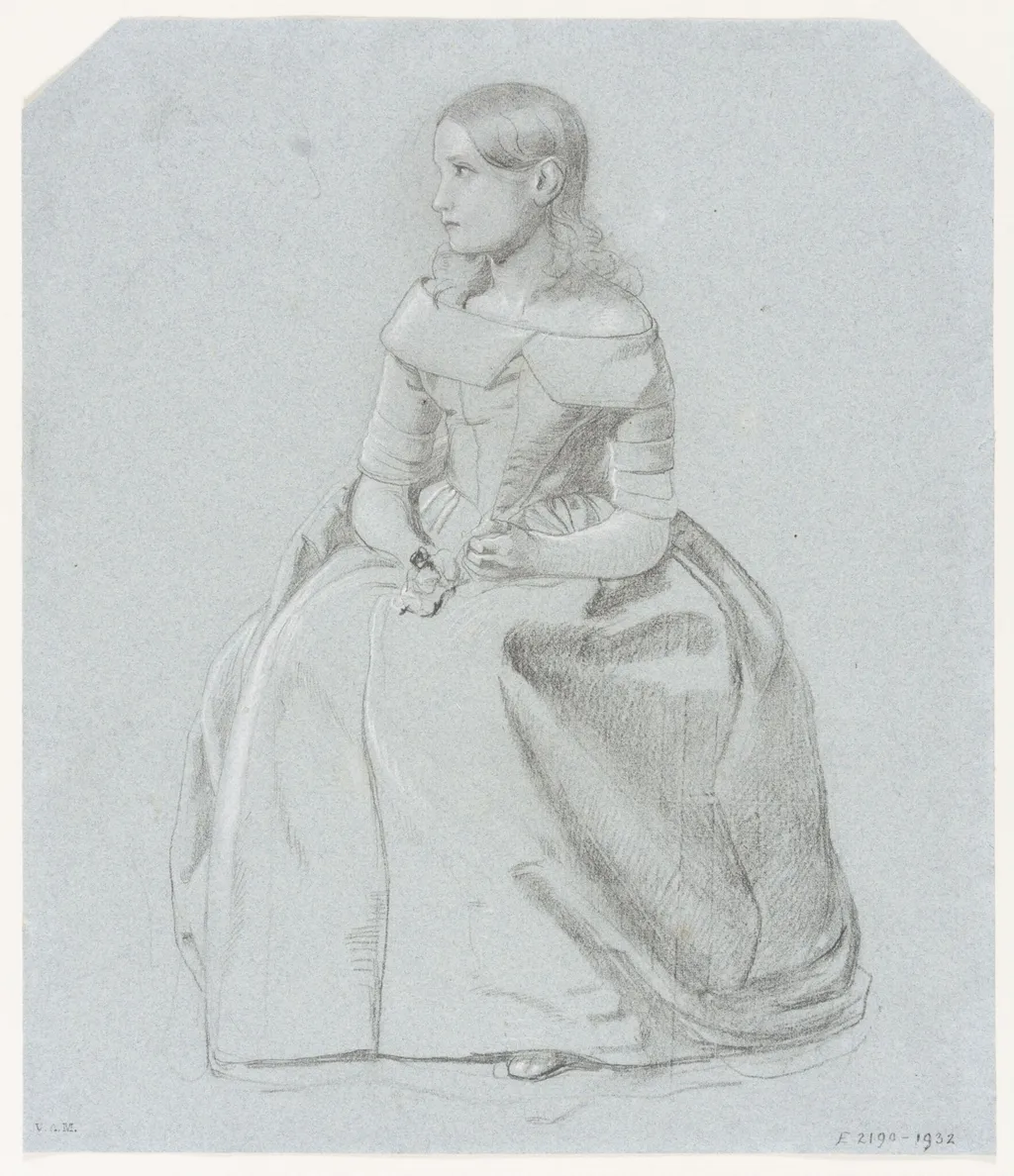
Study of a young woman seated is a drawing by Richard CB, RA, ARA Redgrave. It dates from 1850 and is held in the collection of the Victoria and Albert Museum. The work is a small-scale drawing that records a seated young woman with her hands placed gently in her lap.
About this work
Overview
The work is a small-scale drawing that records a seated young woman with her hands placed gently in her lap. Her head is turned in profile to the left, creating a subtle sense of movement. Executed in pencil with black and white chalk accents, the study captures the interplay of light and shadow across the figure’s form.
Subject & Meaning
The sitter is presented in a modest dress and simple hairstyle typical of mid‑nineteenth‑century fashion. The pose, with hands resting calmly, suggests a quiet, introspective moment, likely intended as a reference for a larger narrative composition rather than a finished portrait.
Technique & Style
Redgrave employed a pencil underdrawing to outline the figure, then reinforced darker areas with black chalk and lifted highlights with white chalk. This layered approach allows a nuanced rendering of volume and texture, characteristic of his preparatory studies.
History & Provenance
Created by Richard Redgrave (1804–1888), a leading Victorian artist and the inaugural curator of the South Kensington Museum (now the V&A), the drawing is believed to be a preparatory study for his later painting The Governess (1845). It closely parallels another known study for the same composition, sharing dress and hairstyle but differing in angle.
Context
During the nineteenth century Redgrave routinely produced such sketches as part of his workflow, using them to explore composition, posture, and lighting before committing to oil on canvas. The study reflects the academic practice of meticulous figure preparation prevalent in the Royal Academy circles of the period.
Artist & collection
Artist
Richard Redgrave painted quiet English woods, cottages, and manor halls in watercolour and oil.

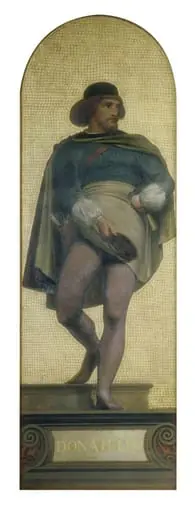 Donatello: design for a mosaic in the Museum (the 'Kensington Valhalla')
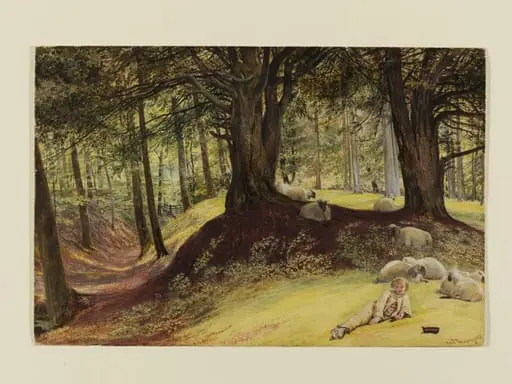 Parkhurst Woods, Abinger, Surrey
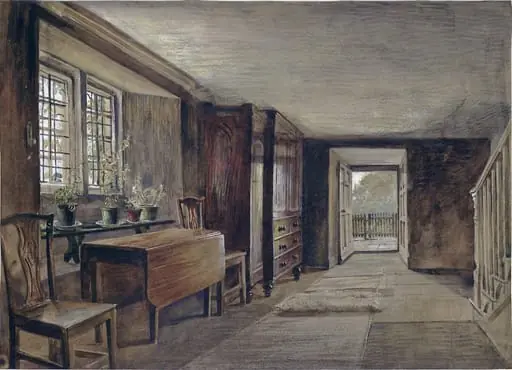 The Entrance Hall of Mortham Tower, Rokeby, Yorkshire
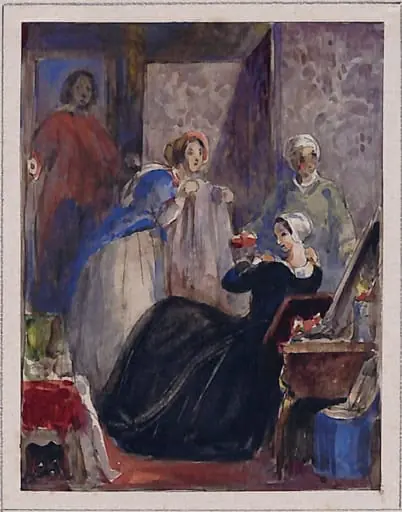 Throwing off her Weeds
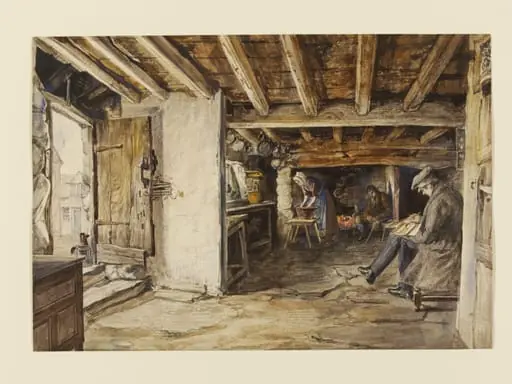 Interior of a cottage, North Wales
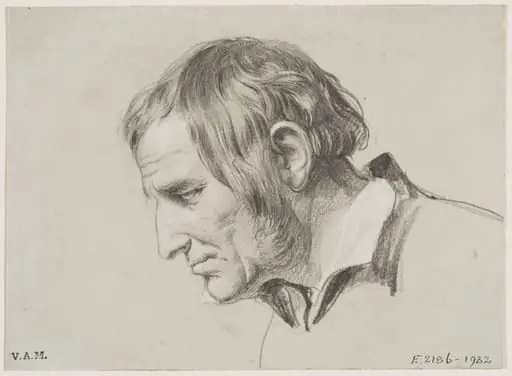 Study of an old man’s head
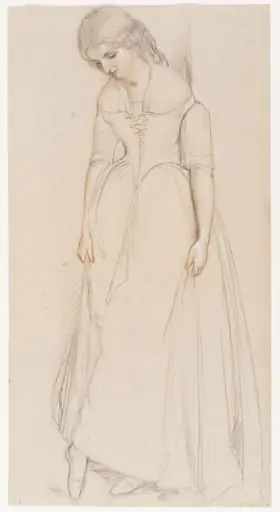 Study for the woman near the doorway in <i>Cinderella About to Try on the Glass Slipper</i> (1842)
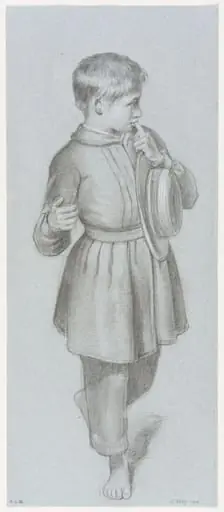 Study of the boy with his finger in his mouth for <i>Sunday Morning: Walk from Church</i>