Artwork
Paul Serusier
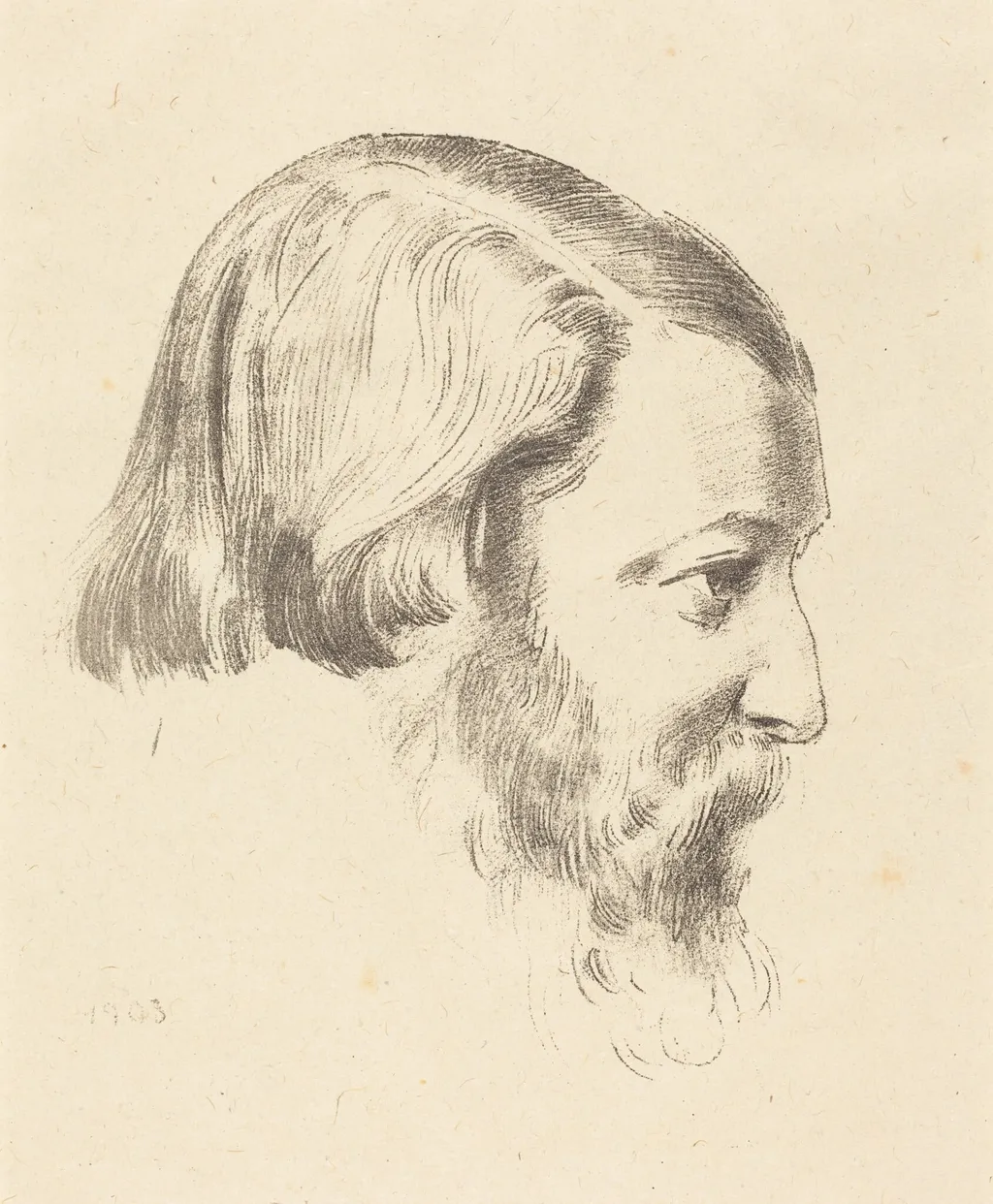
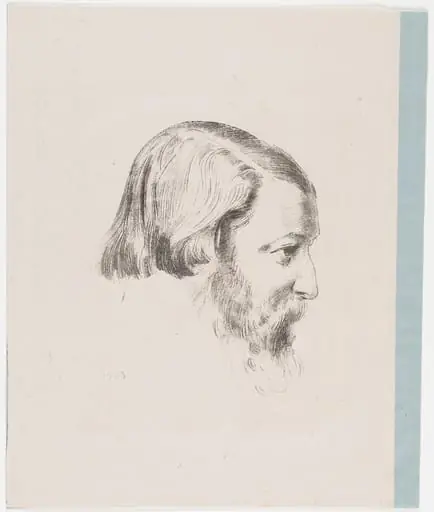
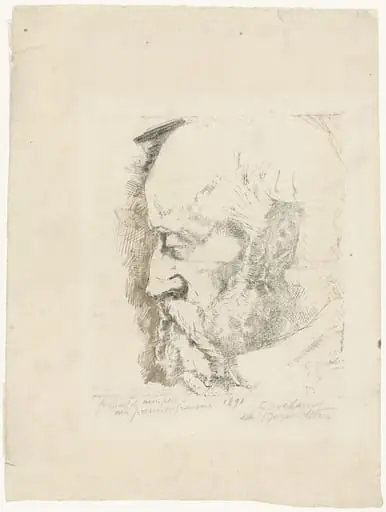
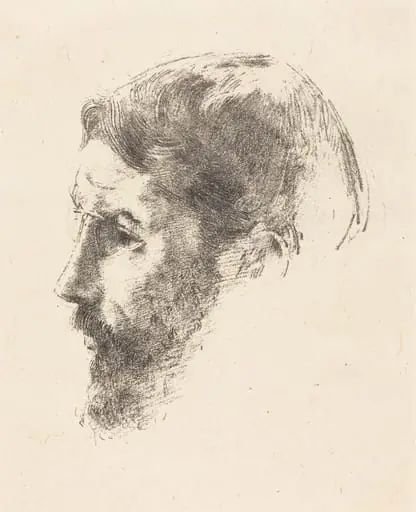
Paul Serusier is an ink print by Odilon Redon. It dates from 1903 and is held in the collection of the National Gallery of Art.
About this work
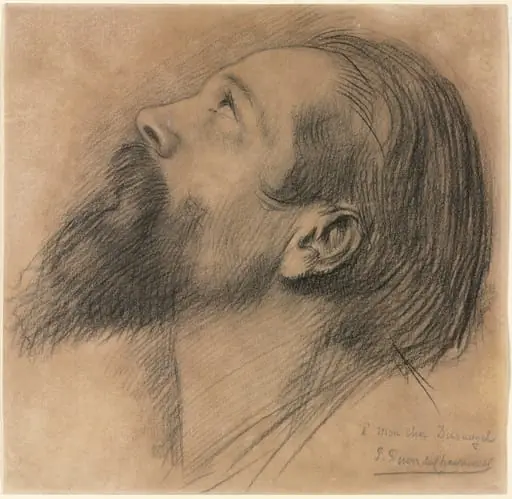
The man's hair is rendered in loose, expressive strokes, while his beard is more detailed.
The painting depicts a man's head in profile, facing right. His hair is long and dark, and he has a beard. The background is a light color.
The man's hair is rendered in loose, expressive strokes, while his beard is more detailed. The overall effect is one of quiet contemplation.
This portrait is a lithograph by Odilon Redon, created in 1903. To learn more about the artist's use of lithography, explore the technique of lithography.
Overview
This 1903 lithograph by Odilon Redon portrays Paul Serusier, a fellow artist and member of the Nabis group. Rendered in profile, the subject faces right with a long, dark beard and flowing hair. The background is softly muted, allowing the figure to emerge through subtle tonal contrasts. Redon’s choice of lithography emphasizes texture and atmosphere over sharp definition, aligning with his interest in psychological presence rather than literal likeness.
Subject & Meaning
Paul Serusier was a close associate of Redon and a key figure in the Symbolist movement. The portrait captures him in quiet repose, suggesting introspection rather than public persona. The absence of context or narrative detail focuses attention on the man’s demeanor—his furrowed brow and stillness evoke a sense of inner life. Redon, known for his dreamlike imagery, here applies his sensitivity to character through minimal means.
Technique & Style
Redon employed lithography to achieve soft gradations and tactile surface variation. The hair is suggested with loose, sweeping strokes, while the beard is rendered with finer, more deliberate lines, creating a contrast between fluidity and precision. The light background enhances the tonal richness of the ink, allowing shadows to define form without outline. This approach reflects Redon’s preference for ambiguity and emotional resonance over clarity.
History & Provenance
Created in 1903, the lithograph emerged during a period when Redon was increasingly focused on portraiture and human expression. It was likely made as a personal tribute or exchange among artists in his circle. The work remained within private collections after its creation, with no public exhibition record until later in the 20th century, when interest in Symbolist prints revived.
Context
In early 20th-century Paris, lithography was favored by Symbolist artists for its capacity to convey mood through tone rather than line. Redon, alongside Serusier and others, rejected academic realism in favor of evocative, interiorized imagery. This portrait reflects a broader shift in artistic priorities—toward psychological depth and the quiet dignity of the individual, away from grand narrative or spectacle.
Legacy
The lithograph stands as a quiet testament to the bonds between Symbolist artists and their shared aesthetic values. Though not widely reproduced, it exemplifies Redon’s mastery of lithography as a medium for introspective portraiture. Later generations of printmakers recognized its restraint and emotional nuance, influencing approaches to psychological representation in 20th-century graphic art.
Artist & collection
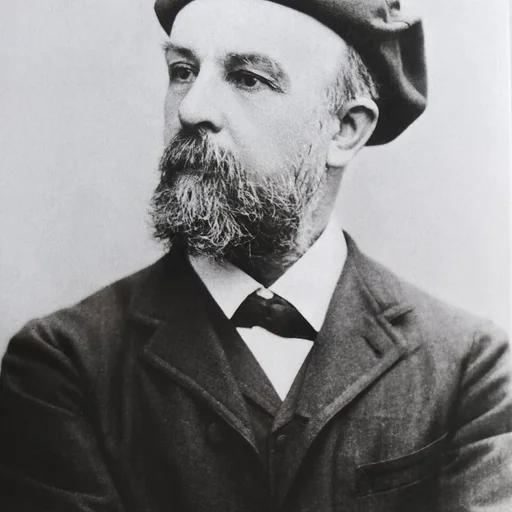
Artist
Born Bertrand-Jean Redon on 20 April 1840 in Bordeaux, the artist adopted the name Odilon from his mother, Marie-Odile.