Artwork
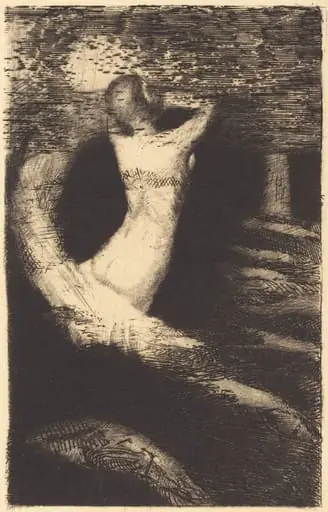
Saint-Antoine...A travers ses longs cheveux qui lui couvraient la figure, j'ai cru reconnaitre Ammonaria (Saint Anthony: "Beneathe her long hair , which covered her face, I thought I recognized Ammonaria)
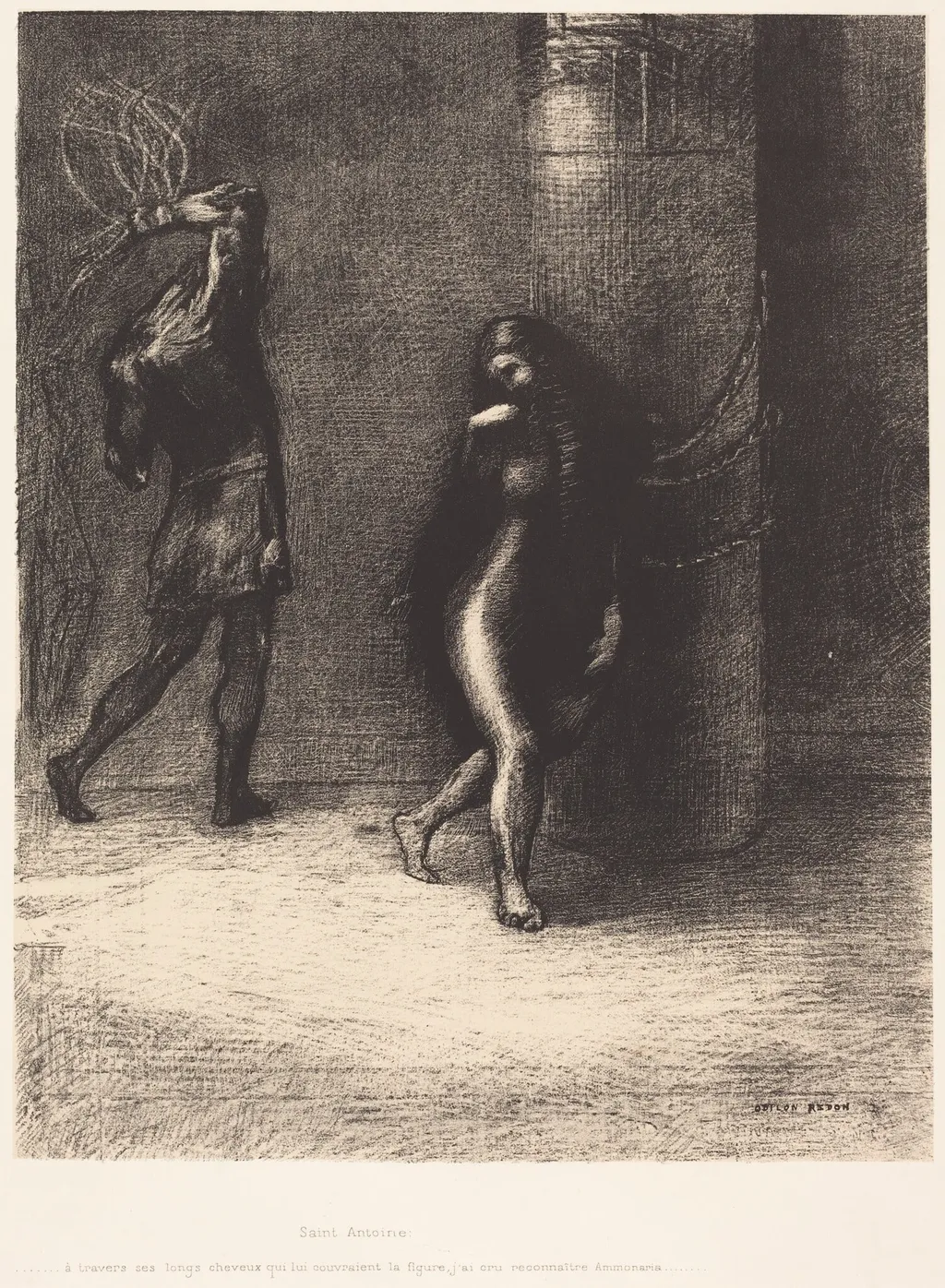
Saint-Antoine...A travers ses longs cheveux qui lui couvraient la figure, j'ai cru reconnaitre Ammonaria (Saint Anthony: "Beneathe her long hair , which covered her face, I thought I recognized Ammonaria) is an ink print by the Impressionist artist Odilon Redon. It dates from 1889 and is held in the collection of the National Gallery of Art.
About this work
Overview
Created in 1889, this lithograph by French symbolist Odilon Redon bears the title Saint‑Antoine. The image presents a solitary figure whose long hair drapes over the face, evoking a sense of concealment and introspection. Though the title suggests the male saint, the visual content aligns more closely with the mythic figure Ammonaria, traditionally associated with themes of suffering.
Subject & Meaning
The central figure is identified as Ammonaria, a legendary woman subjected to flagellation, a motif that underscores penitence and spiritual trial. By veiling the face with hair, Redon intensifies the anonymity of suffering, inviting viewers to contemplate the universal nature of devotion and self‑denial beyond a specific saintly narrative.
Technique & Style
Redon employed the lithographic process, drawing directly onto a stone surface with greasy mediums before transferring the image onto paper. The work’s stark contrasts and fluid lines reflect his symbolist sensibility, emphasizing mood and inner experience over realistic detail. The monochrome palette enhances the austere atmosphere of the scene.
History & Provenance
The print emerged during Redon’s mature period, when he increasingly explored religious and mythological subjects through printmaking. It entered several private collections in the early twentieth century before being acquired by a European museum, where it remains part of the institution’s holdings on symbolist graphic art.
Context
In the late nineteenth century, French artists revisited medieval hagiography and folklore, often reinterpreting saints and legends through a modern psychological lens. Redon’s choice to merge Saint Anthony’s name with Ammonaria’s narrative reflects this trend, blending devotional iconography with personal symbolism.
Legacy
Redon’s lithographs, including this work, contributed to the revival of printmaking as a vehicle for avant‑garde expression. The piece continues to be cited in studies of symbolist art for its ambiguous title, its treatment of suffering, and its innovative use of the lithographic medium to convey spiritual intensity.
Artist & collection
Artist
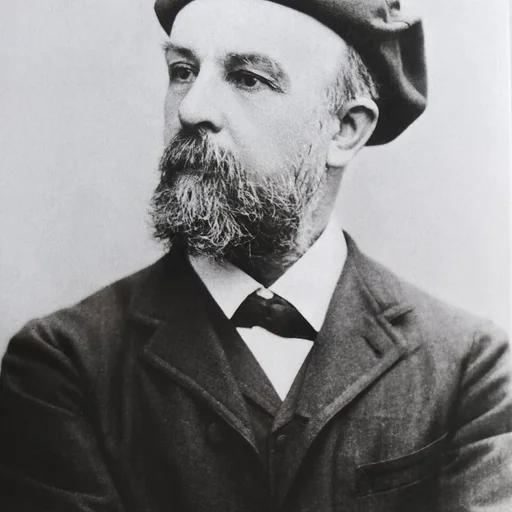
Born Bertrand-Jean Redon on 20 April 1840 in Bordeaux, the artist adopted the name Odilon from his mother, Marie-Odile.

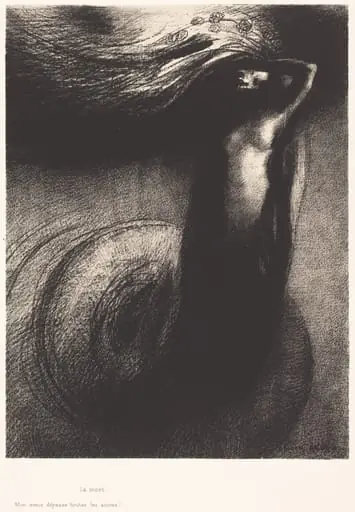 La Mort: Mon ironie depasse toutes les autres! (Death: My iron surpasses all others!)
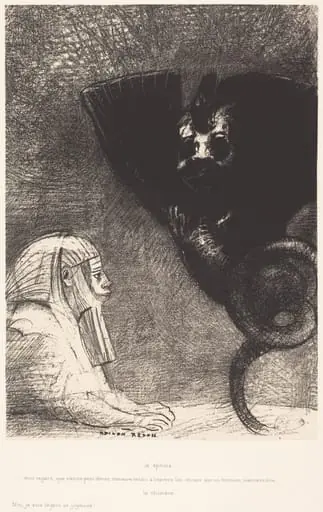 Le Sphynx...mon regard que rien ne peut devier, demeure tendu a travers les choses sur un horizon inaccessible. La Chimere: Moi,Je suis legere et joyeuse (The Sphinx: "My gaze, which nothing can deflect, passes through the things and remains fixed on an inaccessible horizon." The Chimera: "I am weightless and joyful")
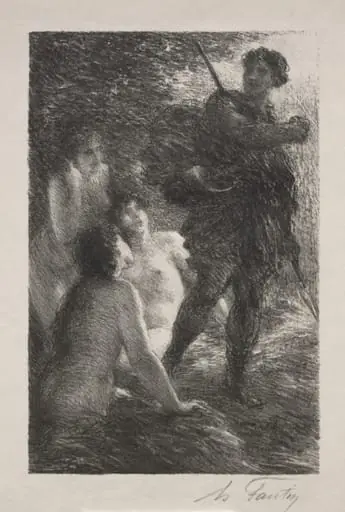 Twilight of the Gods, Act III: Sigfried and the Rhine Maidens
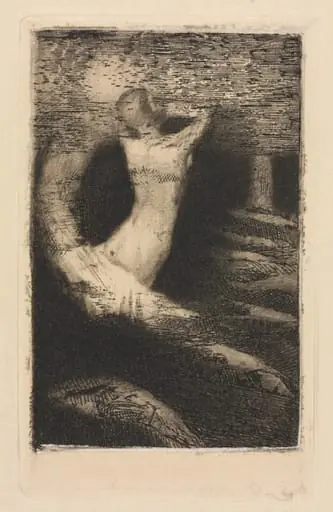 Passage of a Soul
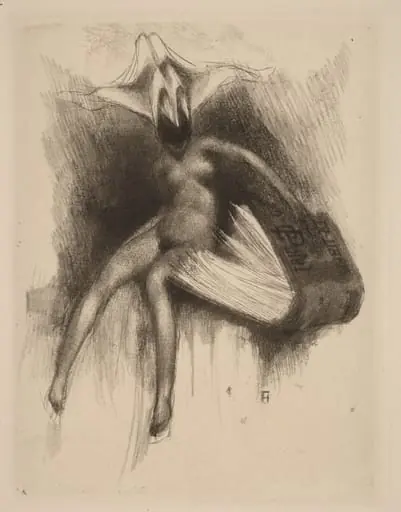 Ex Libris C. Patel
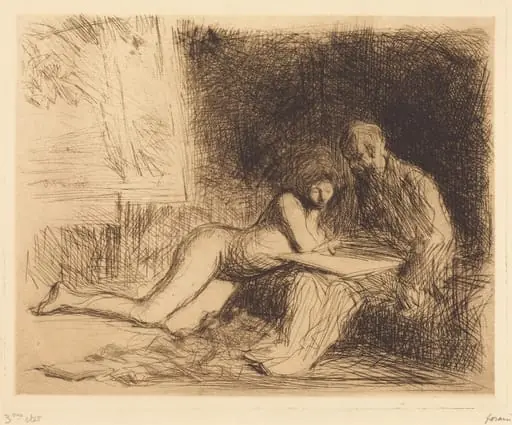 Le repos du modèle (4e planche) (The Model's Rest) (fourth plate)
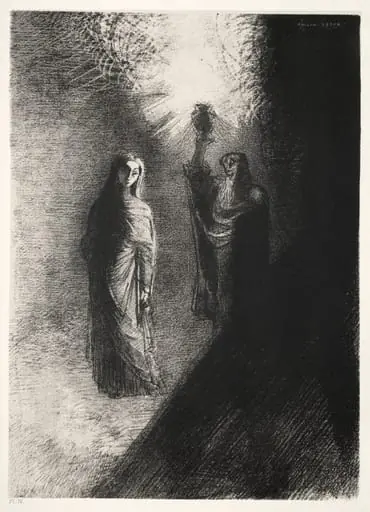 He Raises the Bronze Urn
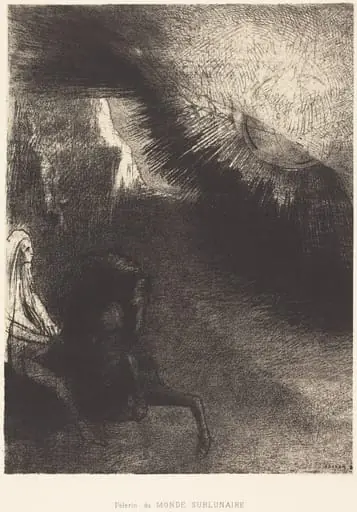 Pélerin du monde sublunaire (Pilgrim of the sublunary world)
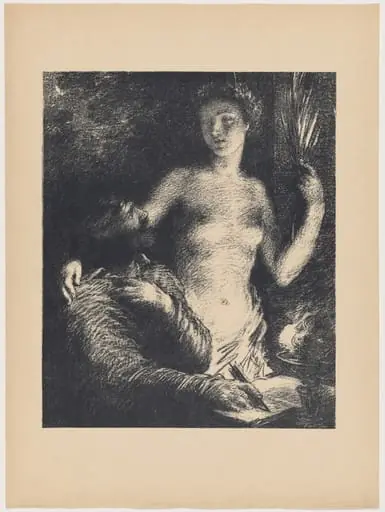 Inspiration
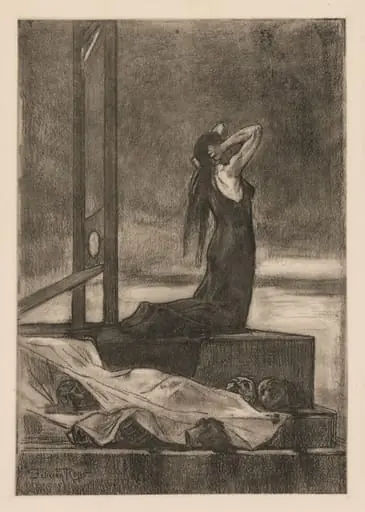 Capital Punishment: The Pain of Death (Todesstrafe: La peine de mort)
 Passage d'une Ame (Passage of a Spirit)
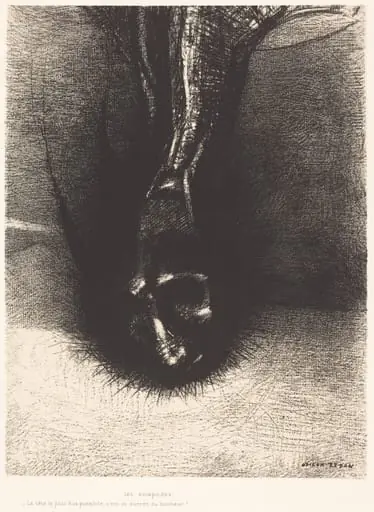 Les Sciapodes: La tete le plus bas possible, c'est le secret du bonheur! (The Skiapods: "The head as low as possible, that is the secret of happiness!")