Artwork
Les Sciapodes: La tete le plus bas possible, c'est le secret du bonheur! (The Skiapods: "The head as low as possible, that is the secret of happiness!")
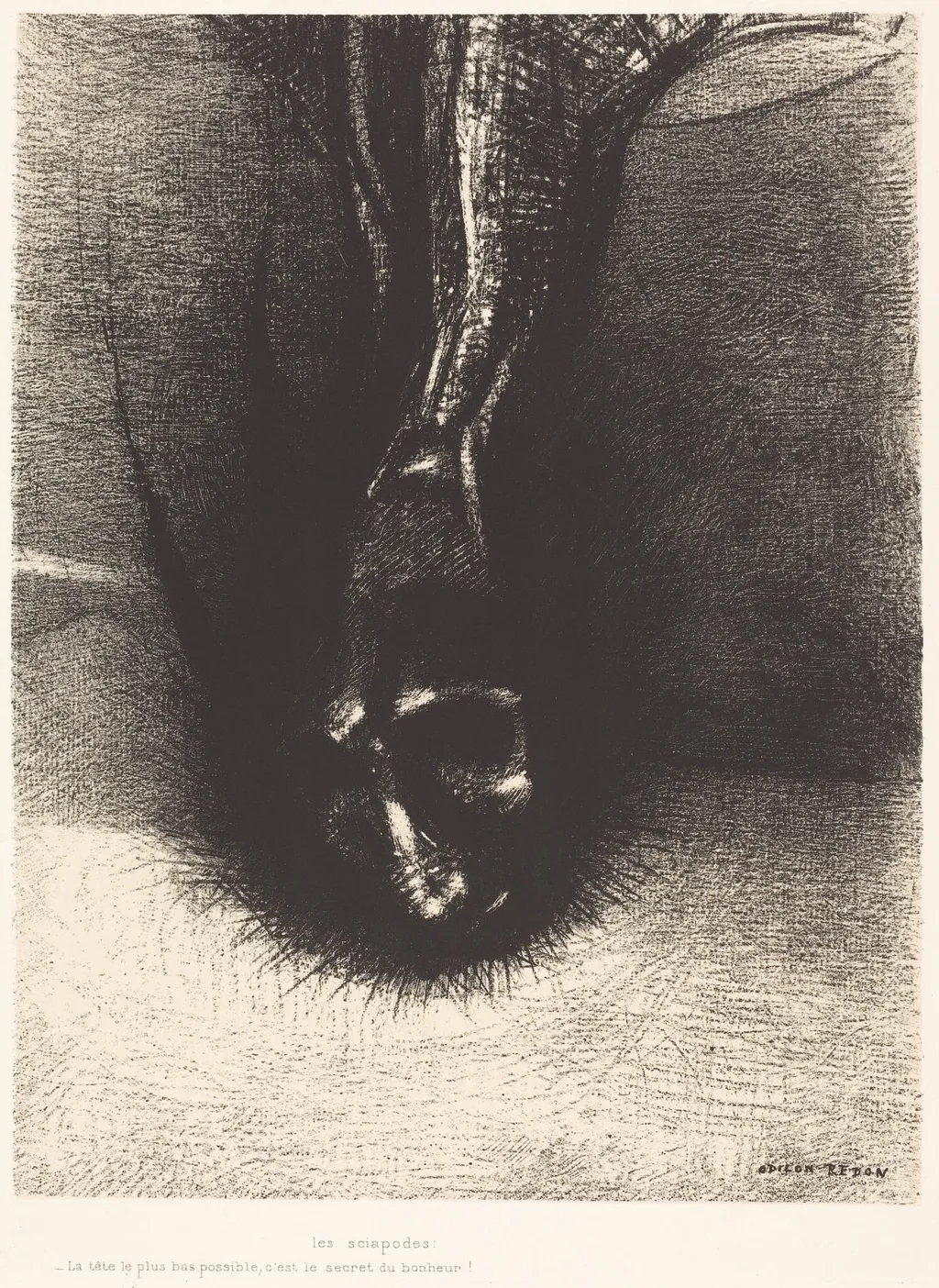
Les Sciapodes: La tete le plus bas possible, c'est le secret du bonheur! (The Skiapods: "The head as low as possible, that is the secret of happiness!") is an ink print by the Impressionist artist Odilon Redon. It dates from 1889 and is held in the collection of the National Gallery of Art.
About this work
Overview
Created in 1889, this lithographic print by French symbolist Odilon Redon bears the whimsical title Les Sciapodes: La tête le plus bas possible, c’est le secret du bonheur! The work depicts a figure whose head is tilted dramatically downward, rendering the face invisible and the hair a mass of dark, spiky strokes against a pale, ambiguous background.
Subject & Meaning
The title references the mythical sciapods, creatures said to sleep with their heads pressed to the ground. By portraying a human-like form in a similarly lowered posture, Redon hints at a satirical meditation on humility or the pursuit of contentment through self‑effacement, inviting viewers to consider the paradox of happiness found in surrender.
Technique & Style
Executed as a lithograph, the image relies on the medium’s capacity for stark contrasts and fluid line work. Redon employs dense, black ink for the tangled hair and the figure’s silhouette, while the surrounding space is rendered in light washes, creating a sense of depth that is both mysterious and deliberately unresolved.
History & Provenance
The print emerged during Redon’s mature period, when he increasingly explored printmaking alongside painting. Though specific exhibition records are scarce, the work aligns with his broader output of symbolist prints that circulated among Parisian avant‑garde circles in the late nineteenth century.
Context
Redon’s fascination with fantastical beings and dreamlike scenarios reflects the symbolist movement’s interest in the subconscious and myth. The sciapod, a creature from medieval bestiaries, provided a vehicle for Redon to merge folklore with contemporary concerns about the nature of joy and the human condition.
Legacy
While not as widely reproduced as some of Redon’s more famous prints, this lithograph exemplifies his ability to fuse humor, myth, and psychological insight. It continues to be cited in studies of symbolist printmaking as an illustration of how narrative titles can shape the interpretation of abstract visual cues.
Artist & collection
Artist
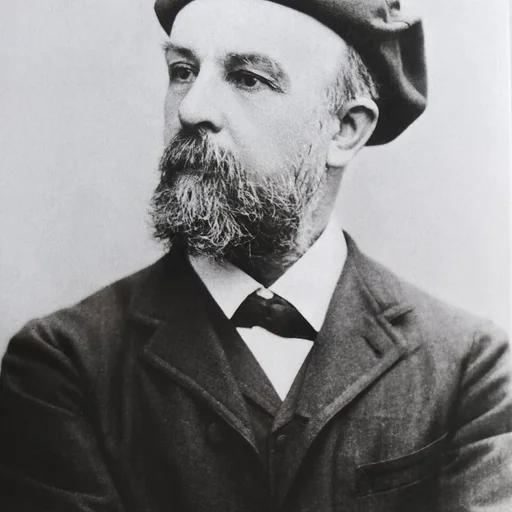
Born Bertrand-Jean Redon on 20 April 1840 in Bordeaux, the artist adopted the name Odilon from his mother, Marie-Odile.

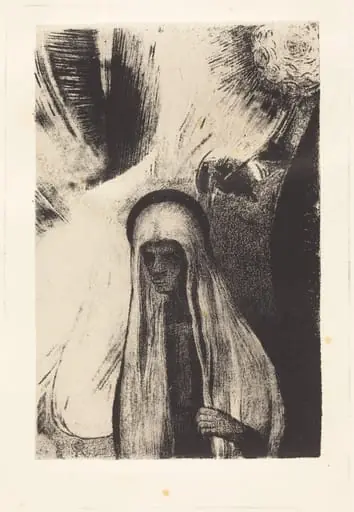 La Vieille: Que Crains-tu? Un large trou Noir! Il est vide peut-etre? (What are you afraid of? A wide black hole! It is empty, perhaps!)
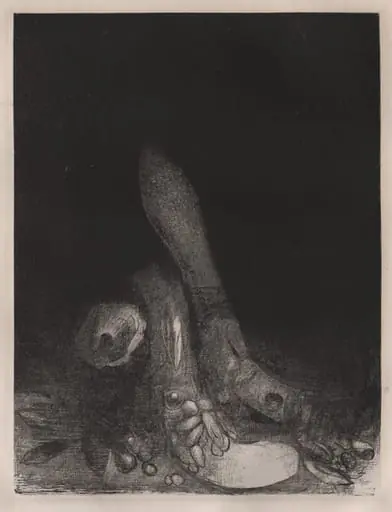 Flowers Fall and the Head of a Python Appears
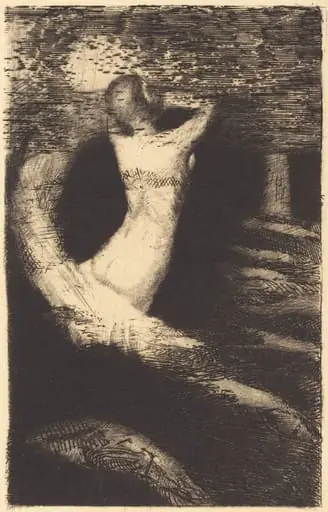 Passage d'une Ame (Passage of a Spirit)
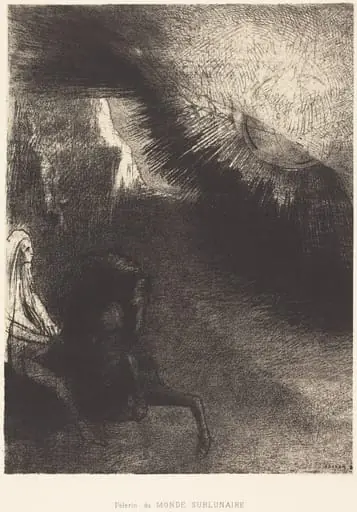 Pélerin du monde sublunaire (Pilgrim of the sublunary world)
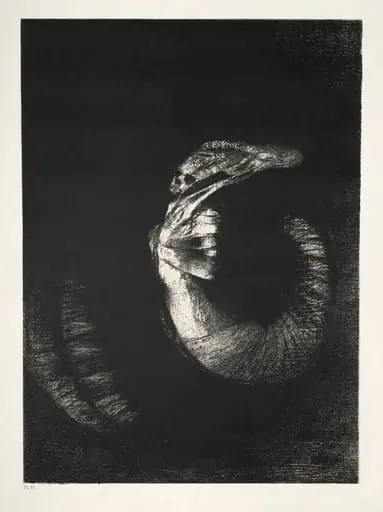 It Is a Skull Wreathed with Roses. It Dominates a Woman's Torso of Pearly Whiteness
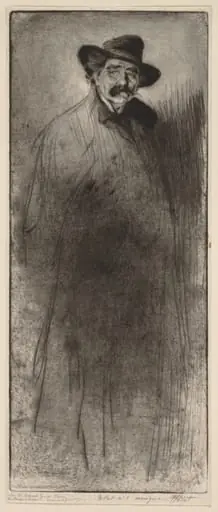 The Old Garibaldian
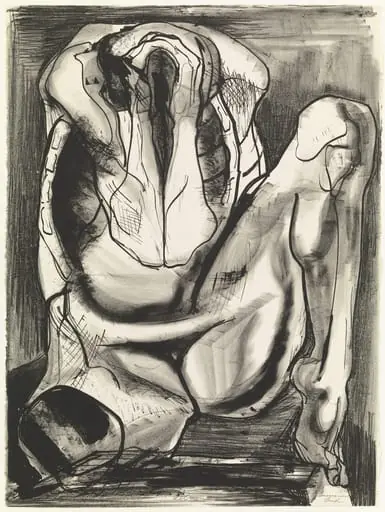 Untitled
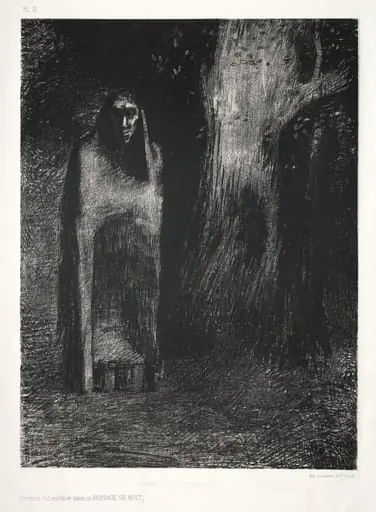 The Man Was Alone in a Night Landscape
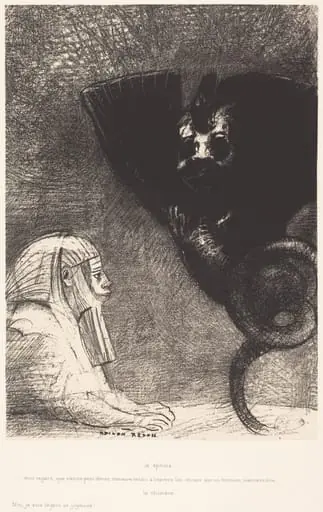 Le Sphynx...mon regard que rien ne peut devier, demeure tendu a travers les choses sur un horizon inaccessible. La Chimere: Moi,Je suis legere et joyeuse (The Sphinx: "My gaze, which nothing can deflect, passes through the things and remains fixed on an inaccessible horizon." The Chimera: "I am weightless and joyful")