Artwork
Chamois (Chamois)
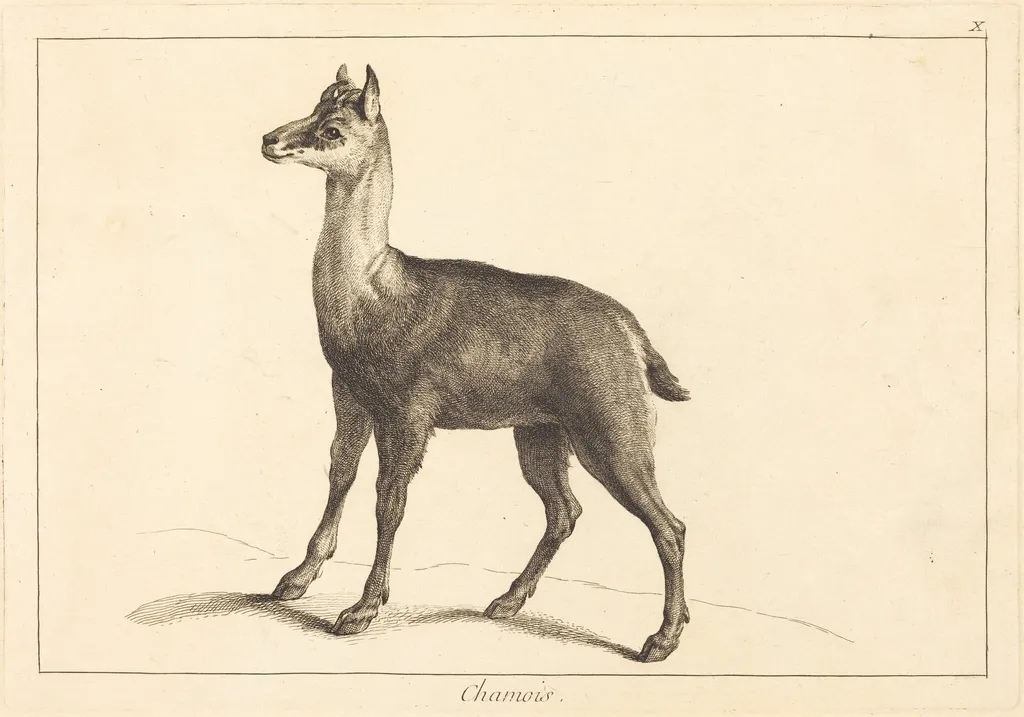
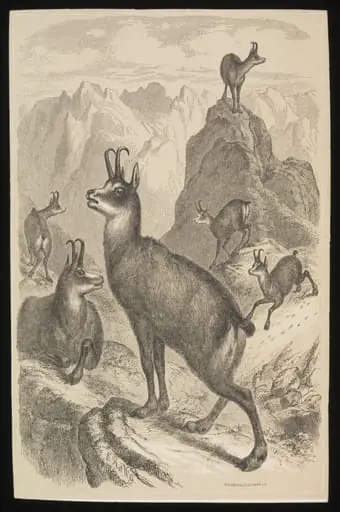
Chamois (Chamois) is an ink print by the Baroque artist Jean Eric Rehn. It dates from 1745 and is held in the collection of the National Gallery of Art.
About this work
Overview
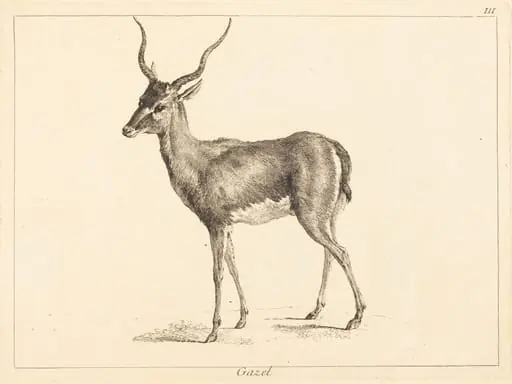
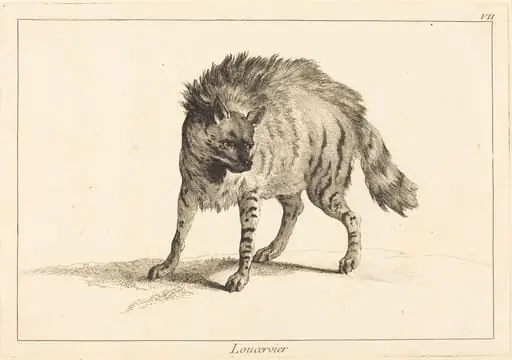
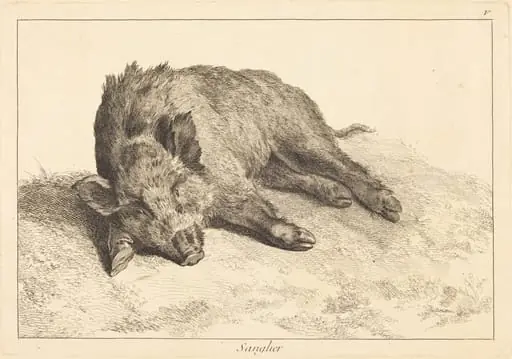
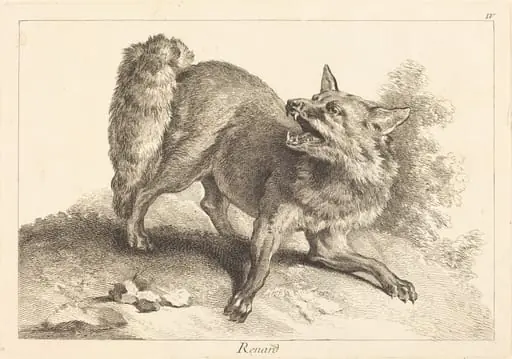
Jean Eric Rehn’s print titled *Chamois* dates from 1745 and combines etching with engraving on a metal plate. The work depicts a solitary chamois perched on a craggy rock, its curved horns and dense fur rendered with precise line work. As a print, it could be reproduced in modest numbers, allowing a broader audience to view the animal’s form.
Subject & Meaning
The animal portrayed is a chamois, a goat‑like ungulate native to mountainous regions of Europe. By isolating the creature on a stark ledge, Rehn emphasizes its adaptation to rugged terrain, highlighting both the animal’s physical characteristics and its ecological niche. The image serves as a visual record rather than an allegorical scene.
Technique & Style
Rehn employed a hybrid process: initial etching to lay out broad tonal areas, followed by fine engraving to define texture and detail, especially in the animal’s coat and horns. The contrast between the soft, stippled background and the sharply incised foreground creates a clear spatial hierarchy, typical of mid‑18th‑century scientific prints.
Context
Working in Sweden during the Enlightenment, Rehn contributed to a growing interest in natural history. Prints like this were valued by hunters, scholars, and collectors who sought accurate visual references for study. The integration of artistic skill with empirical observation reflects the period’s blend of aesthetic and scientific pursuits.
History & Provenance
Examples of Rehn’s *Chamois* are held in the collection of the National Gallery of Art in Washington, D.C. The museum acquired the print as part of its broader assemblage of 18th‑century European prints, underscoring the work’s relevance to the history of natural‑history illustration.
Artist & collection