Artwork
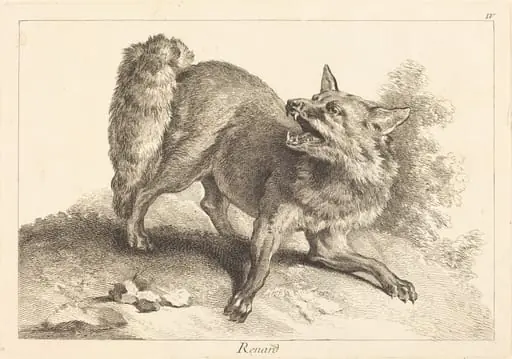
Loucervier (Hyena)
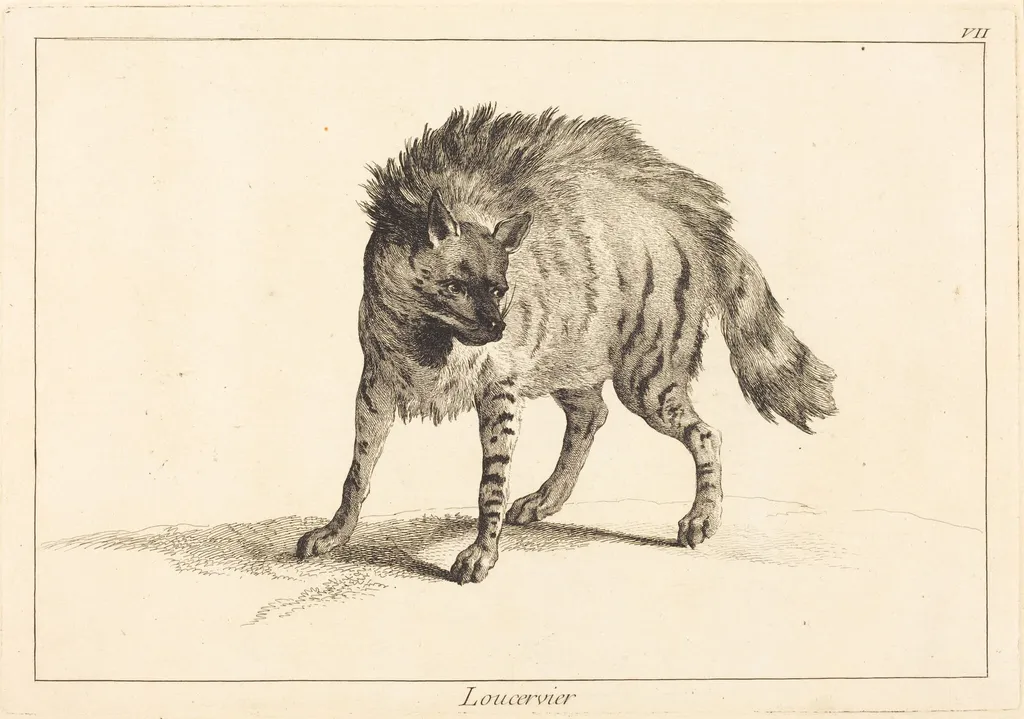
Loucervier (Hyena) is an ink print by the Baroque artist Jean Eric Rehn. It dates from 1745 and is held in the collection of the National Gallery of Art.
About this work
Overview
Jean‑Eric Rehn’s 1745 print titled Loucervier (Hyena) is an etching and engraving on paper. The work depicts a solitary hyena in profile, rendered in fine linear detail that emphasizes the animal’s shaggy coat and distinctive posture as it advances across a stark, unadorned background.
Subject & Meaning
The composition isolates the hyena, highlighting its untamed demeanor through a keenly observed, almost fierce facial expression. By presenting the creature without any surrounding scenery, Rehn directs the viewer’s focus to the animal’s physicality and innate wildness, inviting contemplation of its role as a symbol of the untamed natural world.
Technique & Style
Rehn employed a combination of etching and engraving, first incising the image into a copper plate with acid and then reinforcing lines by hand‑cutting. This dual approach yields a contrast of delicate, atmospheric strokes and sharper, more defined outlines, allowing the texture of the hyena’s fur and the tension of its movement to be conveyed with precision.
History & Provenance
Created in the mid‑eighteenth century, the print reflects the period’s growing interest in exotic fauna. While specific ownership records are scarce, the work is documented in Rehn’s catalogue of prints and has appeared in several European collections of animal studies, illustrating the artist’s engagement with natural history illustration.
Artist & collection


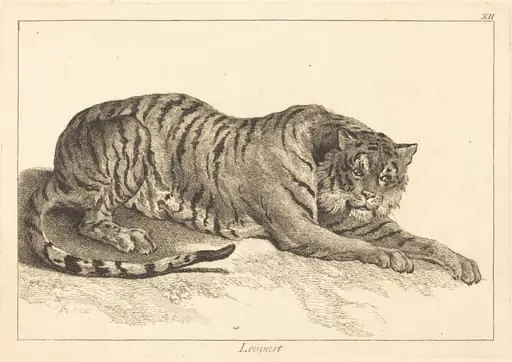 Leopart (Leopard or Tiger)
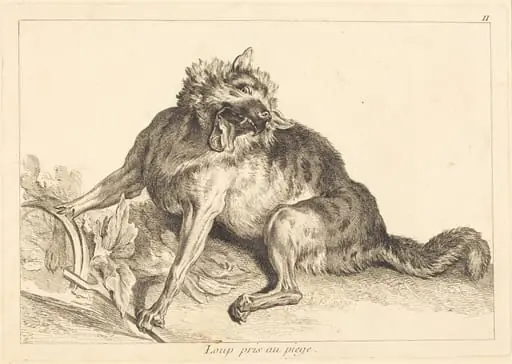 Loup pris au piege (Wolf Caught in a Trap)
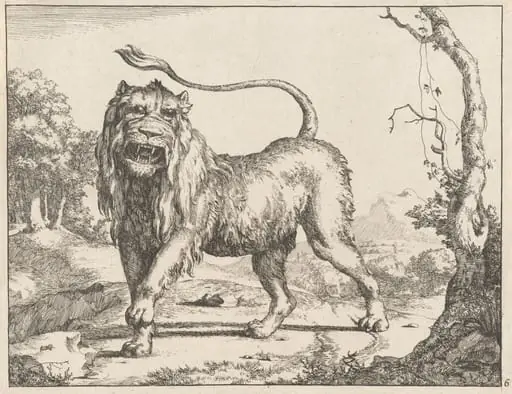 Lion
Lion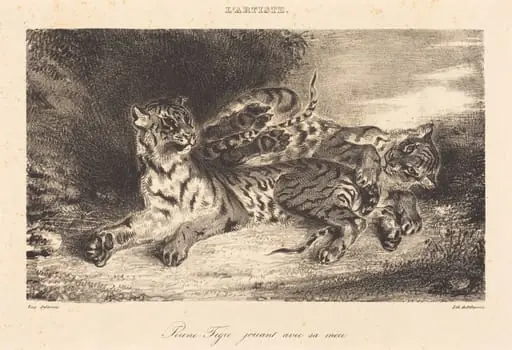 Young Tiger Playing with its Mother (Jeune tigre jouant avec sa mère)
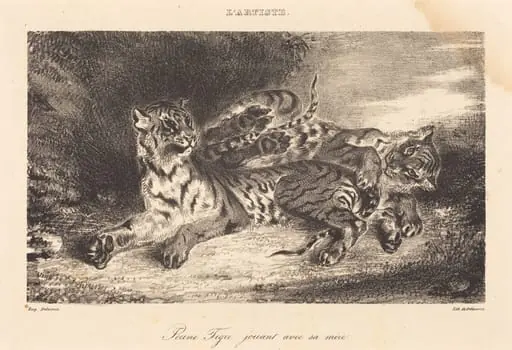 Young Tiger Playing with its Mother (Jeune tigre jouant avec sa mère)
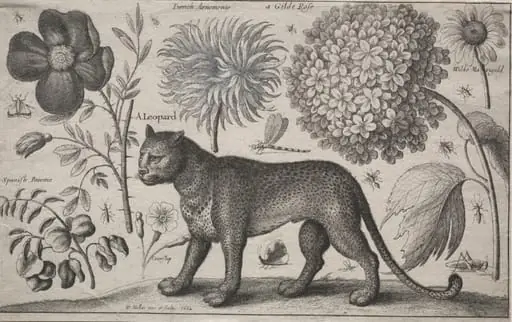 Animals and Plants: Leopard with Plants and Insects
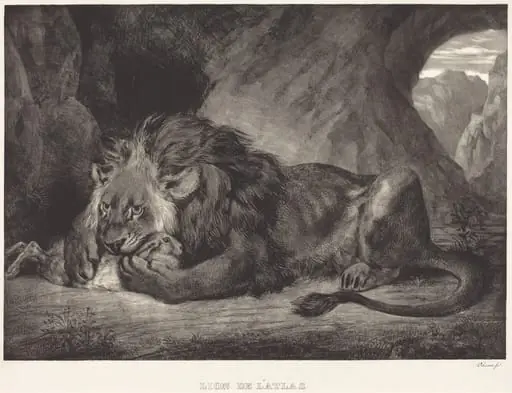 Lion of the Atlas Mountains (Lion de l'Atlas)
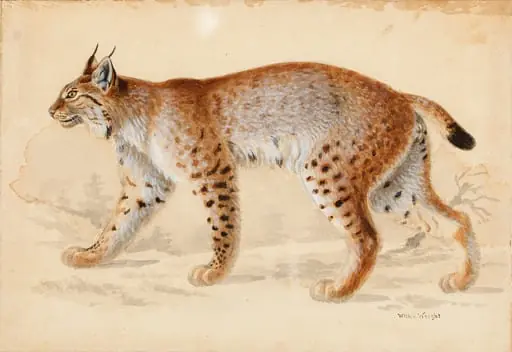 Ilves
Ilves