Artwork
Untitled
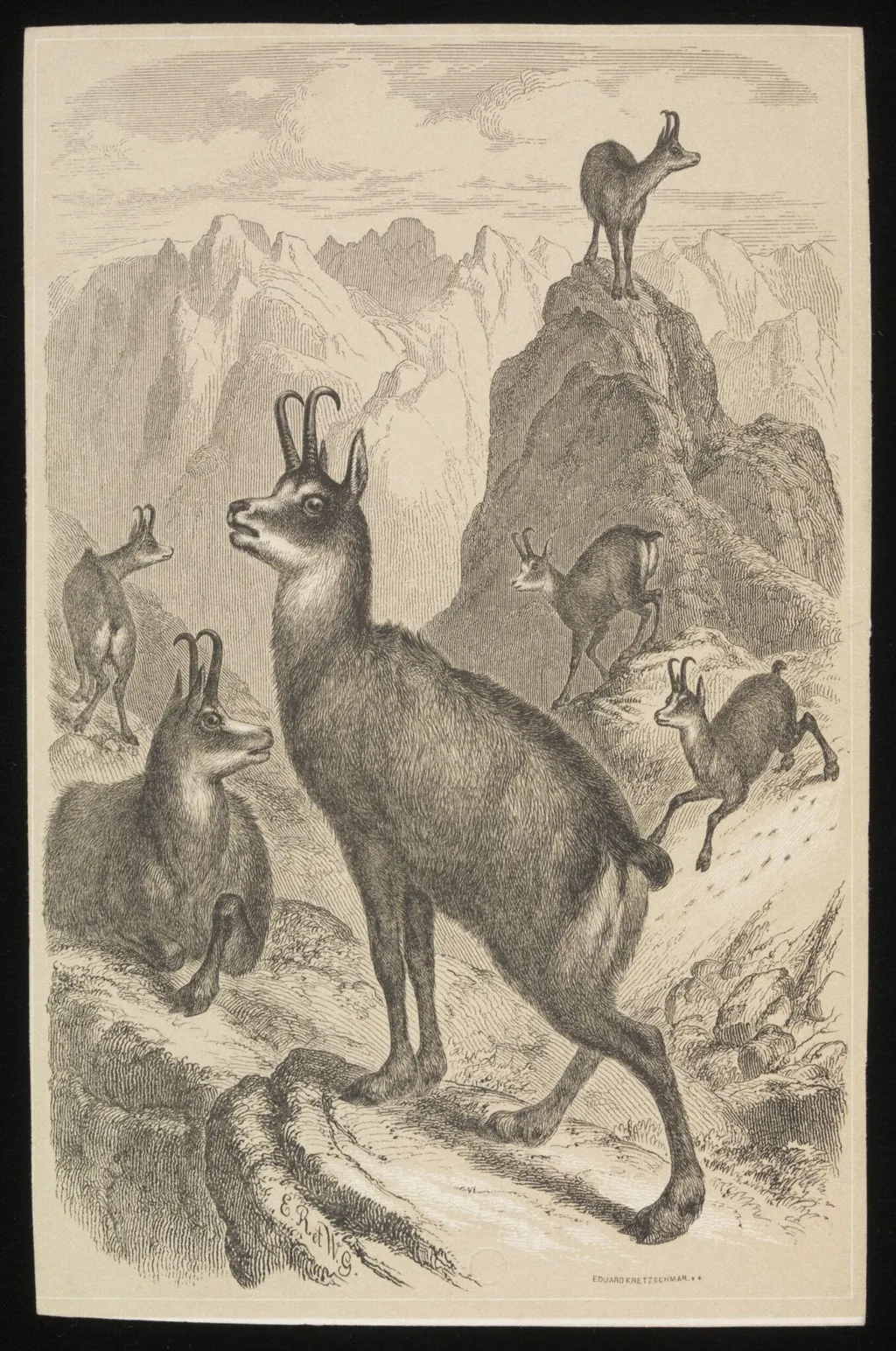
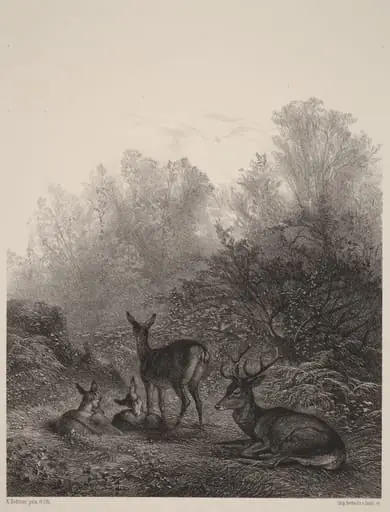
Untitled is a print by Eduard Kretzschmar. It dates from 1850 and is held in the collection of the Victoria and Albert Museum.
About this work
Overview
Delicate white ink accents suggest scattered light on stone surfaces, enhancing the sense of terrain and atmosphere without overwhelming the naturalistic tone.
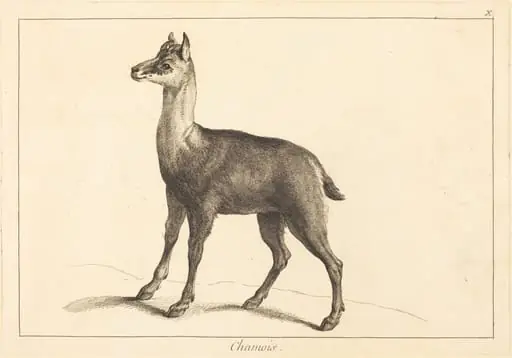
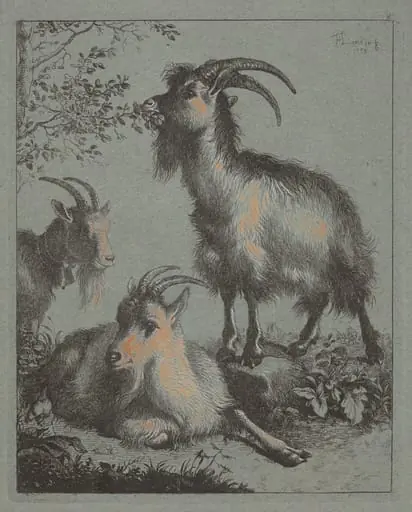
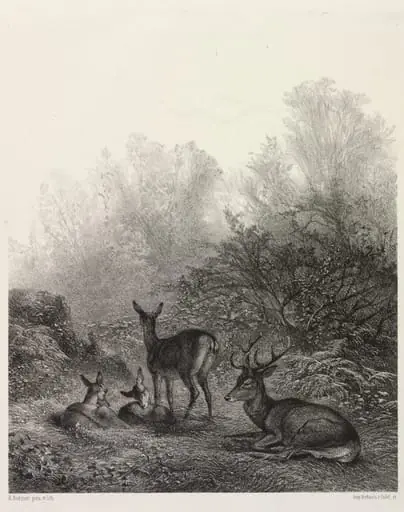
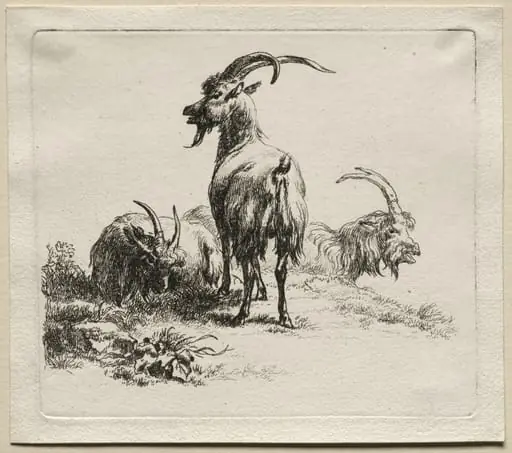
This 1850 print by Eduard Kretzschmar depicts six chamois in a rugged alpine setting. The composition centers on a large animal in profile, standing on a sloping ledge and gazing upward, while smaller figures are arranged across the background rocks. Delicate white ink accents suggest scattered light on stone surfaces, enhancing the sense of terrain and atmosphere without overwhelming the naturalistic tone.
Subject & Meaning
The chamois, native to European mountain ranges, are rendered not as symbolic figures but as observed wildlife. Their postures—alert, climbing, resting—reflect quiet moments in their natural habitat. The absence of human presence or narrative context emphasizes the animals’ autonomy within their environment, aligning with 19th-century naturalist interests in documenting animal behavior with precision.
Technique & Style
Kretzschmar employs fine, controlled linework to define the animals’ musculature and textured fur, capturing subtle variations in weight and movement. The legs are articulated with anatomical accuracy, suggesting motion and balance on uneven ground. White ink is used sparingly to indicate highlights on rock and snow, adding depth without artificial contrast, reinforcing the print’s restrained, observational approach.
History & Provenance
Created in 1850, this print belongs to a series of animal studies Kretzschmar produced during a period of growing interest in natural history illustration. While specific ownership records are limited, the work aligns with German artistic circles that valued detailed depictions of wildlife, often circulated as prints for scientific or private collections rather than public exhibition.
Context
In mid-19th-century Europe, artists increasingly turned to nature as a subject divorced from myth or allegory. Kretzschmar’s work reflects this shift, paralleling developments in zoology and field observation. His focus on chamois—animals then less commonly portrayed than deer or livestock—suggests engagement with regional Alpine fauna and the rising appreciation for precise, non-idealized natural forms.
Legacy
Kretzschmar’s prints, including this one, remain notable for their technical restraint and fidelity to animal anatomy. Though not widely exhibited today, they contribute to a broader tradition of European animal drawing that prioritized observation over ornamentation. His work is referenced in studies of 19th-century naturalistic printmaking, particularly in German-speaking regions.
Artist & collection
Artist
Eduard Kretzschmar made small, detailed prints in the middle of the 1800s. Try his *Untitled* print from that era—it shows a quiet street scene with careful lines and soft shading. These kinds of prints belong to the…