Artwork
A Wayside Shrine Carved into a Rocky Tor
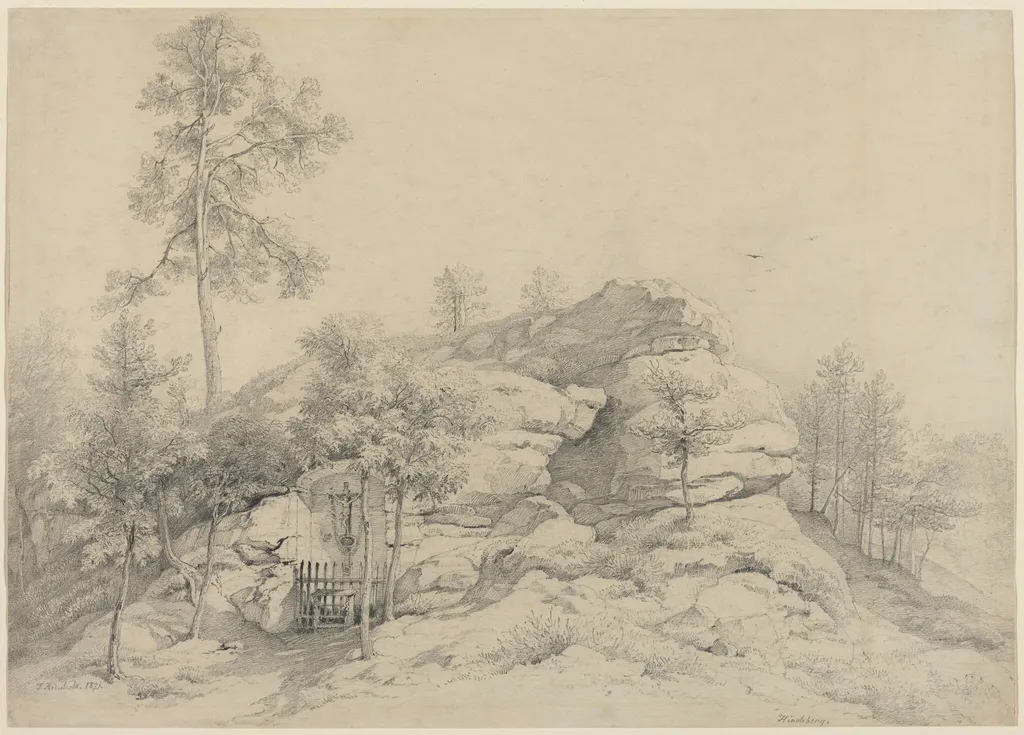
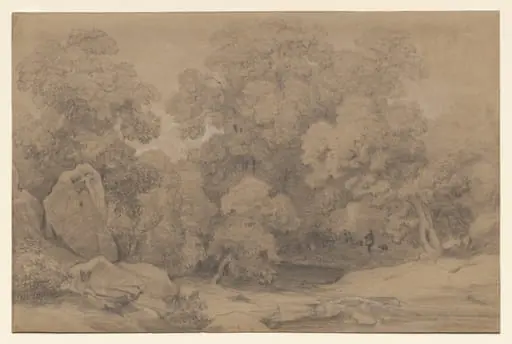
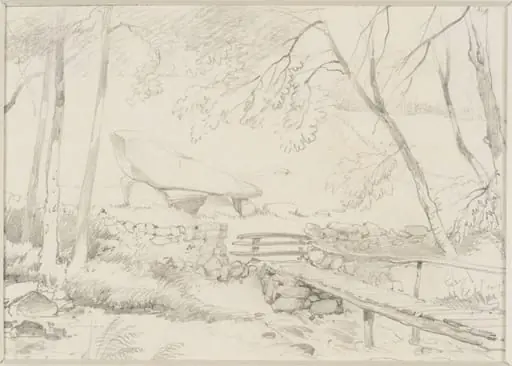
A Wayside Shrine Carved into a Rocky Tor is a graphite drawing by the Romanticist artist Friedrich Philipp Reinhold. It dates from 1821 and is held in the collection of the National Gallery of Art.
About this work
Overview
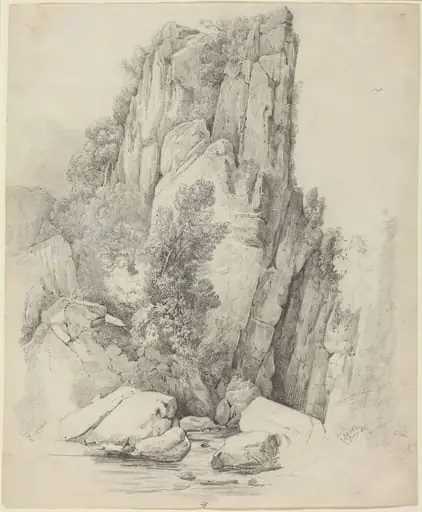
A Wayside Shrine Carved into a Rocky Tor is a graphite drawing on cream laid paper by Friedrich Philipp Reinhold, dated to 1821. It depicts a serene natural setting with a shrine integrated into a rocky hillside, surrounded by sparse vegetation and trees.
Subject & Meaning
The drawing portrays a tranquil, somewhat untamed landscape featuring a small shrine carved into a rocky outcrop, accessible via a wooden fence. The emphasis is on the natural, peaceful coexistence of the carved shrine within its rugged surroundings.
Technique & Style
Reinhold employed graphite to capture the contrasting textures of rough rock and slender tree branches. The simple, expressive lines and focus on natural beauty align with early 19th-century artistic tendencies that emphasized the power and beauty of nature.
History & Provenance
Created in 1821 by Friedrich Philipp Reinhold, specific details regarding the drawing's ownership history and exhibitions are not provided in the available information.
Context
This work fits within the broader context of Romanticism, an art movement that celebrated the sublime, the beauty of nature, and the emotional response it evoked. The drawing's themes of natural serenity and the integration of human-made elements into the landscape reflect Romantic ideals.
Legacy
While specific lasting impacts or notable recognitions of 'A Wayside Shrine Carved into a Rocky Tor' are not detailed, it contributes to the understanding of early 19th-century artistic practices and the enduring appeal of Romantic-era landscapes.
Artist & collection
Artist
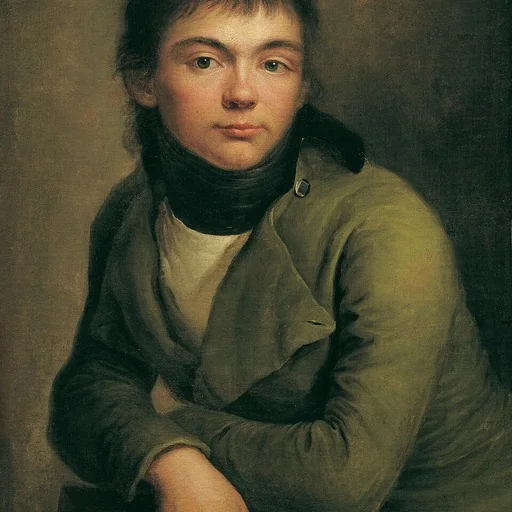
Friedrich Philipp Reinhold (1779–1840) was an artist, born in Gera.