Artwork
Dutch Roadstead
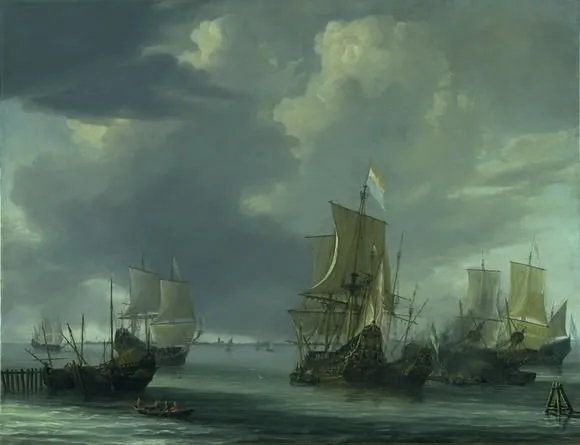
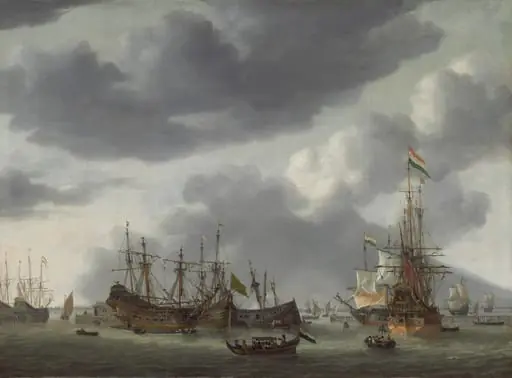
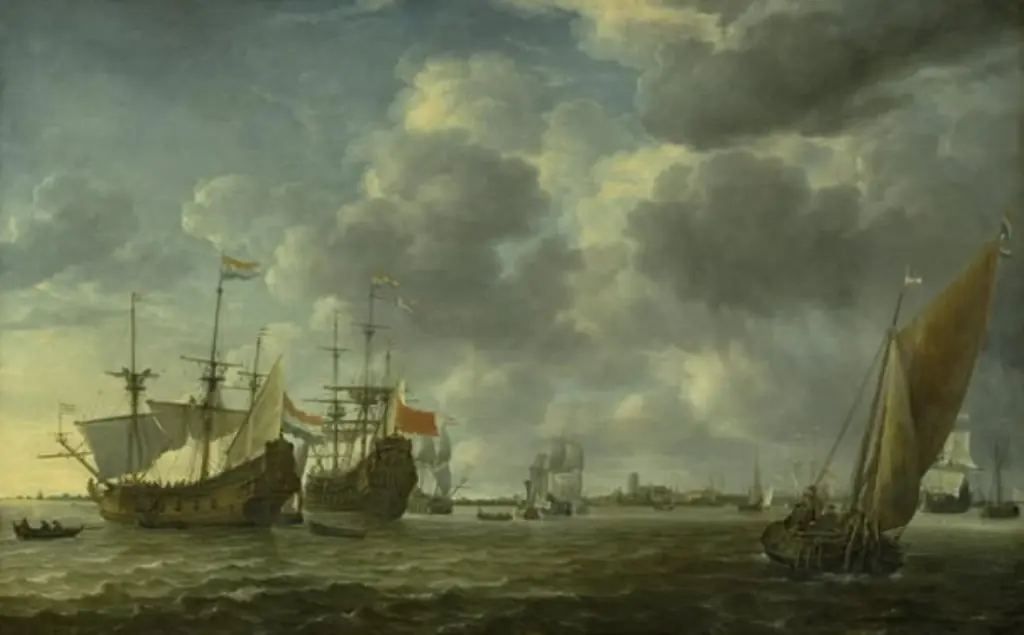
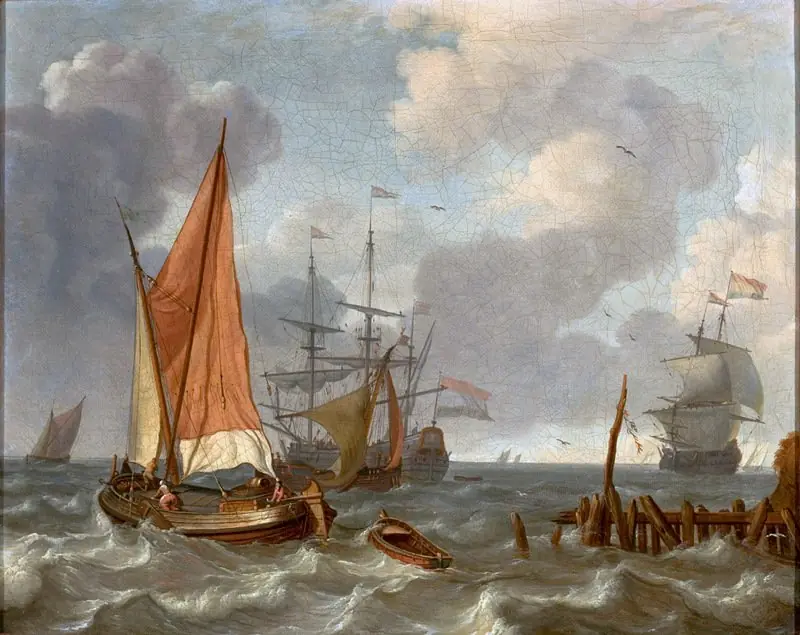
Dutch Roadstead is an oil painting by the Dutch Golden Age artist Nooms, called Zeeman, Reinier. It dates from 1657 and is held in the collection of the Statens Museum for Kunst.
About this work
Overview
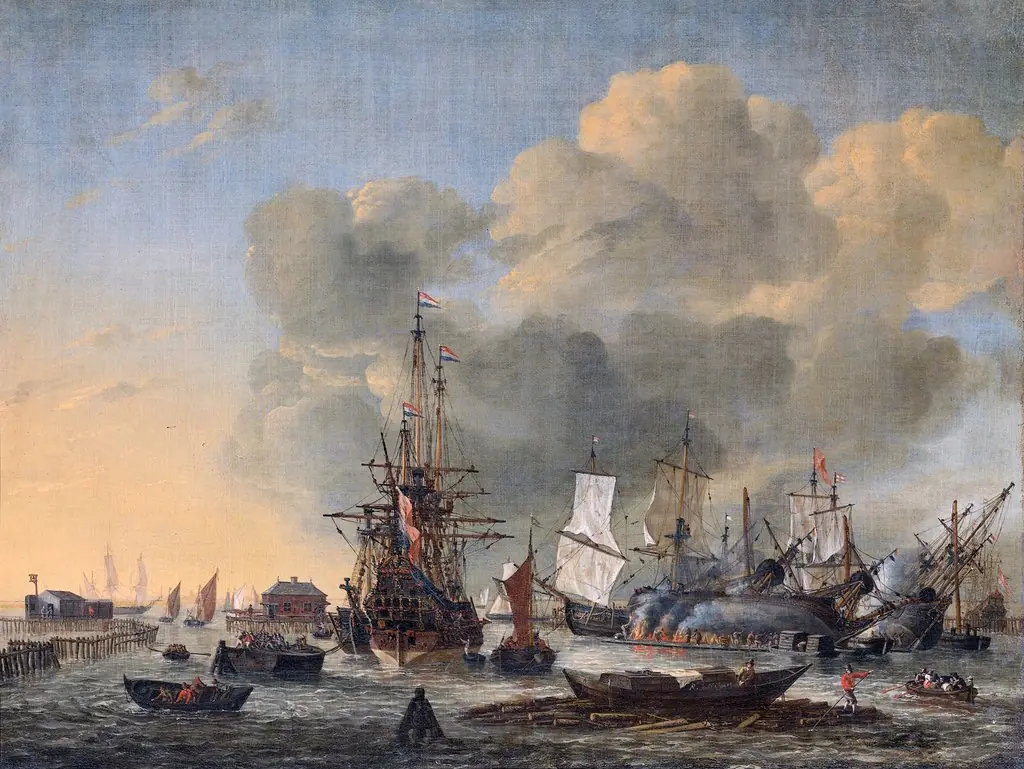
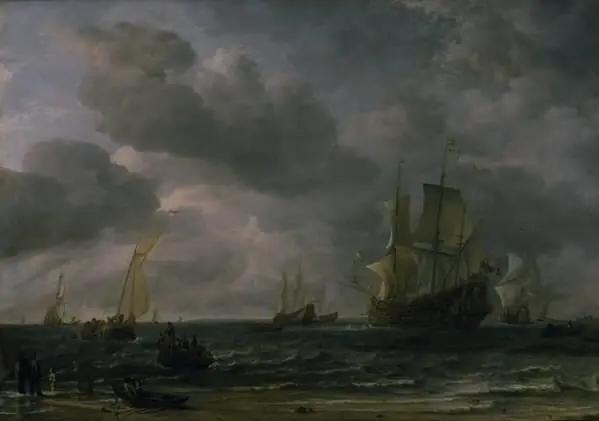
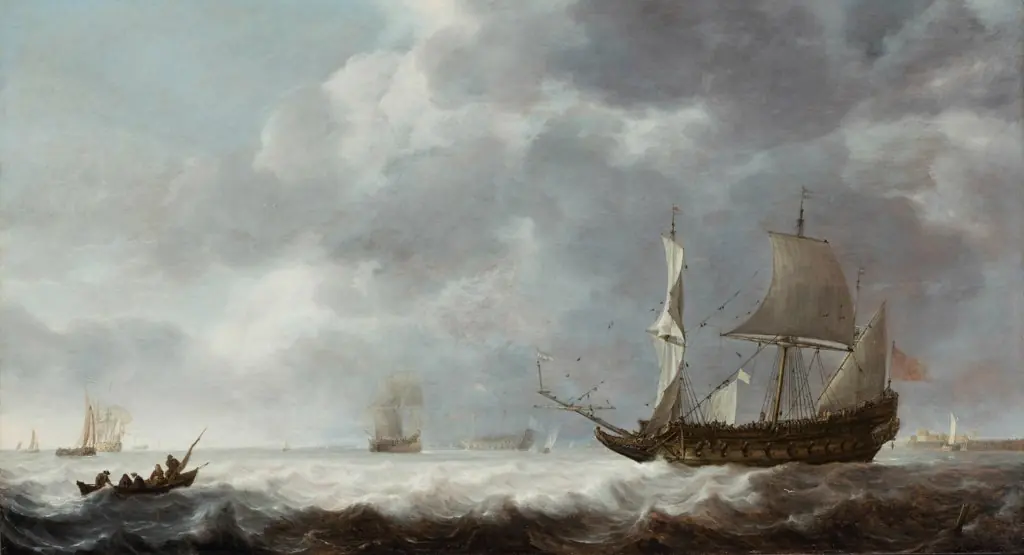
Dutch Roadstead, executed in oil in 1657, is a maritime scene by Reinier Nooms, a specialist of Dutch seascapes in the mid‑17th century. The canvas captures a storm‑laden harbor where six sizable sailing vessels confront a turbulent sea under a brooding sky, while a modest boat with a few figures occupies the foreground.
Subject & Meaning
The composition foregrounds the precarious relationship between man and nature, illustrating the hazards of navigation during a gale. The contrast between the massive, labor‑filled ships and the solitary, vulnerable boat underscores themes of commerce, risk, and the resilience of seafarers confronting the unpredictable sea.
Technique & Style
Nooms employs chiaroscuro, using strong light and dark contrasts to model the hulls and rigging against the stormy backdrop. The brushwork blends smoothly on the water’s surface, conveying movement, while sharper strokes delineate the ships’ details, creating a dramatic, atmospheric effect characteristic of Dutch Golden Age marine painting.
History & Provenance
Created during the Dutch Golden Age, the work reflects the period’s fascination with maritime trade and naval power. Though specific ownership records are scarce, the painting has been associated with collections of 17th‑century Dutch marine art and serves as a representative example of Nooms’s oeuvre, which was widely circulated through prints and copies.
Artist & collection

Artist
Reinier Nooms (c. 1623 – 1664), also known as Zeeman or Seeman (Dutch for "sailor"), was a Dutch maritime painter known for his highly detailed paintings and etchings of ships. From the 1650s, Nooms started producing…