Artwork
A Weeping Woman
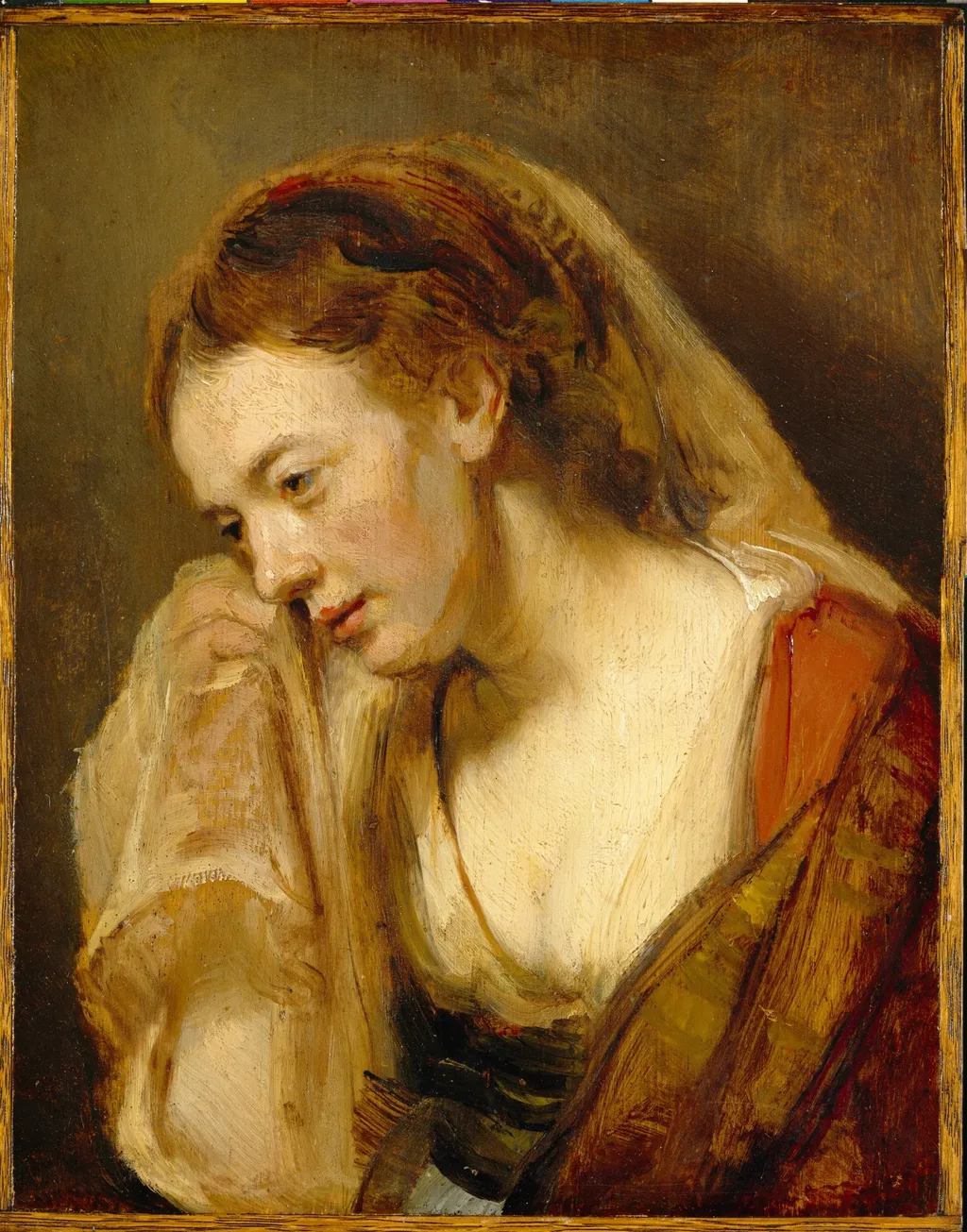
A Weeping Woman is an oil painting by the Dutch Golden Age artist Rembrandt. It dates from 1640 and is held in the collection of the Detroit Institute of Arts.
About this work
Overview
A Weeping Woman is an oil on oak panel painting created in 1644, currently housed at the Detroit Institute of Arts. The work depicts a woman in a state of sorrow, executed in a style reflective of the Dutch Golden Age.
Subject & Meaning
The painting focuses on a solitary female figure overcome with emotion, her tears conveying profound distress. The subject's contemplative pose suggests introspection or grief, though the specific narrative context remains ambiguous.
Technique & Style
Characterized by expressive brushwork and a somber color palette, the painting exhibits traits common to Rembrandt's circle. The use of oil on oak panel, a popular medium among Dutch masters, contributes to the work's textured, intimate quality.
History & Provenance
Attributed to a student of Rembrandt, following an original study by the master, the painting's exact authorship is debated among scholars. Proposed attributions include Carel Fabritius, Samuel van Hoogstraten, and Nicolaes Maes, highlighting the collaborative and influential nature of Rembrandt's workshop.
Context
The woman's kneeling pose closely mirrors that of a figure in Rembrandt's 'The Woman Taken in Adultery', indicating a direct compositional influence. This connection underscores the painting's place within the broader output of Rembrandt's studio during the 1640s.
Artist & collection

Artist
Rembrandt Harmenszoon van Rijn (15 July 1606 – 4 October 1669), known mononymously as Rembrandt, was a Dutch Golden Age painter, printmaker, and draughtsman.








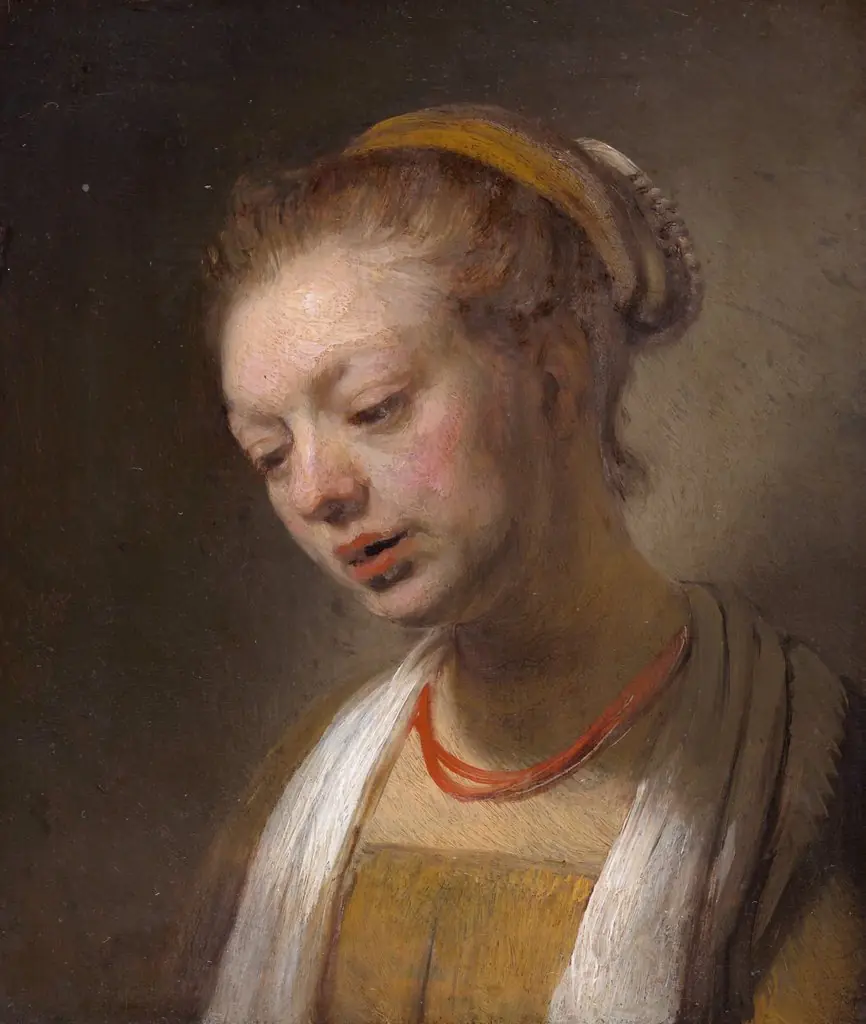 Young Woman with a Red Necklace
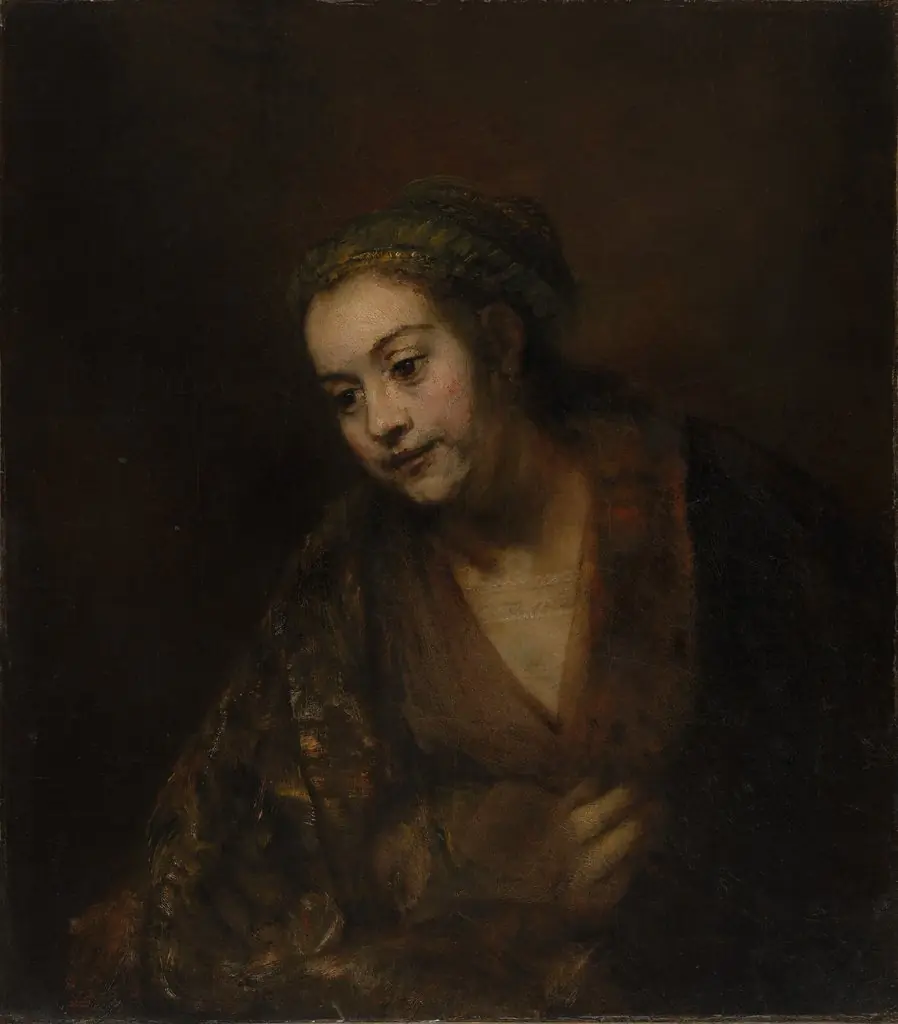 Hendrickje Stoffels (1626–1663)
 Study Head of a Woman
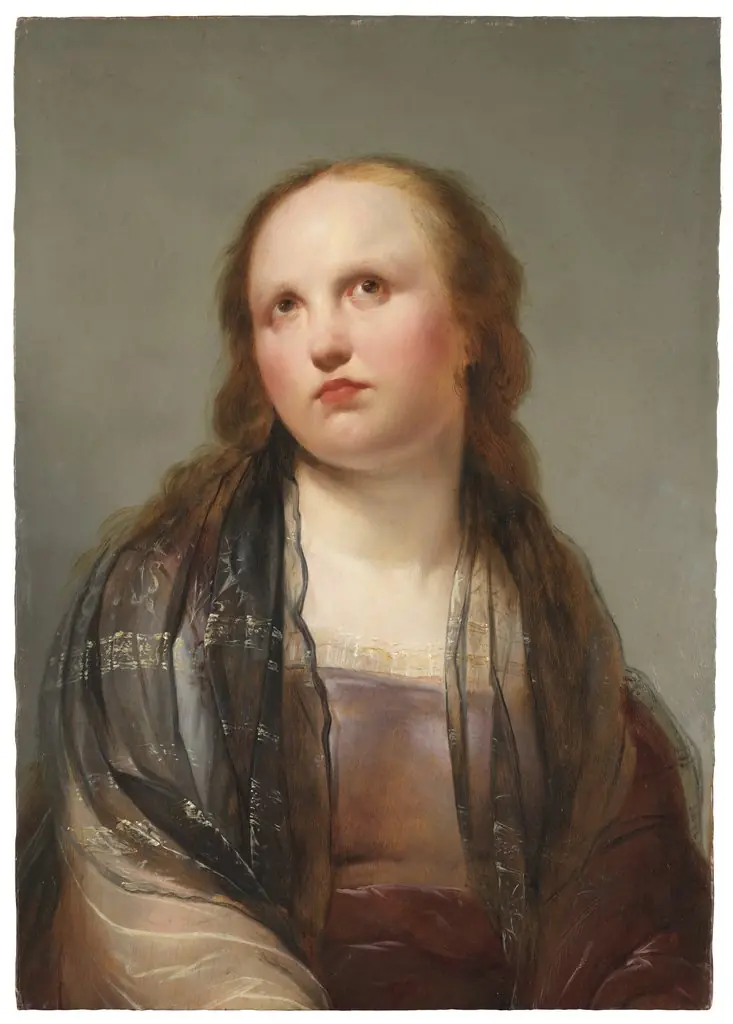 Porträtt av en ung kvinna
 Young Woman with a Pearl Necklace
 Head of an Angel
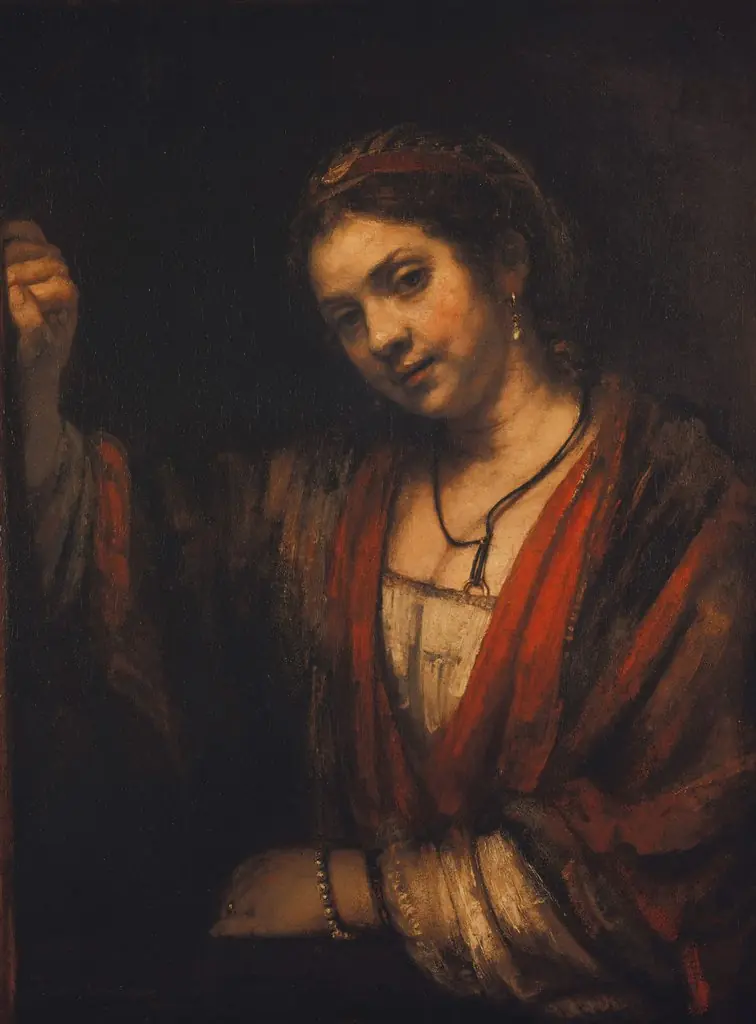 Hendrickje Stoffels by a Door
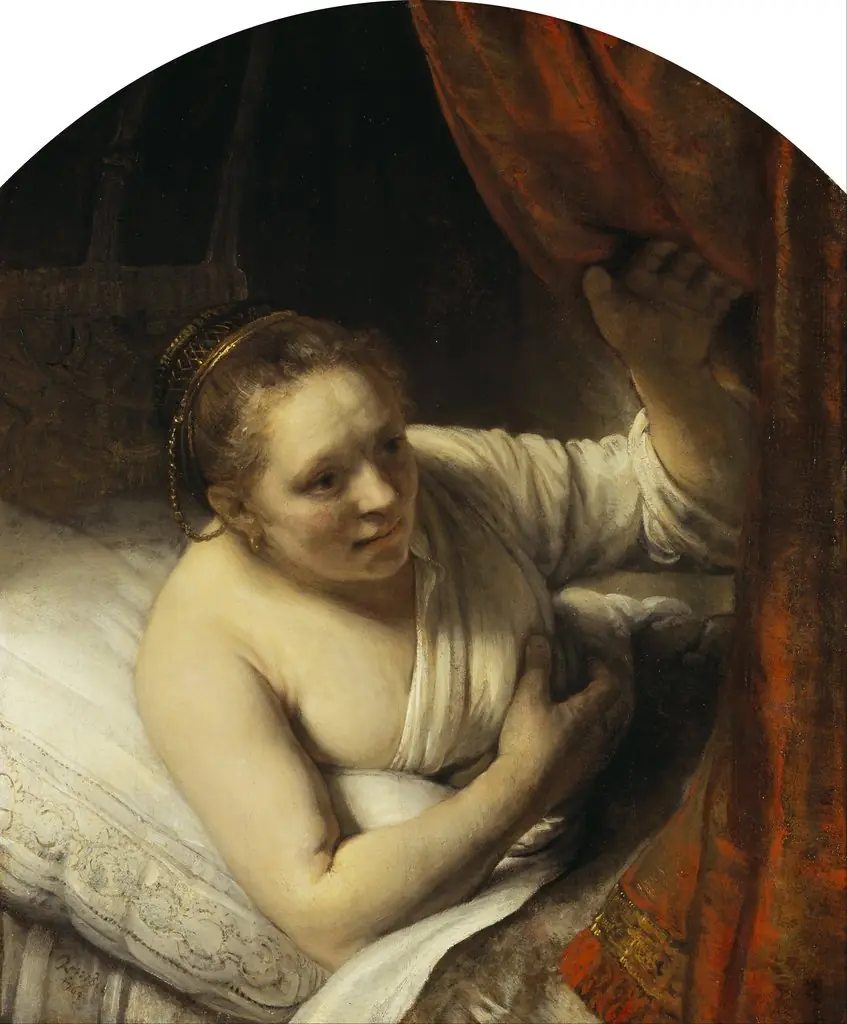 A Woman in Bed
 Half-figure of a woman with a beret
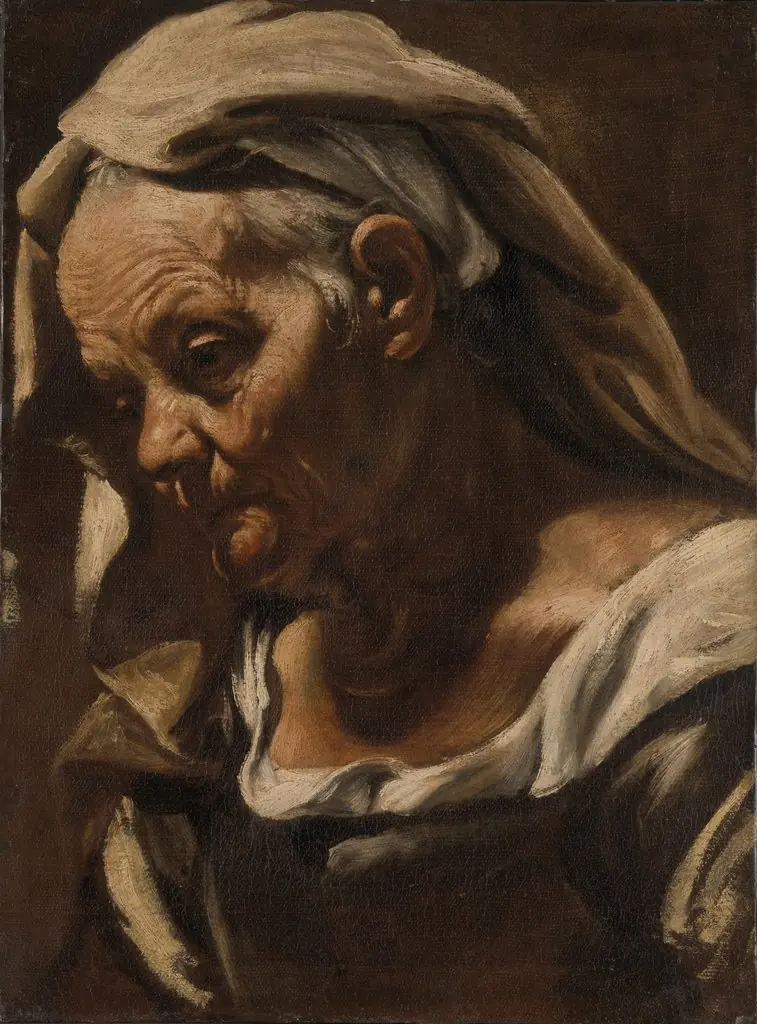 Head of an Old Woman
 The Sibyl
 Head of an Old Woman Looking to Lower Right (Saint Elizabeth)