Artwork
Ahasuerus and Haman at the Feast of Esther
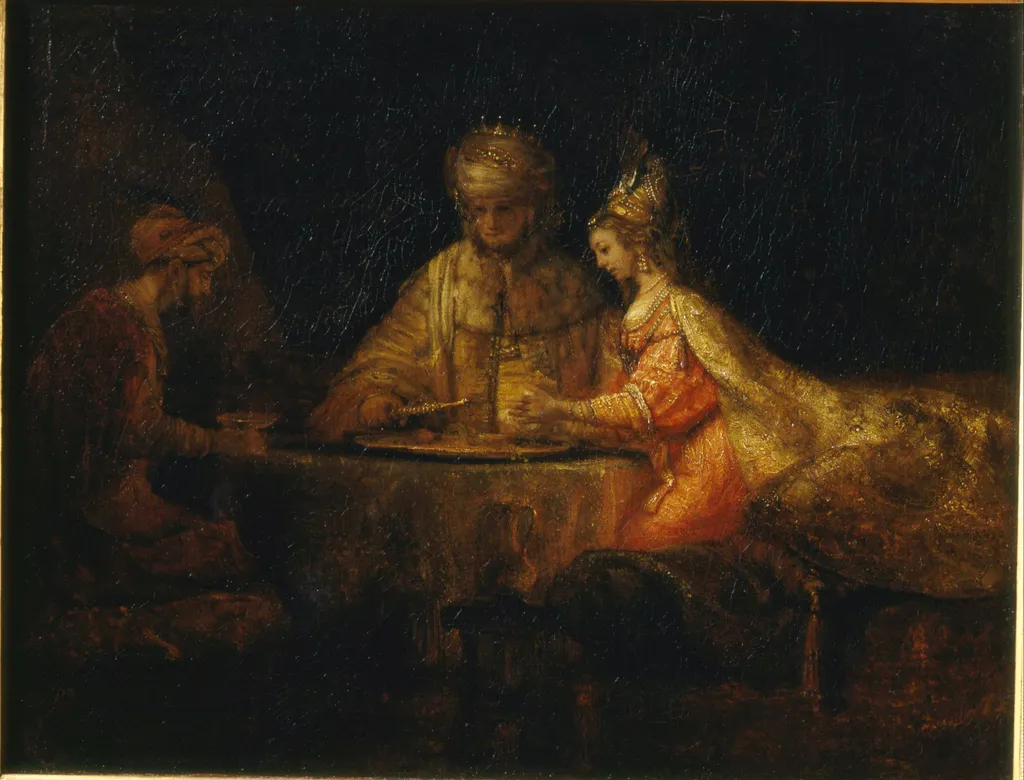
Ahasuerus and Haman at the Feast of Esther is an oil painting by the Dutch Golden Age artist Rembrandt. It dates from 1660 and is held in the collection of the Pushkin Museum of Fine Arts.
About this work
Overview
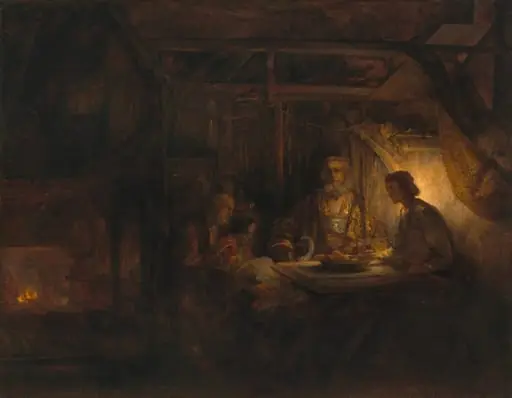
Rembrandt’s oil painting titled *Ahasuerus and Haman at the Feast of Esther* presents a dimly lit banquet scene with three central figures.
Rembrandt’s oil painting titled *Ahasuerus and Haman at the Feast of Esther* presents a dimly lit banquet scene with three central figures. The king, crowned and fur‑trimmed, leans over a ledger; beside him sits Esther in a gold dress, her gaze directed downward; a third figure, Haman, stands behind them in darker attire, his head bowed. The composition isolates the trio against a shadowy backdrop, emphasizing their emotional tension.
Subject & Meaning
The work captures the dramatic moment from the Biblical Book of Esther when the queen concludes her plea to King Ahasuerus. Esther’s lowered arms convey apprehension, while the monarch’s pursed lips suggest anger or contemplation. Haman’s posture, turned away and slumped, hints at impending doom, underscoring the narrative’s themes of power, vulnerability, and the precarious balance between ruler and advisor.
Technique & Style
Rembrandt employs his characteristic chiaroscuro, allowing a warm, focused light to illuminate the faces of the three characters while the surrounding space recedes into deep shadow. The subtle modeling of flesh and the delicate handling of the gold dress contrast with the coarse texture of the king’s fur‑lined robe, creating a tactile sense of materiality and heightening the psychological intensity of the scene.
History & Provenance
The painting’s ownership trail is unusually complete for a 17th‑century work. Documentation traces its existence to 1662, merely two years after Rembrandt completed it, providing a clear line of custody through successive collections. This uninterrupted provenance offers scholars reliable context for dating, attribution, and the work’s early reception.
Context
Created in the early 1650s, the canvas reflects the Dutch Golden Age’s fascination with biblical subjects rendered in intimate, human terms. Rembrandt’s focus on a limited number of figures, rather than a grandiose court scene, aligns with his later period’s shift toward psychological depth and restrained narrative composition.
Own this work as a print
Artist & collection
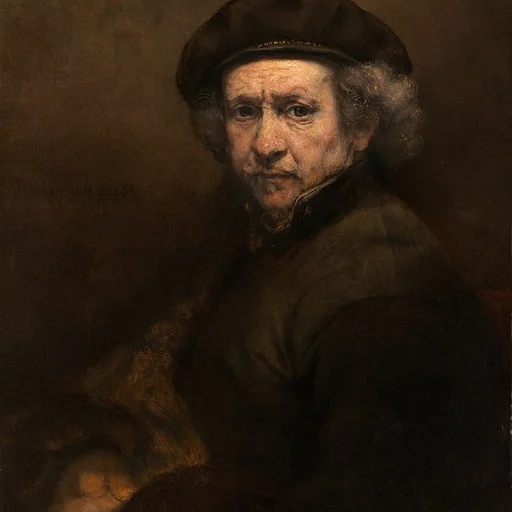
Artist
Rembrandt Harmenszoon van Rijn (15 July 1606 – 4 October 1669), known mononymously as Rembrandt, was a Dutch Golden Age painter, printmaker, and draughtsman.