Artwork
Bust of a Man in a Turban
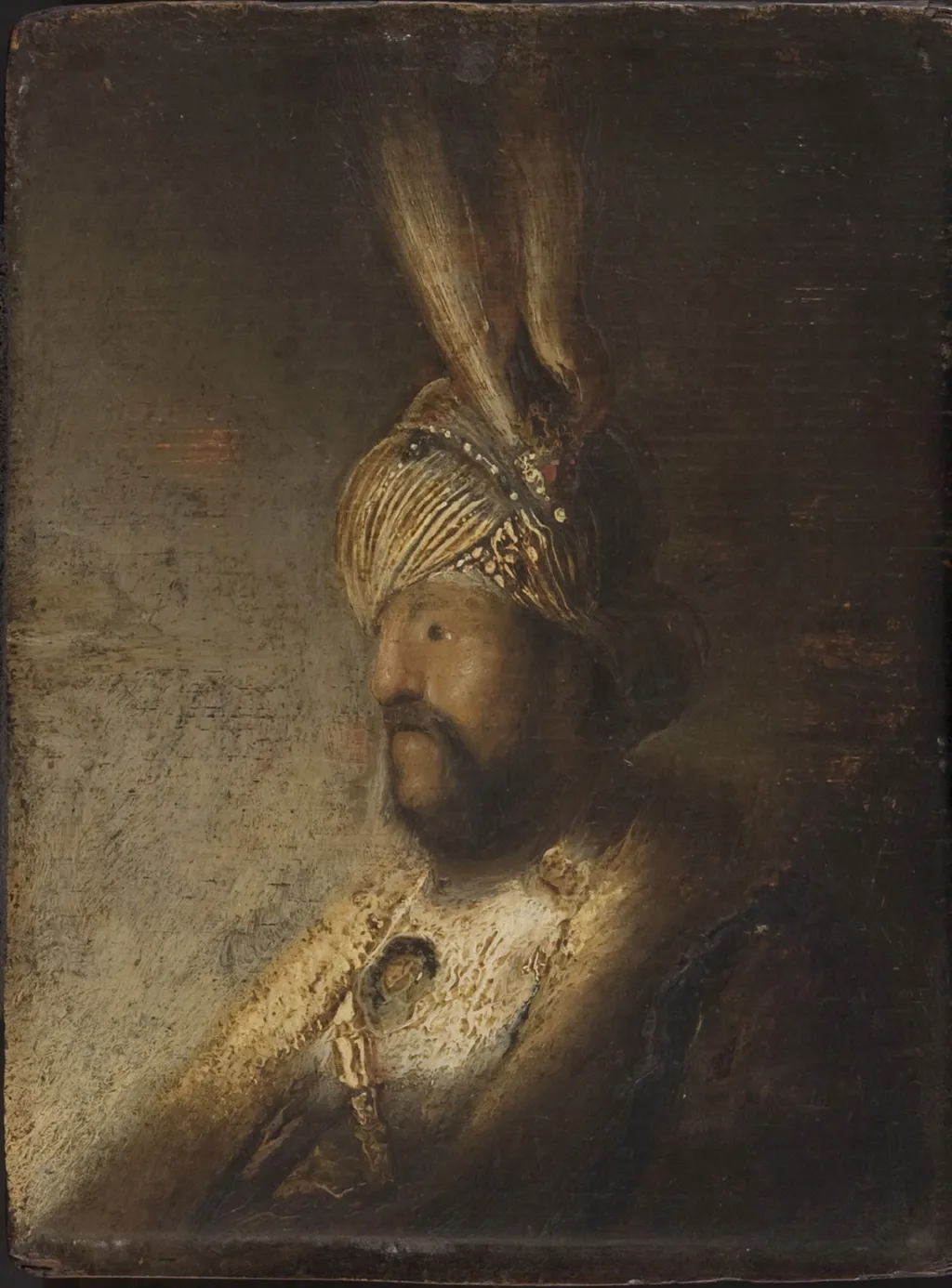
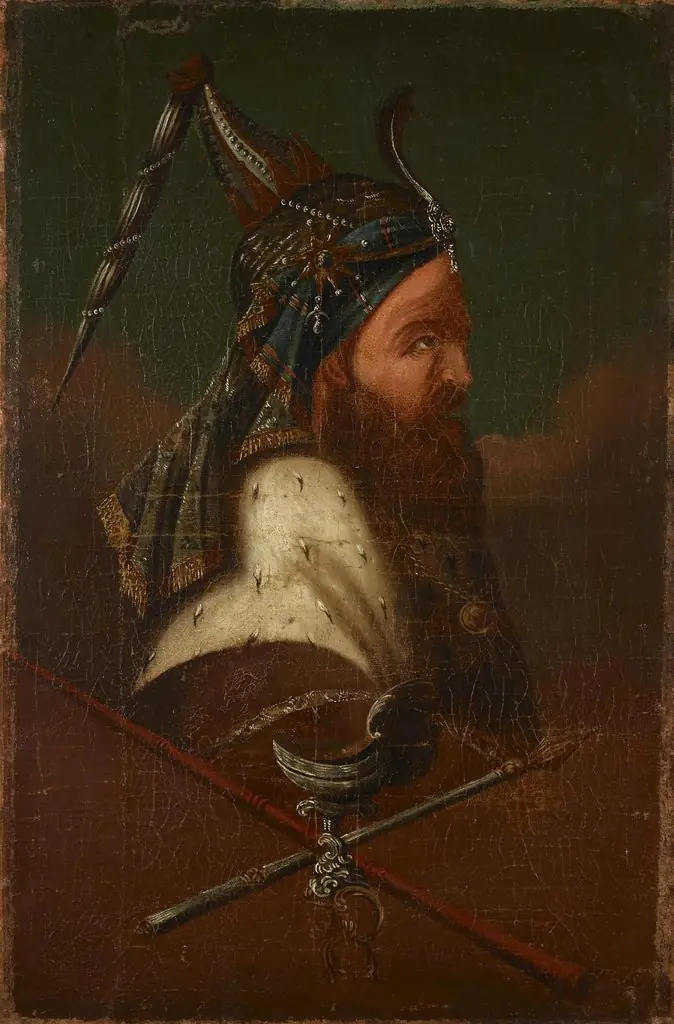
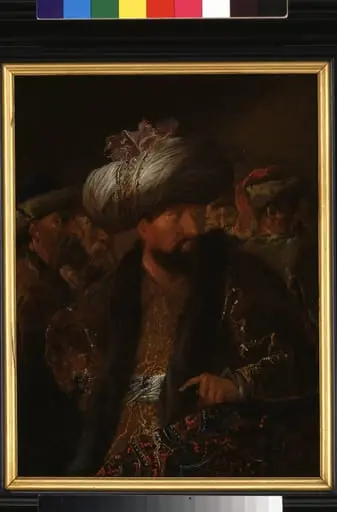
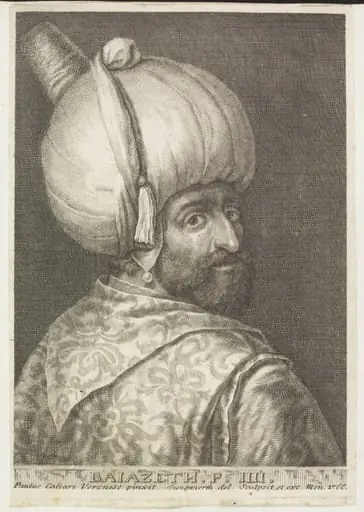
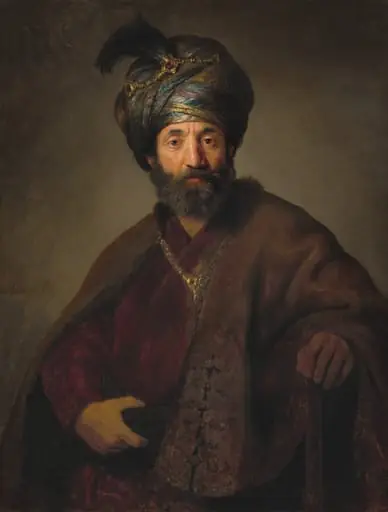
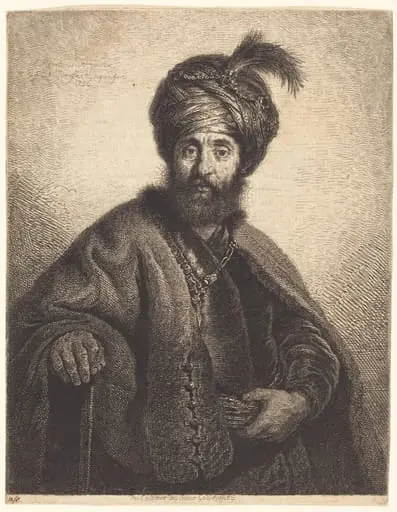
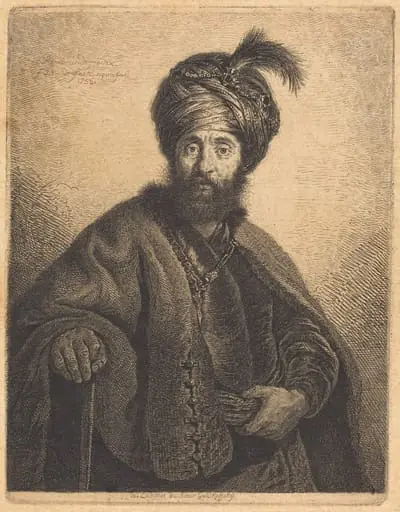
Bust of a Man in a Turban is an oil painting by Rembrandt. It dates from 1629 and is held in the collection of the Philadelphia Museum of Art. Created in 1629, this oil painting presents a half‑length portrait of a man wearing a turban.
About this work
Overview
Created in 1629, this oil painting presents a half‑length portrait of a man wearing a turban. Rendered in a restrained palette, the figure is set against a dark, unadorned background that isolates his features. The work belongs to the early period of a Dutch painter whose career would later encompass hundreds of canvases, etchings and drawings.
Subject & Meaning
The sitter is shown from the chest upward, turned toward the left, with a composed, neutral expression. The turban, rendered with fine linear and dotted patterns, dominates the composition and suggests an interest in exotic attire, a motif occasionally explored in early seventeenth‑century Dutch portraiture.
Technique & Style
Executed in oil on canvas, the painting employs chiaroscuro to model the face and headwear, allowing the dark backdrop to amplify the subtle gradations of light on skin and fabric. Brushwork is meticulous in the turban’s decorative details, while broader strokes define the flesh tones, reflecting the artist’s developing skill in rendering texture.
History & Provenance
The work originates from the artist’s early career, a time when he was establishing his reputation in Amsterdam. Though specific ownership records are limited, the painting has been catalogued among his early portrait output and is now held in a public collection that specializes in Dutch Golden Age art.
Artist & collection
Artist
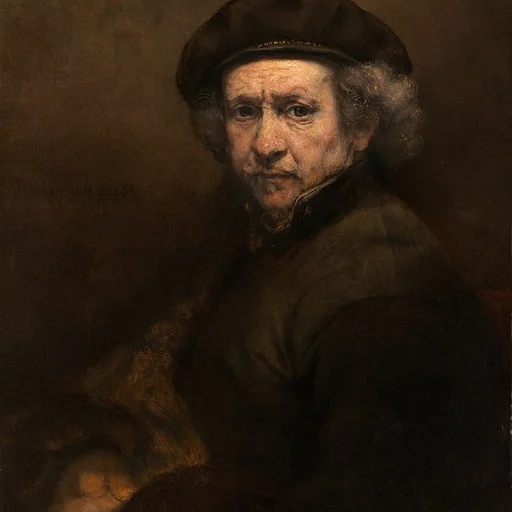
Rembrandt Harmenszoon van Rijn (15 July 1606 – 4 October 1669), known mononymously as Rembrandt, was a Dutch Golden Age painter, printmaker, and draughtsman.