Artwork
The Persian
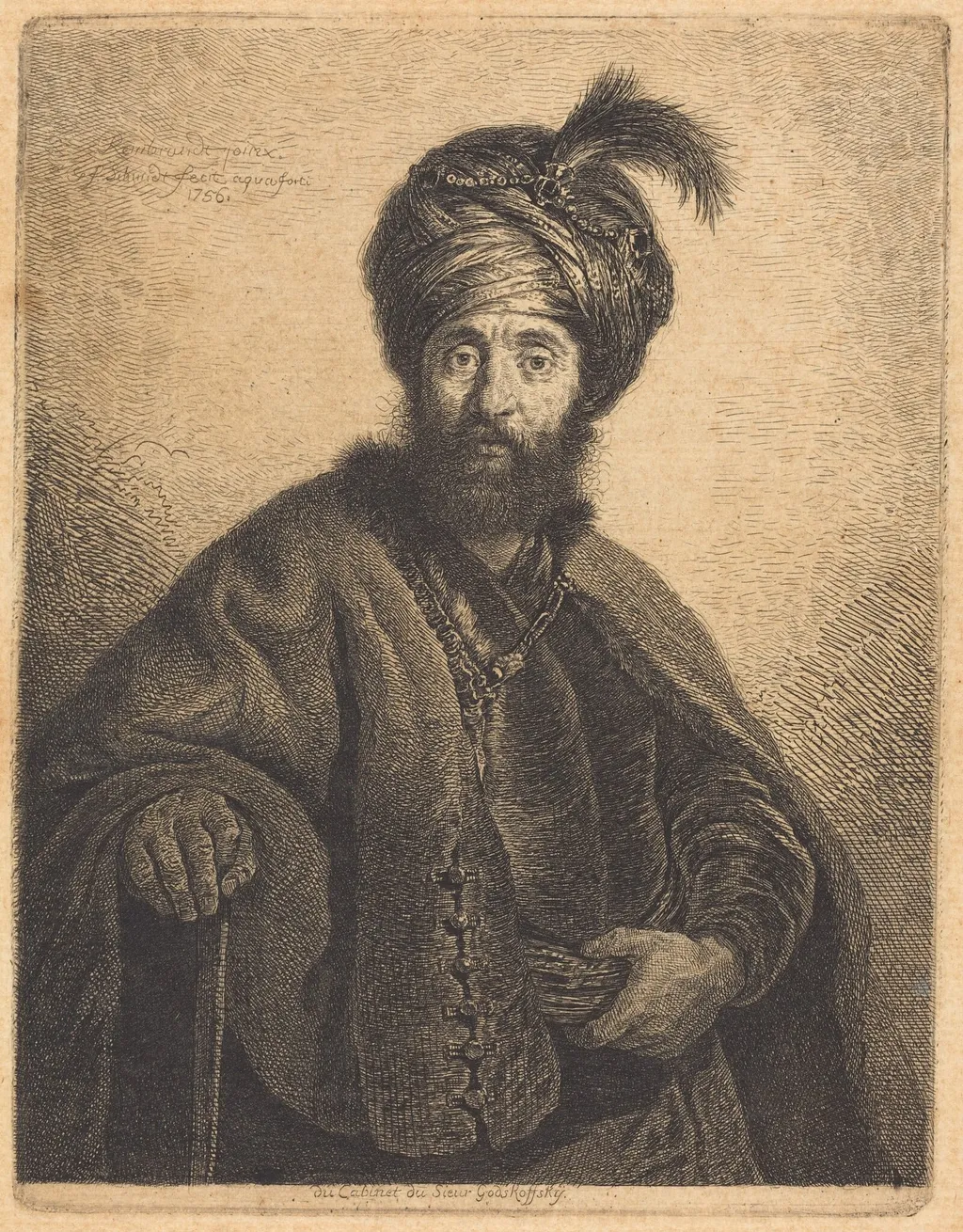
The Persian is an ink print by the Romanticist artist Georg Friedrich Schmidt. It dates from 1756 and is held in the collection of the National Gallery of Art.
About this work
Overview
The work reflects 18th-century European fascination with distant cultures, rendered through the precise, ink-based technique of etching on metal plates.
Created in 1756 by the German artist Georg Friedrich Schmidt, *The Persian* is a black-and-white etching that captures a stylized figure in exoticized Persian dress. Schmidt, active in the Rococo era, specialized in printmaking and pastel portraiture, using etching to achieve fine linear detail. The work reflects 18th-century European fascination with distant cultures, rendered through the precise, ink-based technique of etching on metal plates.
Subject & Meaning
The figure is portrayed in an idealized Persian costume—tall feathered hat, heavy fur coat, and long beard—elements drawn from European fantasies of the East rather than accurate ethnographic observation. He holds a walking stick and rests a hand on his chest, adopting a pose of dignified stillness. The image functions less as a portrait and more as a symbolic representation of foreignness, aligning with Rococo tastes for ornamental, theatrical subjects.
Technique & Style
Schmidt employed etching to produce intricate, controlled lines that define texture and form without color. The dark, deliberate strokes render the fur’s pile, the hat’s feathers, and the folds of fabric with precision. The absence of tone or wash emphasizes linearity, characteristic of printmaking of the period. This method allowed for multiple impressions, making the image accessible beyond original drawings or paintings.
History & Provenance
Schmidt, trained in Berlin and active in Prussia, produced *The Persian* during a period when printmaking was a primary medium for disseminating artistic ideas across Europe. The work was likely circulated among collectors and artists as part of a broader trend in decorative prints. No specific early ownership records are documented, but its survival in museum collections indicates continued interest in 18th-century exoticist imagery.
Context
In mid-18th-century Europe, depictions of 'Oriental' figures were common in decorative arts and prints, fueled by trade, travel literature, and theatrical performances. Schmidt’s etching fits within this trend, mirroring the Rococo preference for whimsy and ornament over historical accuracy. Such images served as visual novelties, reinforcing cultural stereotypes under the guise of curiosity and refinement.
Legacy
While Schmidt’s work is not widely known today, *The Persian* remains a representative example of how European artists interpreted foreign cultures through stylized, decorative means. The print contributes to the historical record of Orientalism in visual art, illustrating the intersection of technique, fashion, and imagination in 18th-century print culture.
Artist & collection

Artist
Georg Friedrich Schmidt was a German engraver, etcher and pastel painter, in the Rococo style.

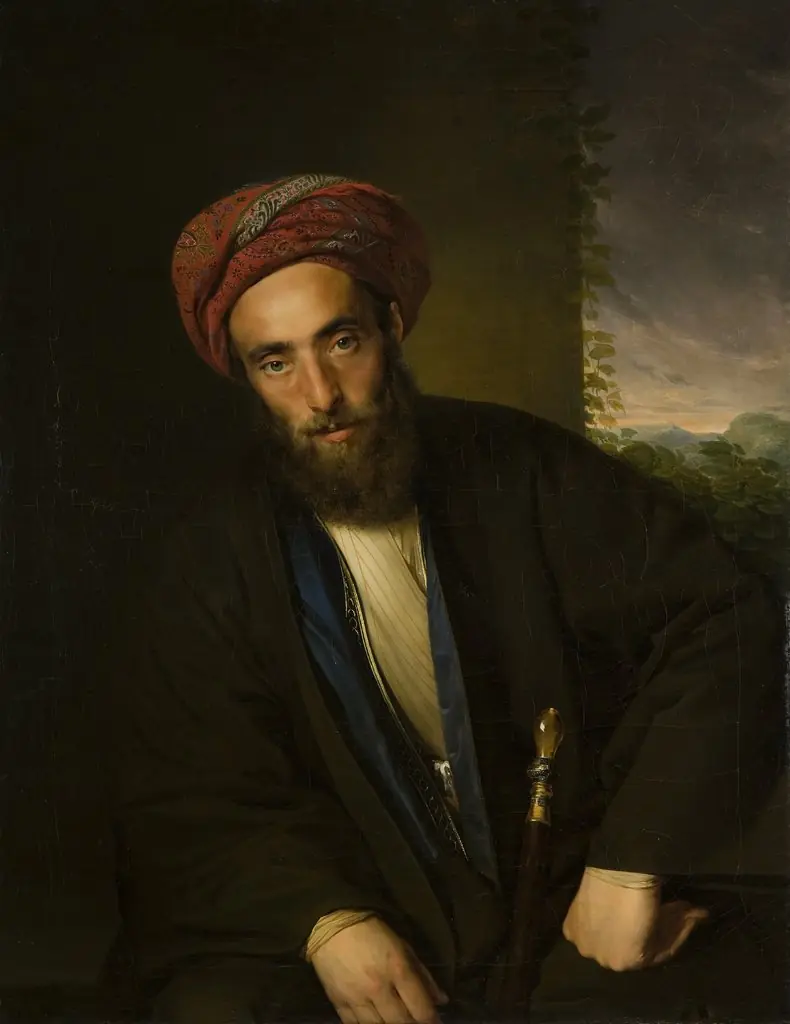 Seated Armenian
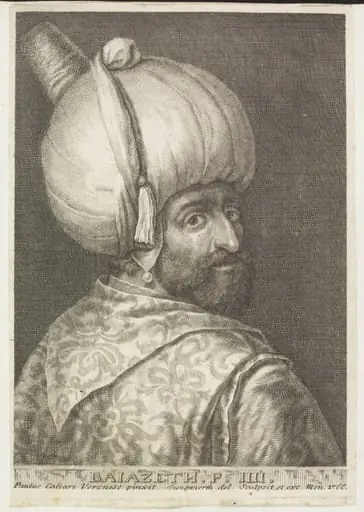 Turkish sultans, sultanas and other historical figures
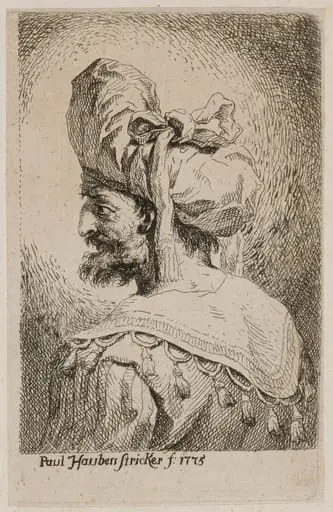 Oriental with a Soft Hat in Profile, Looking Left
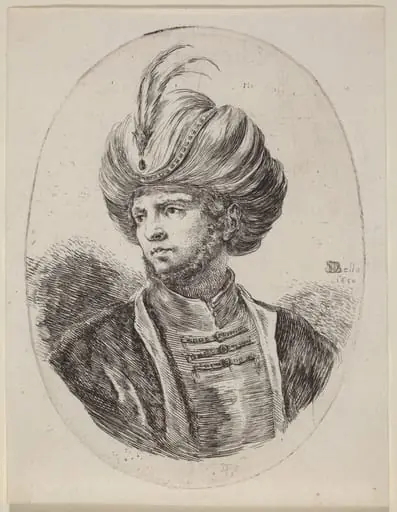 Young Moor with a Slight Beard and Feathered Turban, Turned to the Left
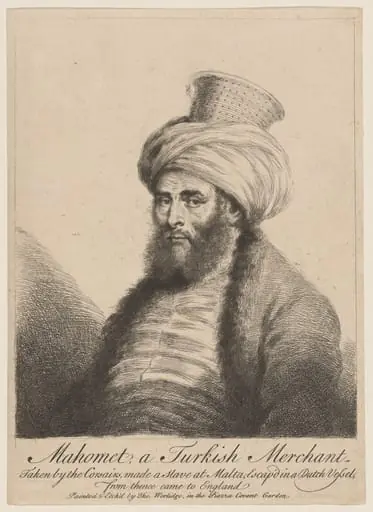 Mahomet, a Turkish Merchant
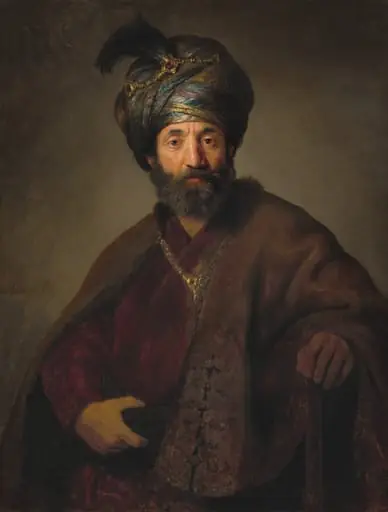 Man in Oriental Costume
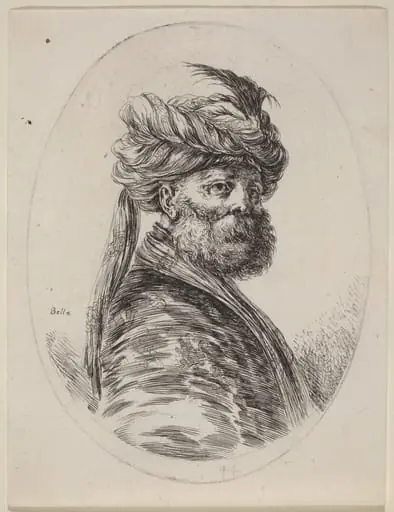 Bearded Moor in a Feathered Turban with a Veil, Turned to the Right
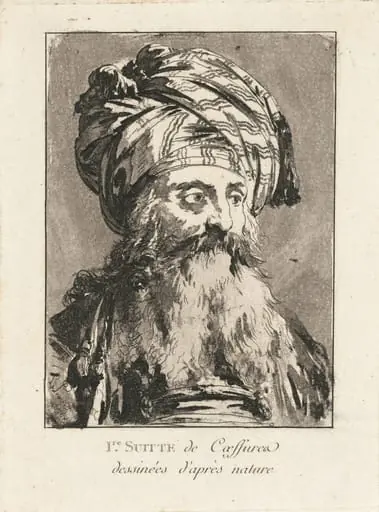 Head of a Turbaned Man
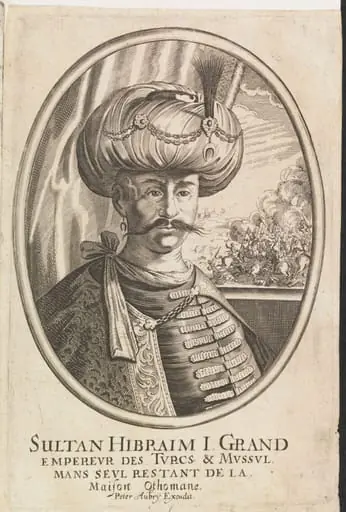 Turkish sultans, sultanas and other historical figures
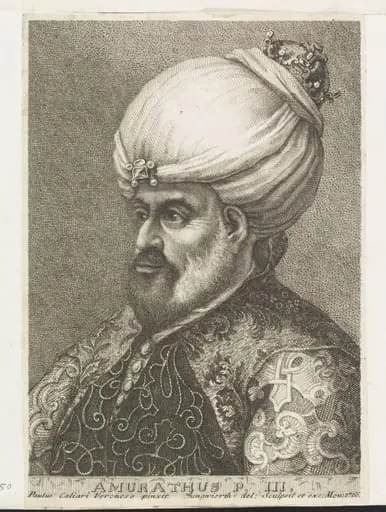 Turkish sultans, sultanas and other historical figures