Artwork
Portrait of a Young Woman (formerly seen as oval portrait of Oopjen Coppit)
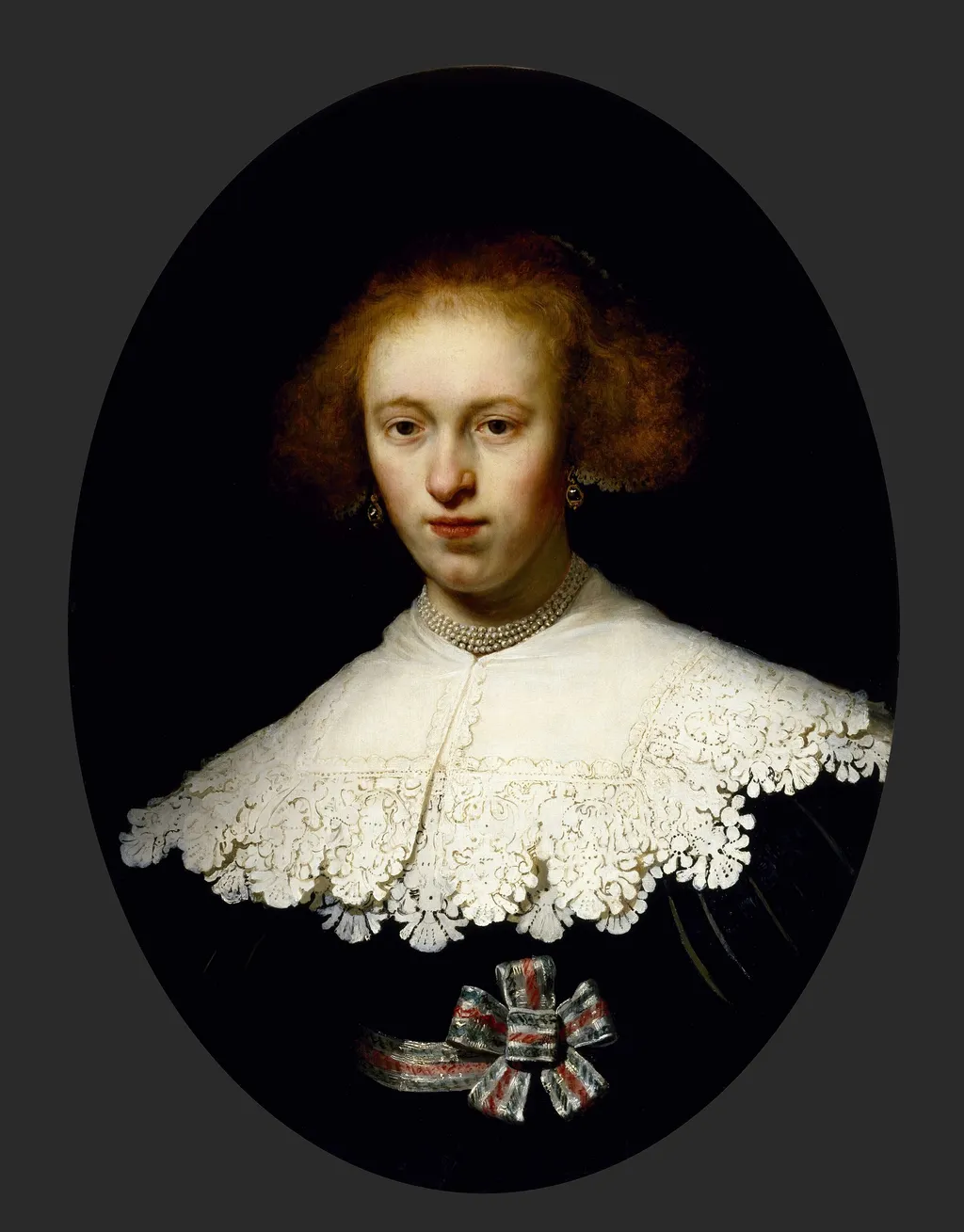
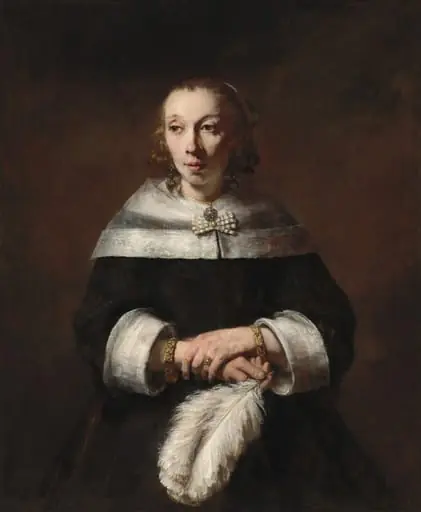
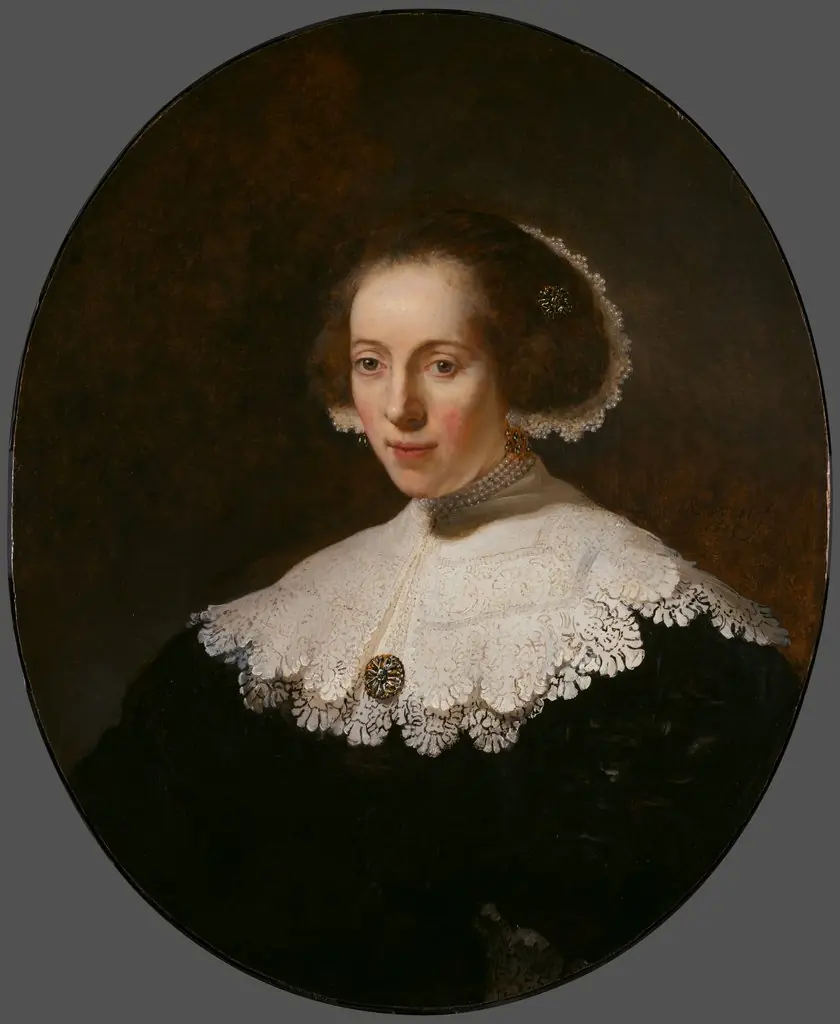
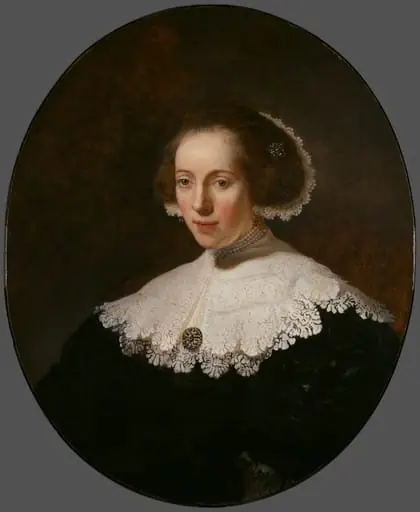
Portrait of a Young Woman (formerly seen as oval portrait of Oopjen Coppit) is an oil painting by the Dutch Golden Age artist Rembrandt. It dates from 1633 and is held in the collection of the Museum of Fine Arts, Houston.
About this work
Overview
The painting is held in the collection of the Museum of Fine Arts, Houston, where it stands as an example of Rembrandt’s early portraiture.
Painted in 1633 by Rembrandt van Rijn, this oil portrait captures a young woman with quiet presence. Created during the Dutch Golden Age, the work reflects the era’s emphasis on individuality and refined domestic life. Though once identified as Oopjen Coppit, current scholarship treats the subject as an unnamed figure. The painting is held in the collection of the Museum of Fine Arts, Houston, where it stands as an example of Rembrandt’s early portraiture.
Subject & Meaning
The sitter, dressed in dark fabric with a prominent bow at the hem, wears fine lace at the neck and pearl jewelry, signaling modest affluence. Her direct gaze and restrained expression convey dignity rather than theatricality. The absence of overt symbolism or narrative context suggests a focus on personal presence rather than social status. The portrait invites contemplation of the individual, not the role she occupies in society.
Technique & Style
Rembrandt employs thick, textured brushwork to render the lace collar and fabric bow, contrasting with smoother areas of skin and shadow. The dark background isolates the figure, drawing attention to subtle variations in tone and texture. Light falls gently across her face and upper torso, modeling form without harsh highlights. His handling of materials—pearls, lace, wool—demonstrates close observation and a tactile sensitivity to surface.
History & Provenance
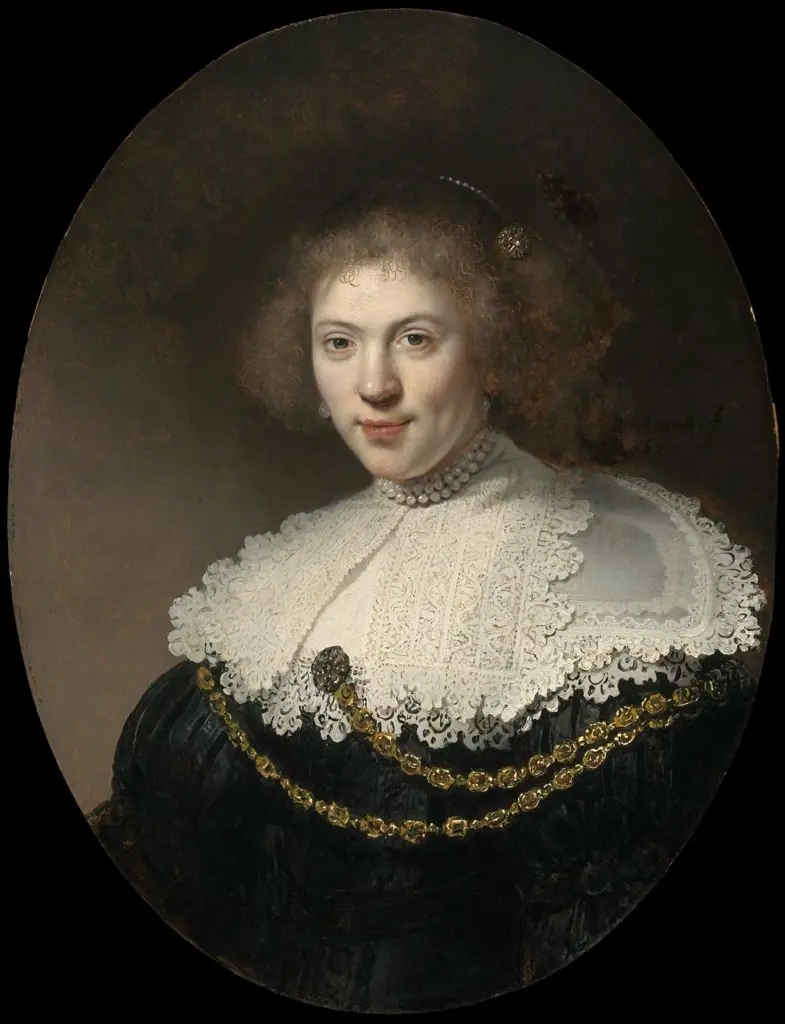
The painting was long attributed to Oopjen Coppit, a known subject of Rembrandt’s, but later research cast doubt on this identification. Its ownership history before entering the Museum of Fine Arts, Houston, remains partially undocumented. It has been consistently recognized as an authentic Rembrandt from the early 1630s, though its original commission and early collectors are not fully established.
Context
In 1630s Amsterdam, portraiture flourished among the merchant class seeking to record personal identity. Rembrandt distinguished himself by emphasizing psychological depth over mere likeness. This work aligns with a trend toward intimate, unadorned depictions of individuals, reflecting broader cultural values of self-possession and quiet refinement in Dutch urban life.
Legacy
Though not among Rembrandt’s most widely reproduced works, this portrait exemplifies his evolving approach to character study in portraiture. Its restrained elegance and technical precision influenced later generations of Dutch painters. Today, it contributes to scholarly understanding of how ordinary individuals were rendered with dignity during a period of artistic innovation.
Artist & collection
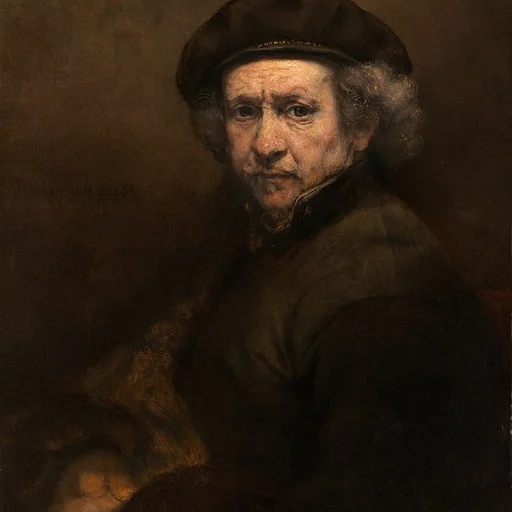
Artist
Rembrandt Harmenszoon van Rijn (15 July 1606 – 4 October 1669), known mononymously as Rembrandt, was a Dutch Golden Age painter, printmaker, and draughtsman.