Artwork
Portrait of an Old Man
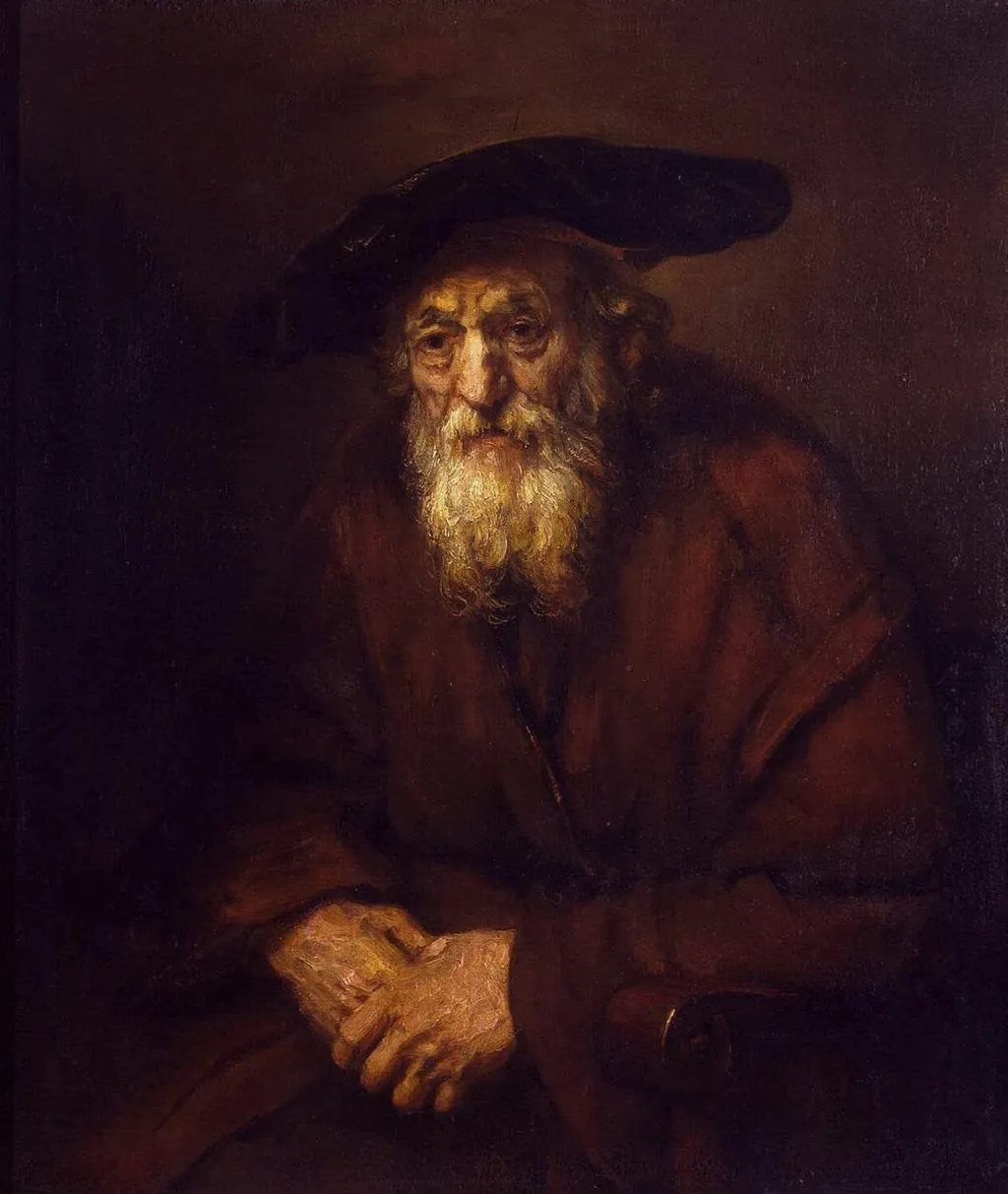
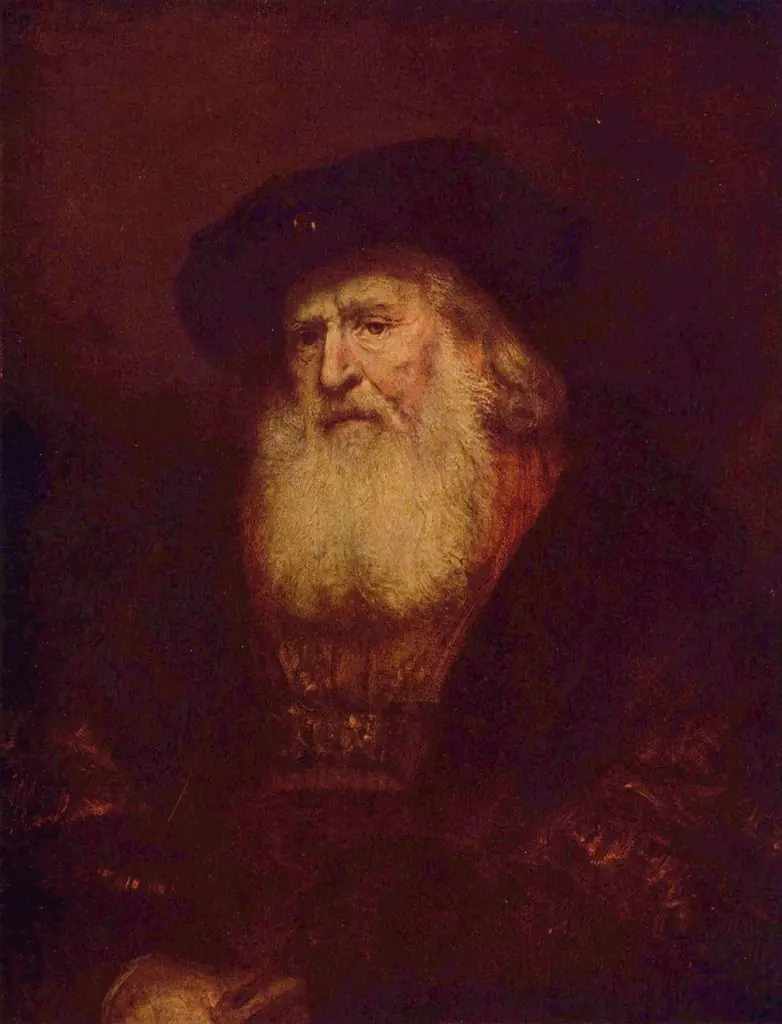
Portrait of an Old Man is an oil painting by the Dutch Golden Age artist Rembrandt. It dates from 1654 and is held in the collection of the Hermitage Museum.
About this work
Overview
It resides in the State Hermitage Museum’s collection, among other works from his prolific career, which included hundreds of paintings and etchings.
Painted in 1654, this oil portrait by Rembrandt van Rijn captures an elderly man with quiet intensity. Executed during the height of the Dutch Golden Age, the work reflects Rembrandt’s sustained focus on human character through portraiture. It resides in the State Hermitage Museum’s collection, among other works from his prolific career, which included hundreds of paintings and etchings. The painting’s subdued palette and intimate scale emphasize its psychological depth over grandeur.
Subject & Meaning
The subject is an aging man with a long white beard and mustache, dressed in a dark robe and black hat. His gaze, directed beyond the frame, suggests contemplation or inner reflection. No identity is recorded, and the absence of symbols or context invites interpretation as a study of time, dignity, or solitude. Rembrandt treats the man not as a noble figure but as a person shaped by lived experience, rendering him with unembellished humanity.
Technique & Style
Rembrandt employed chiaroscuro to model the face with subtle gradations of light and shadow, enhancing the texture of skin, beard, and fabric. Thick impasto highlights the forehead and cheekbones, while the background recedes into near-black neutrality, isolating the figure. Brushwork varies from fine detailing around the eyes to looser strokes in the robe, creating a dynamic tension between precision and spontaneity that deepens the portrait’s realism.
History & Provenance
The painting entered the Hermitage Museum’s collection in the 18th century, likely acquired during Catherine the Great’s expansion of imperial art holdings. Its attribution to Rembrandt has been consistently upheld by scholars, though its original commission or owner remains undocumented. Unlike many portraits of the period, it lacks inscriptions or heraldic markers, suggesting it may have been a private study rather than a commissioned piece.
Context
Created during Rembrandt’s later years, the portrait aligns with a shift in his work toward introspective, less formal subjects. While Amsterdam’s wealthy patrons often commissioned grand portraits, Rembrandt increasingly turned to unidealized individuals—often unnamed—exploring emotional resonance over social status. This piece reflects broader Dutch artistic trends valuing realism and psychological nuance over aristocratic display.
Legacy
The portrait endures as a quiet exemplar of Rembrandt’s ability to convey inner life through minimal means. It influenced later artists drawn to psychological portraiture and the expressive potential of light and texture. Though not widely reproduced in popular culture, it remains a touchstone in academic studies of 17th-century Dutch painting for its restraint and emotional clarity.
Artist & collection
Artist
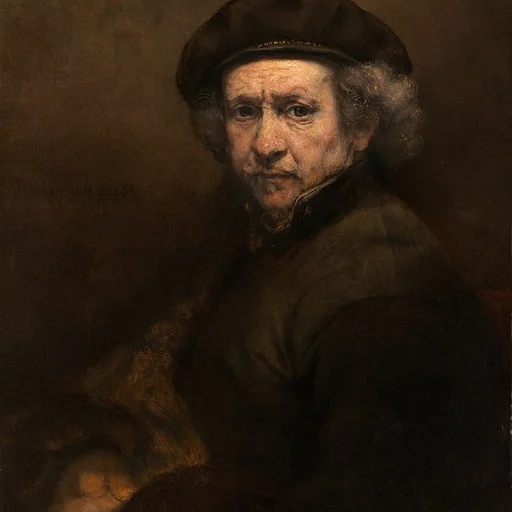
Rembrandt Harmenszoon van Rijn (15 July 1606 – 4 October 1669), known mononymously as Rembrandt, was a Dutch Golden Age painter, printmaker, and draughtsman.

 Portrait of a Bearded Old Man
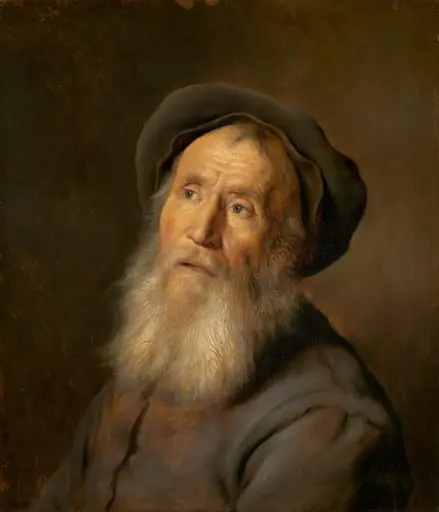 Bearded Man with a Beret
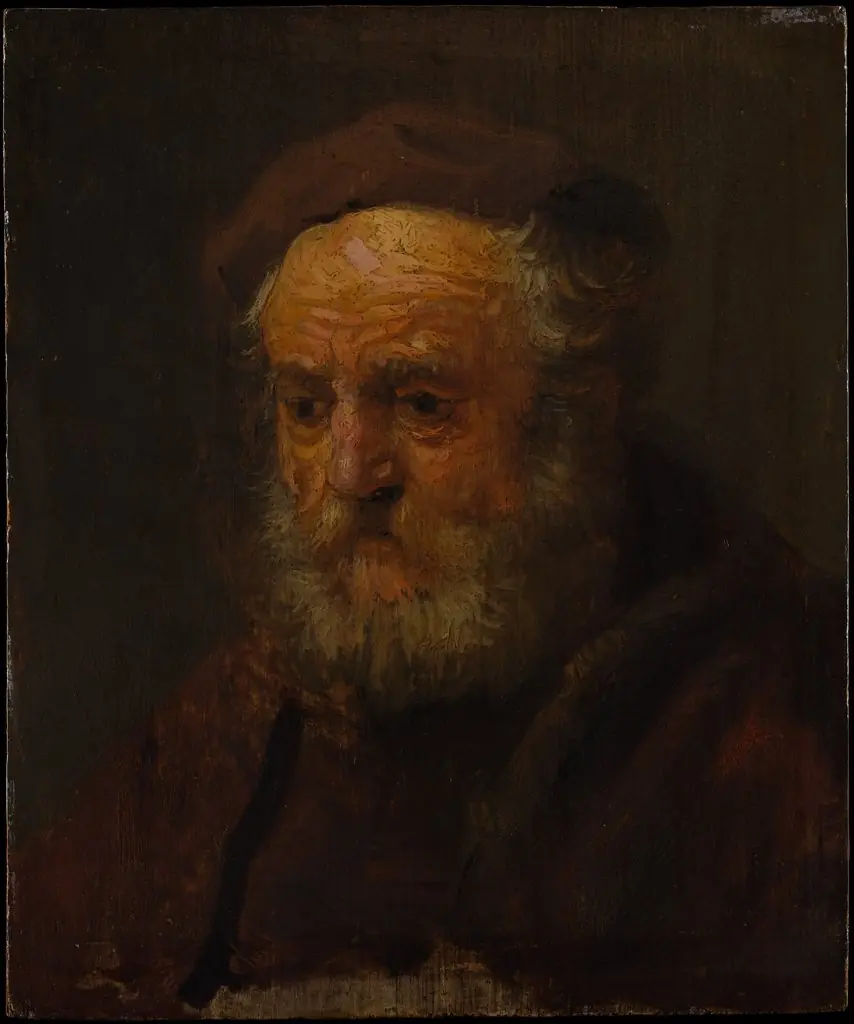 Study Head of an Old Man
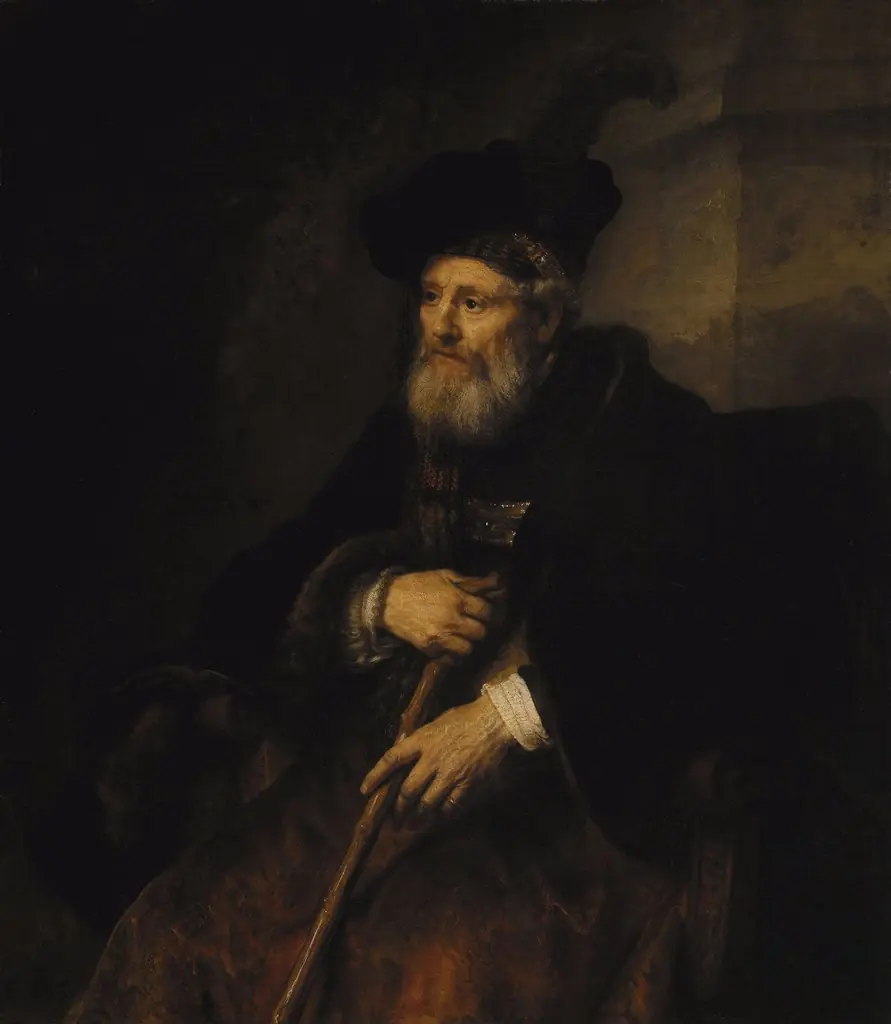 Seated old man with a cane in fanciful costume
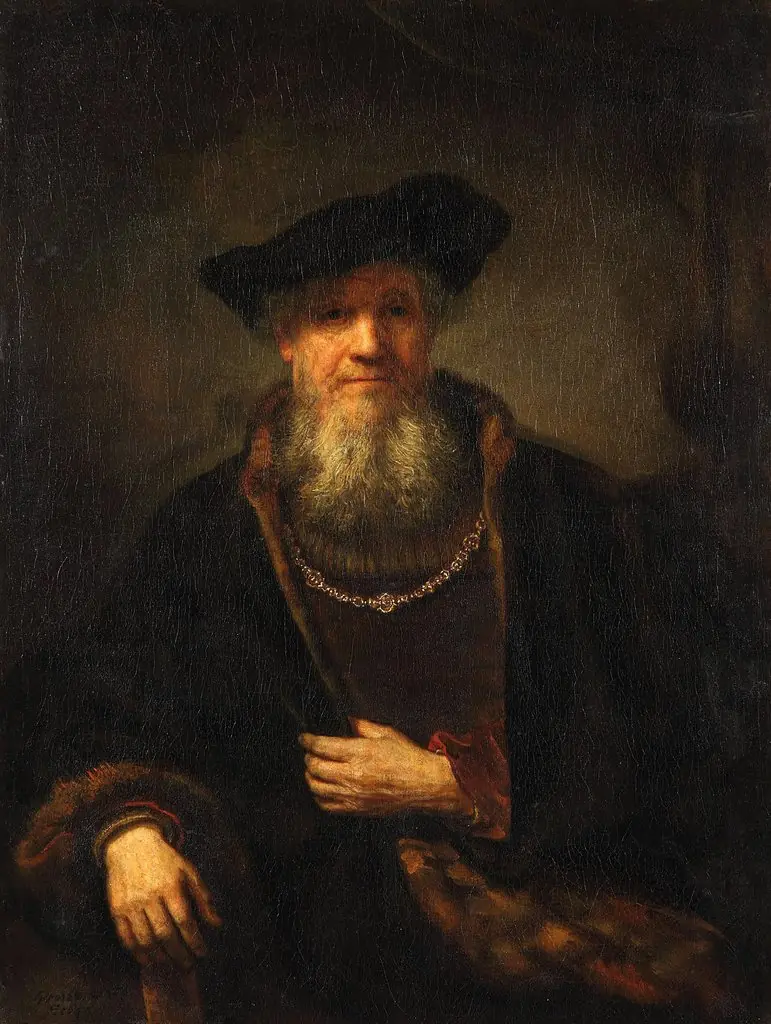 Old Man with Fur Coat
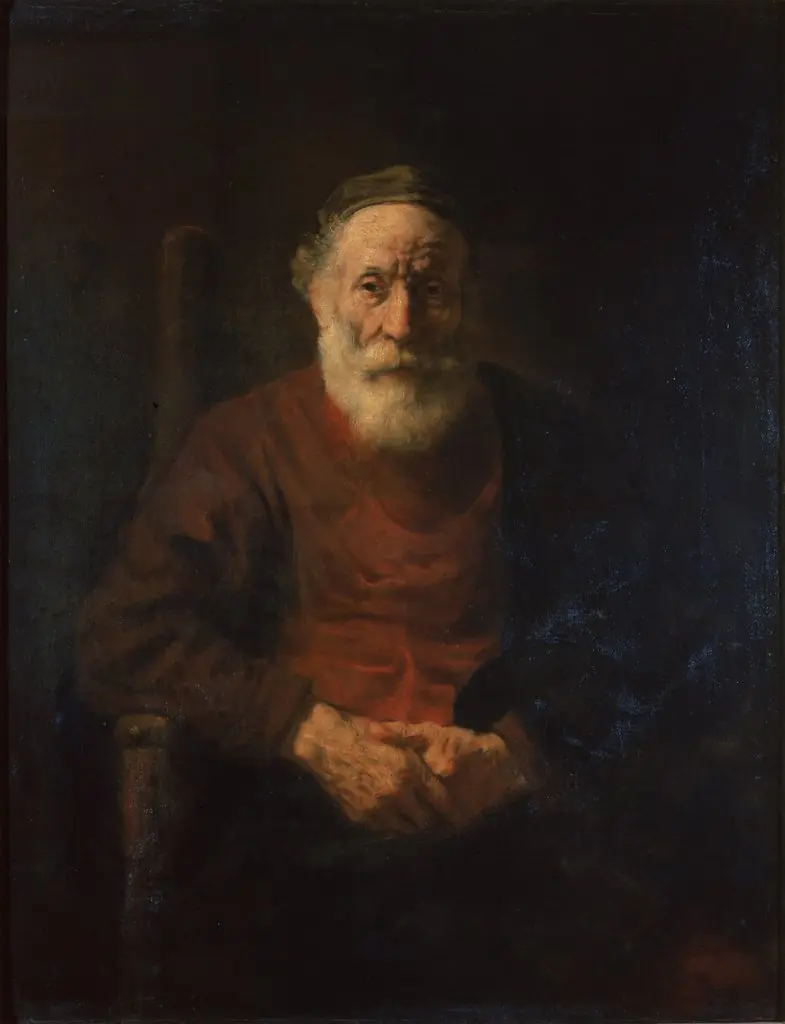 Portrait of an Old Man in Red by Rembrandt
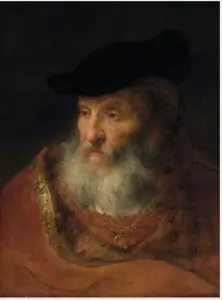 Head of an Old Man
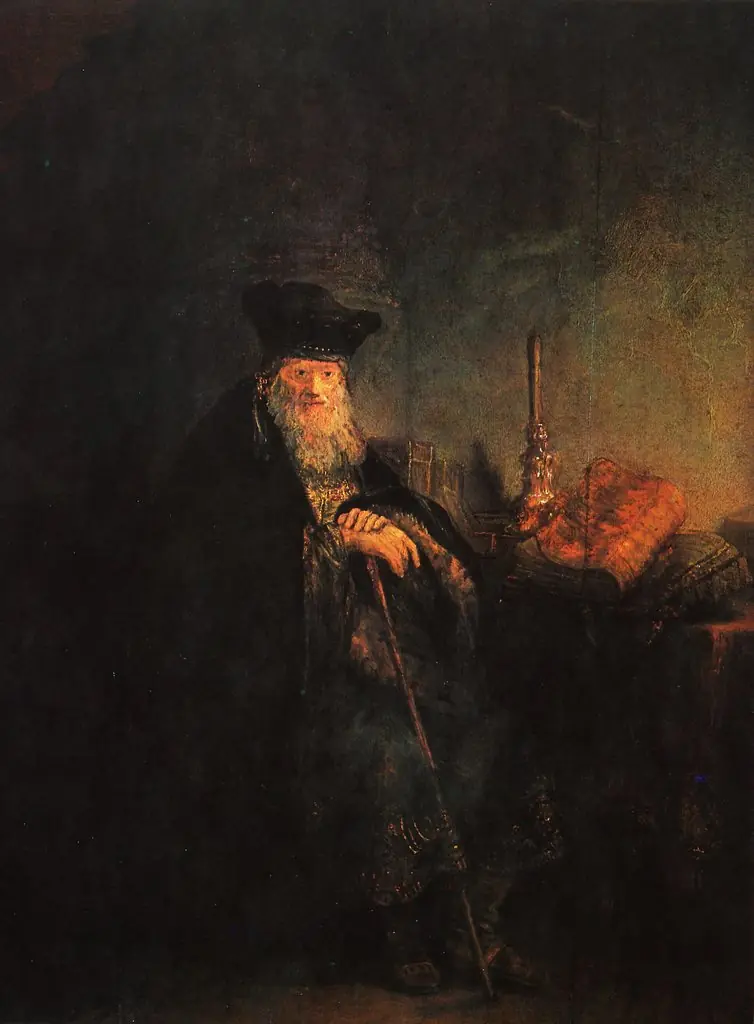 Old scholar in a study
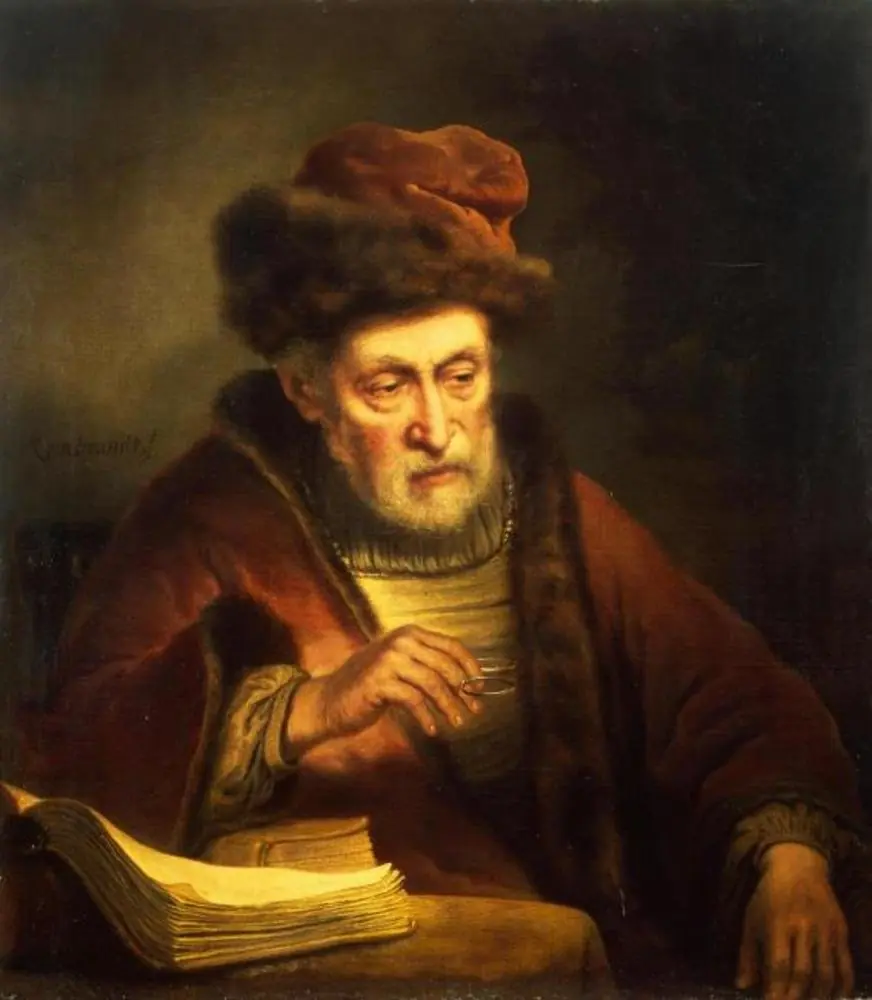 Old Man holding a Pair of Spectacles
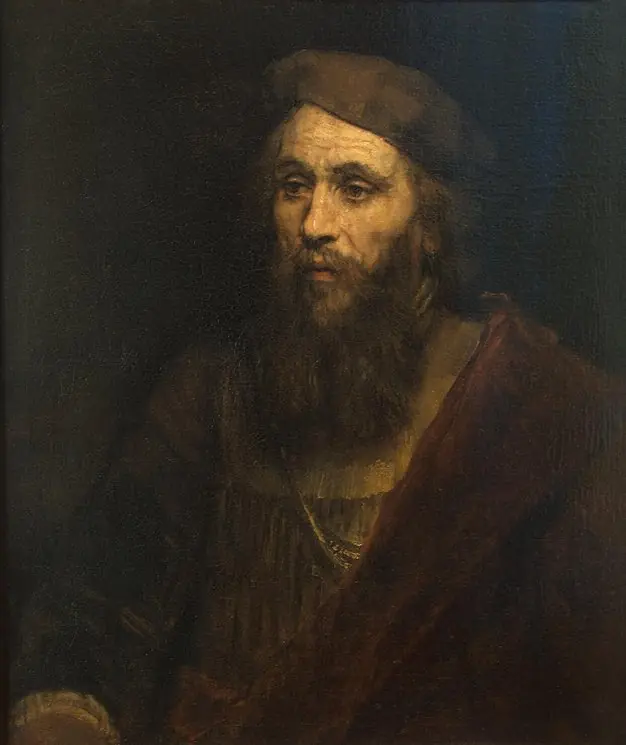 Half-length figure of a man with beard and beret