Artwork
The Laughing Man
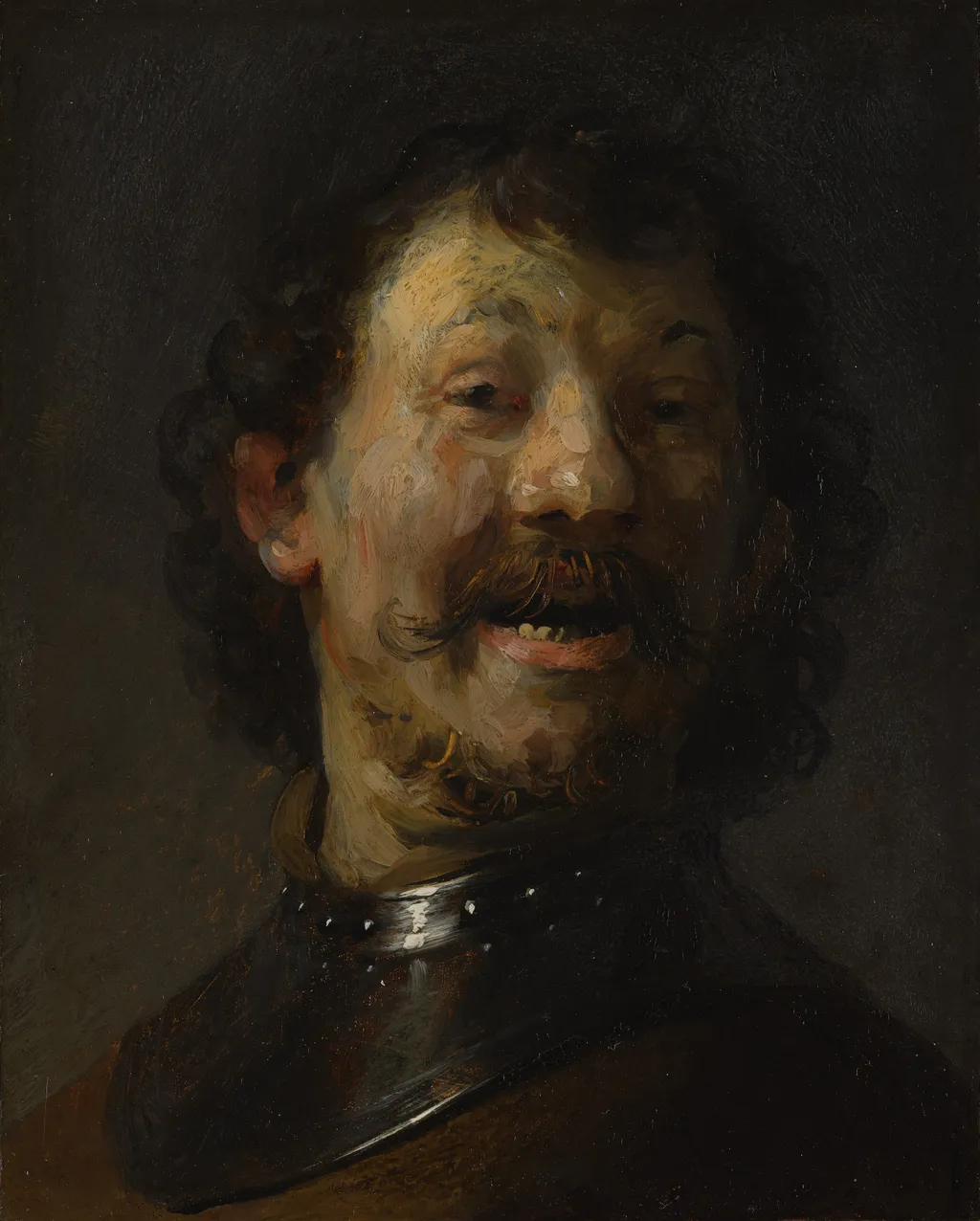
The Laughing Man is an oil painting by the Dutch Golden Age artist Rembrandt. It dates from 1629 and is held in the collection of the Mauritshuis.
About this work
Overview
The Laughing Man is a 1629 copper painting by Rembrandt van Rijn, a prominent Dutch Golden Age artist. The work is a close-up portrait of a laughing man with distinctive facial hair, set against a dark background, currently held in the Mauritshuis collection.
Subject & Meaning
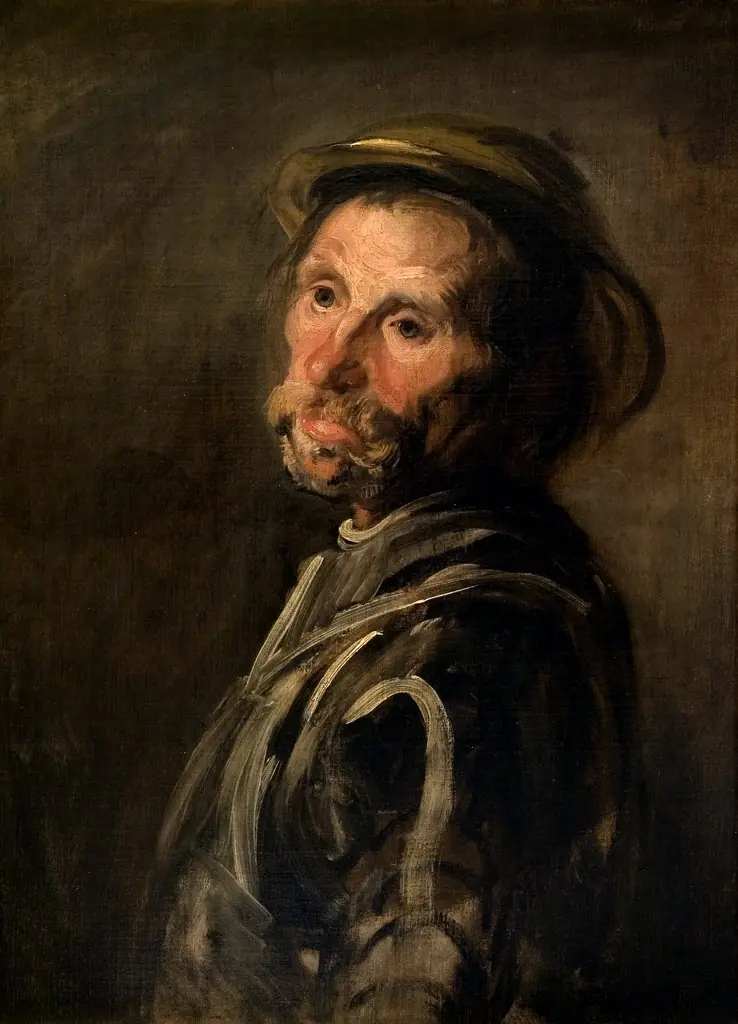
The subject, a man with a brown hair, goatee, gorget, and handlebar moustache, is captured in a moment of laughter. His rough, textured face and visible teeth convey intense emotion, though the painting's deeper meaning or the subject's identity remain unspecified.
Technique & Style
Rembrandt employed thick, uneven brushstrokes to create a gritty skin texture. The painting utilizes chiaroscuro, with focused lighting on the subject's face and deep shadows in the background, enhancing the emotional intensity of the laughter.
History & Provenance
Created in 1629, The Laughing Man is part of Rembrandt's early output. Its provenance is well-documented from its creation until its current residence in the Mauritshuis collection, though specific owners before the museum are not detailed here.
Context
As a work from the Dutch Golden Age, The Laughing Man reflects Rembrandt's experimentation with capturing human emotion through innovative lighting and texture techniques, characteristic of the period's artistic innovations.
Legacy
While not extensively detailed here, The Laughing Man contributes to Rembrandt's legacy of expressive, emotionally charged portraits, influencing subsequent artists in the use of chiaroscuro and textured brushwork to convey depth and feeling.
Own this work as a print
Artist & collection
Artist
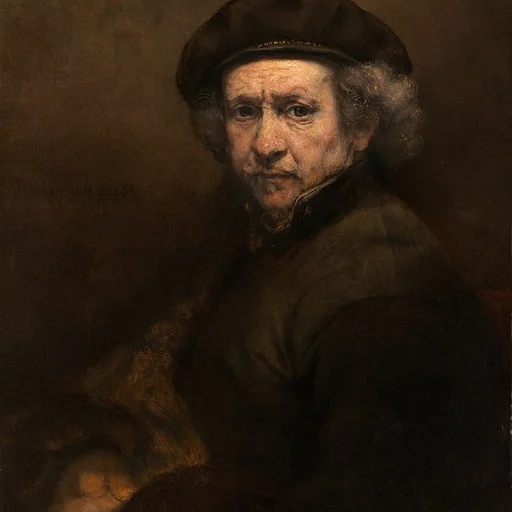
Rembrandt Harmenszoon van Rijn (15 July 1606 – 4 October 1669), known mononymously as Rembrandt, was a Dutch Golden Age painter, printmaker, and draughtsman.