Artwork
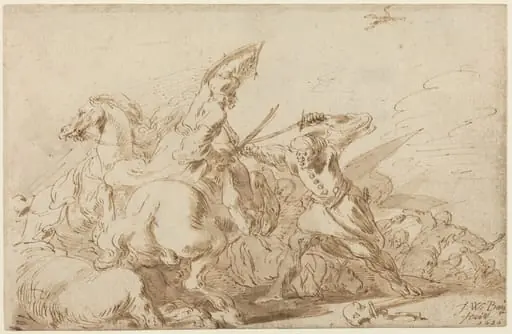
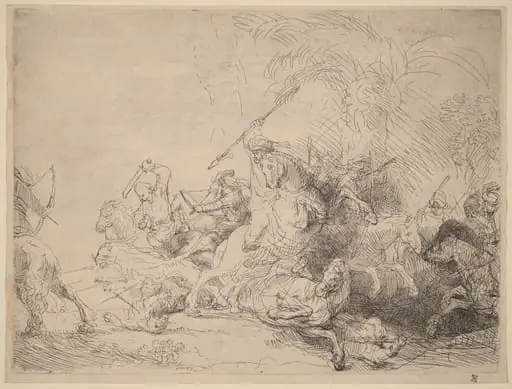
A Cavalry Fight
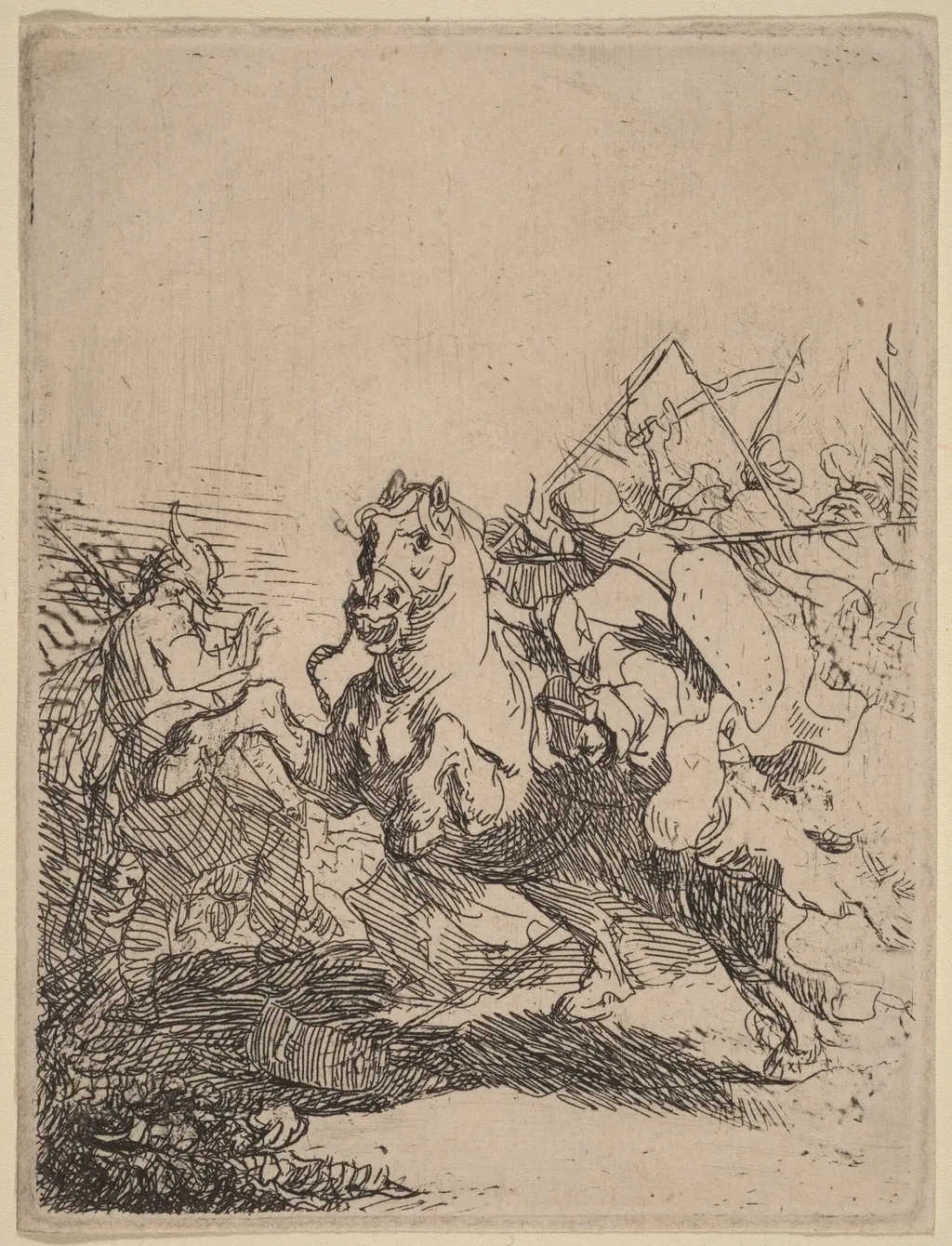
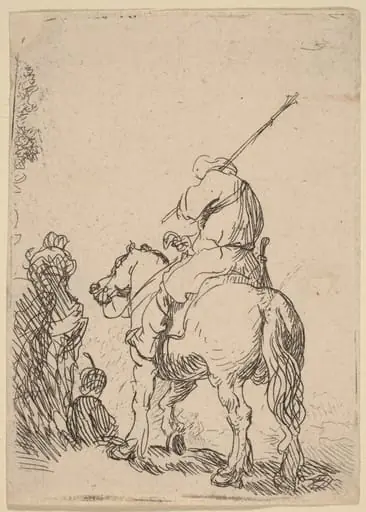
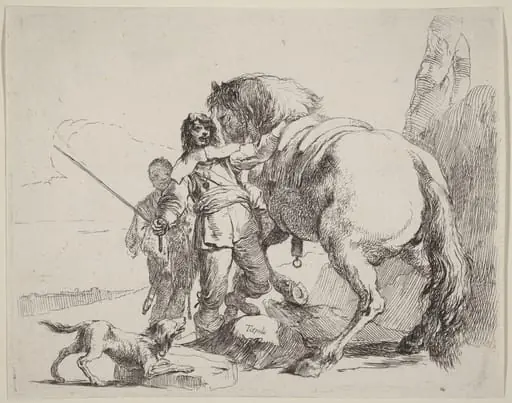
A Cavalry Fight is an ink print by the Baroque artist Rembrandt. It dates from 1632 and is held in the collection of the National Gallery of Art.
About this work
He used a needle to scratch lines into a copper plate, then inked it so the grooves would hold the color.
You see horses rearing, swords swinging, and soldiers tumbling in a tight knot of chaos. Dust and smoke blur the edges, but every face is sharp—fear, fury, or focus.
Rembrandt made this tiny print in 1632, right after he moved to Amsterdam. He used a needle to scratch lines into a copper plate, then inked it so the grooves would hold the color. The darkest shadows come from lines so close they almost touch, a trick called drypoint that wears out fast—most early prints like this are lighter than later ones.
To see how he built drama with just lines, look up etching.
Overview
Created around 1632, A Cavalry Fight is a small etching by Rembrandt van Rijn, made shortly after his move to Amsterdam. The print captures a moment of violent confusion among mounted soldiers, rendered entirely through incised lines on copper. Despite its modest size, the composition conveys intense motion and emotional turbulence, demonstrating Rembrandt’s early mastery of printmaking as a narrative medium.
Subject & Meaning
The scene depicts a chaotic clash between cavalrymen, with horses rearing, blades flashing, and figures collapsing in close proximity. No clear side is identified, emphasizing the universal brutality of combat. Faces are rendered with acute detail, revealing individual expressions of fear, aggression, or concentration—transforming the melee into a psychological study rather than a historical record.
Technique & Style
Rembrandt used drypoint to scratch lines directly into a copper plate, creating rich, velvety blacks through burrs that hold ink. The densest shadows arise from tightly packed strokes, a technique that degrades quickly with printing, making early impressions darker and more dramatic. Fine etched lines define form and movement, while the absence of tone or wash relies entirely on line weight and density to suggest depth and atmosphere.
History & Provenance
The print was produced in 1632, during Rembrandt’s formative years in Amsterdam, when he was rapidly developing his graphic style. Few early impressions survive, as the soft copper plate wore down after only a few dozen prints. Later impressions show faded contrasts, confirming the rarity and value of the first states. The work was likely circulated among collectors and fellow artists as a study in expressive force.
Context
In early 1630s Amsterdam, demand for prints as affordable art was rising. Rembrandt, newly established in the city, turned to etching to reach a broader audience beyond commissioned portraits. This print reflects his interest in dynamic historical and military scenes, influenced by contemporary prints and his own observations of urban life, even as he pushed beyond conventional storytelling into emotional immediacy.
Legacy
A Cavalry Fight exemplifies Rembrandt’s innovative use of etching to convey psychological intensity through line alone. It influenced generations of printmakers who sought to capture motion and emotion without color or shading. The work remains a key reference for understanding how a single medium, when pushed to its expressive limits, can convey the chaos of human conflict with startling clarity.
Artist & collection
Artist
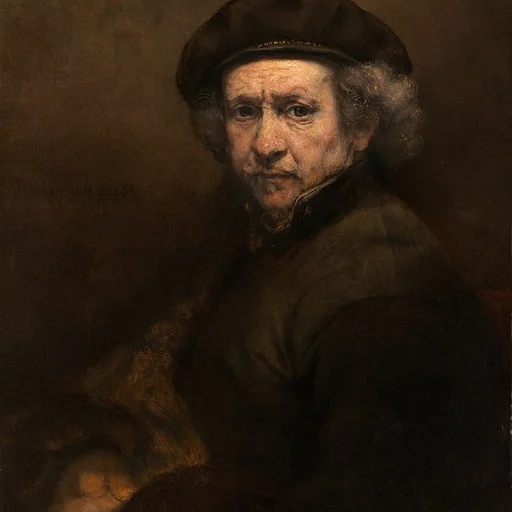
Rembrandt Harmenszoon van Rijn (15 July 1606 – 4 October 1669), known mononymously as Rembrandt, was a Dutch Golden Age painter, printmaker, and draughtsman.