Artwork
Arab Horseman at the Gallop
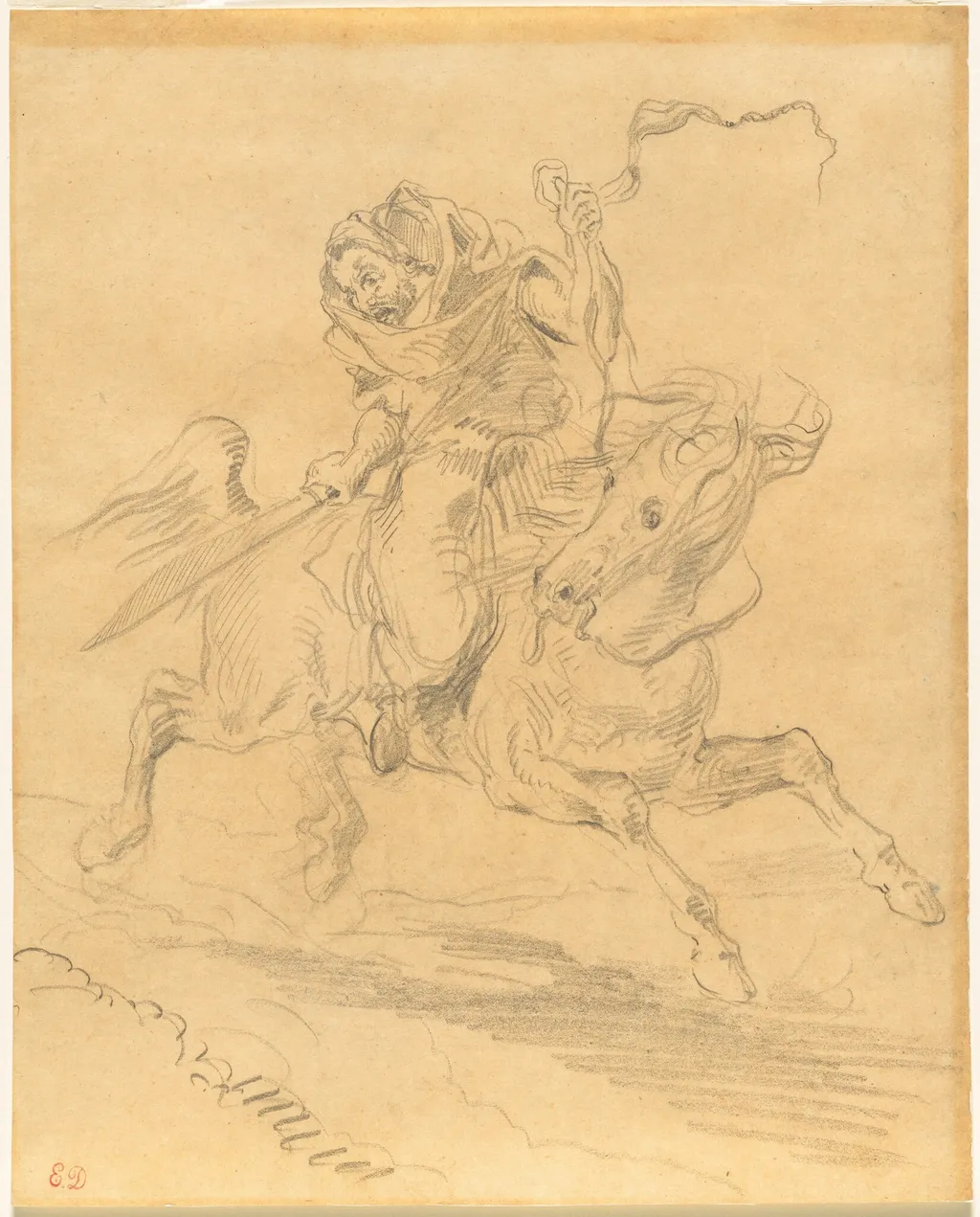
Arab Horseman at the Gallop is a graphite drawing by the Romanticist artist Eugène Delacroix. It dates from 1849 and is held in the collection of the National Gallery of Art.
About this work
Overview
Created in 1849, *Arab Horseman at the Gallop* is a graphite drawing on tracing paper by Eugène Delacroix, a central figure of French Romanticism. The work is part of the National Gallery of Art’s collection in Washington, D.C., and exemplifies Delacroix’s fascination with motion and dramatic narrative.
Subject & Meaning
The composition captures a rider and his horse at the peak of a gallop, emphasizing the tension of the animal’s muscles and the rider’s low, forward‑leaning posture. The sketch conveys a sense of urgency and kinetic energy, reflecting the Romantic preoccupation with intense, fleeting moments.
Technique & Style
Executed with loose, gestural graphite lines, the drawing prioritises the impression of speed over precise detail. The horse’s flared wings and the rider’s billowing cloak are suggested through swift strokes, while the background consists of only a few undulating marks, reinforcing the focus on movement.
History & Provenance
Delacroix produced the piece during a period when he drew inspiration from the dynamism of Rubens and the coloristic vigor of the Venetian Renaissance, though the work itself is monochrome. After remaining in private hands, it entered the National Gallery of Art’s holdings, where it is displayed as part of the museum’s Romantic-era drawing collection.
Own this work as a print
Artist & collection
Artist
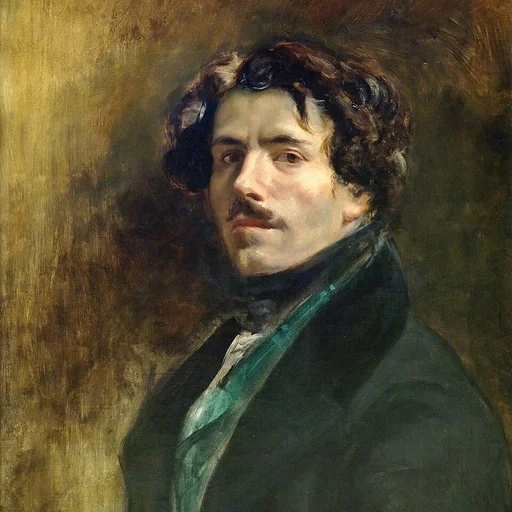
Ferdinand Victor Eugène Delacroix ( DEL-ə-krwah, -KRWAH; French: ; 26 April 1798 – 13 August 1863) was a French Romantic artist who was regarded as the leader of the French Romantic school.

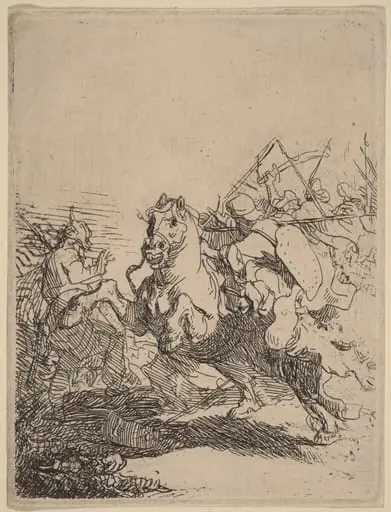 A Cavalry Fight
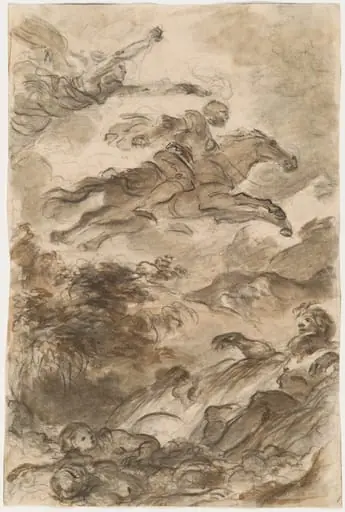 Rinaldo, Astride Baiardo, Flies Off in Pursuit of Angelica
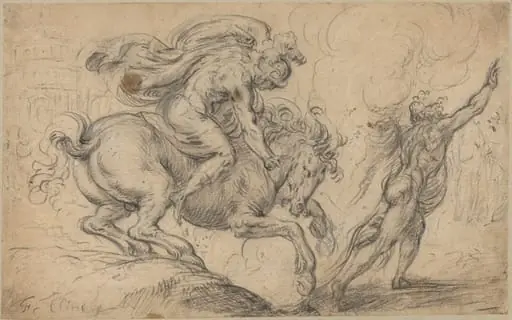 The Sacrifice of Marcus Curtius
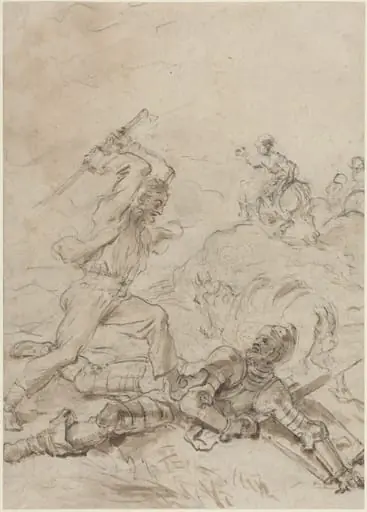 The Muleteer Attacking Don Quixote as He Lies Helpless on the Ground
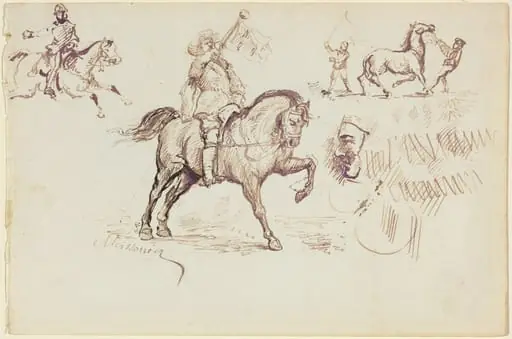 The Herald of Murcia and Other Studies (recto)
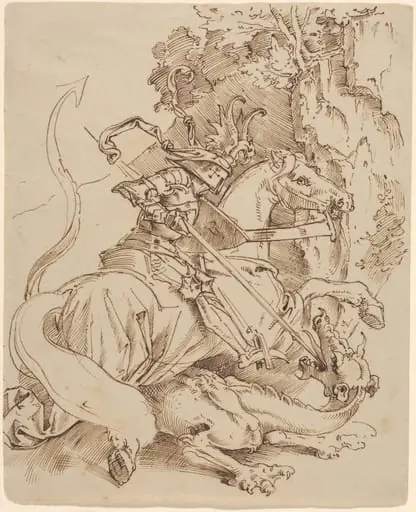 Saint George and the Dragon
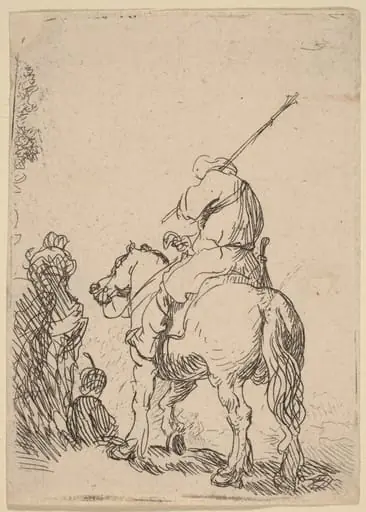 Turbaned Soldier on Horseback
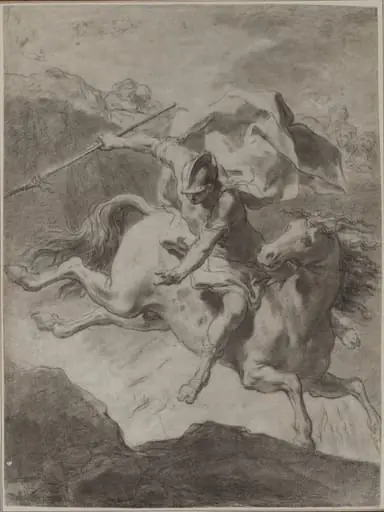 Death of Marcus Curtius
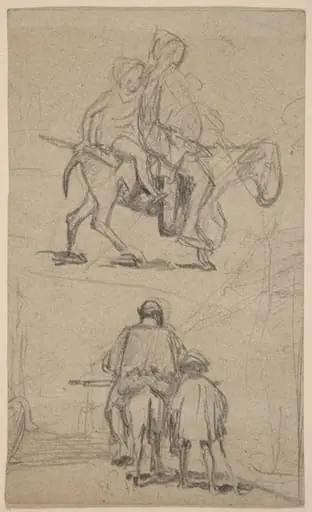 Father, Son, and Donkey
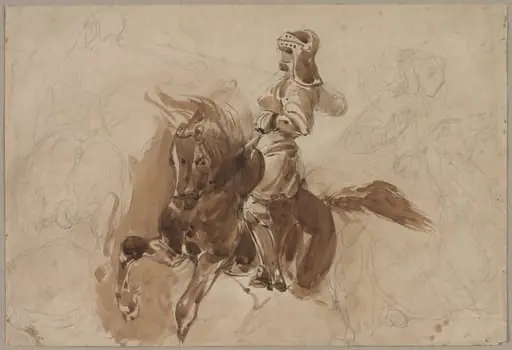 Armored Figure on Horseback (recto)
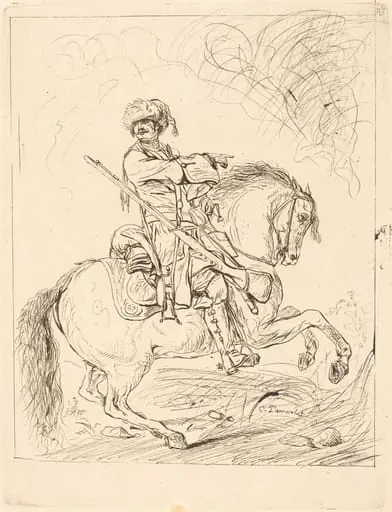 A Dragoon on Horseback
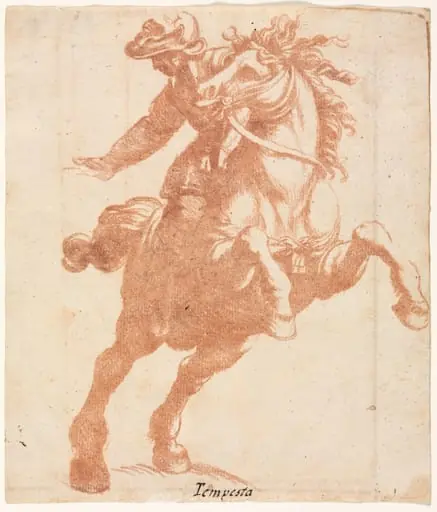 Rearing Horse and Rider