Artwork
Adam and Eve
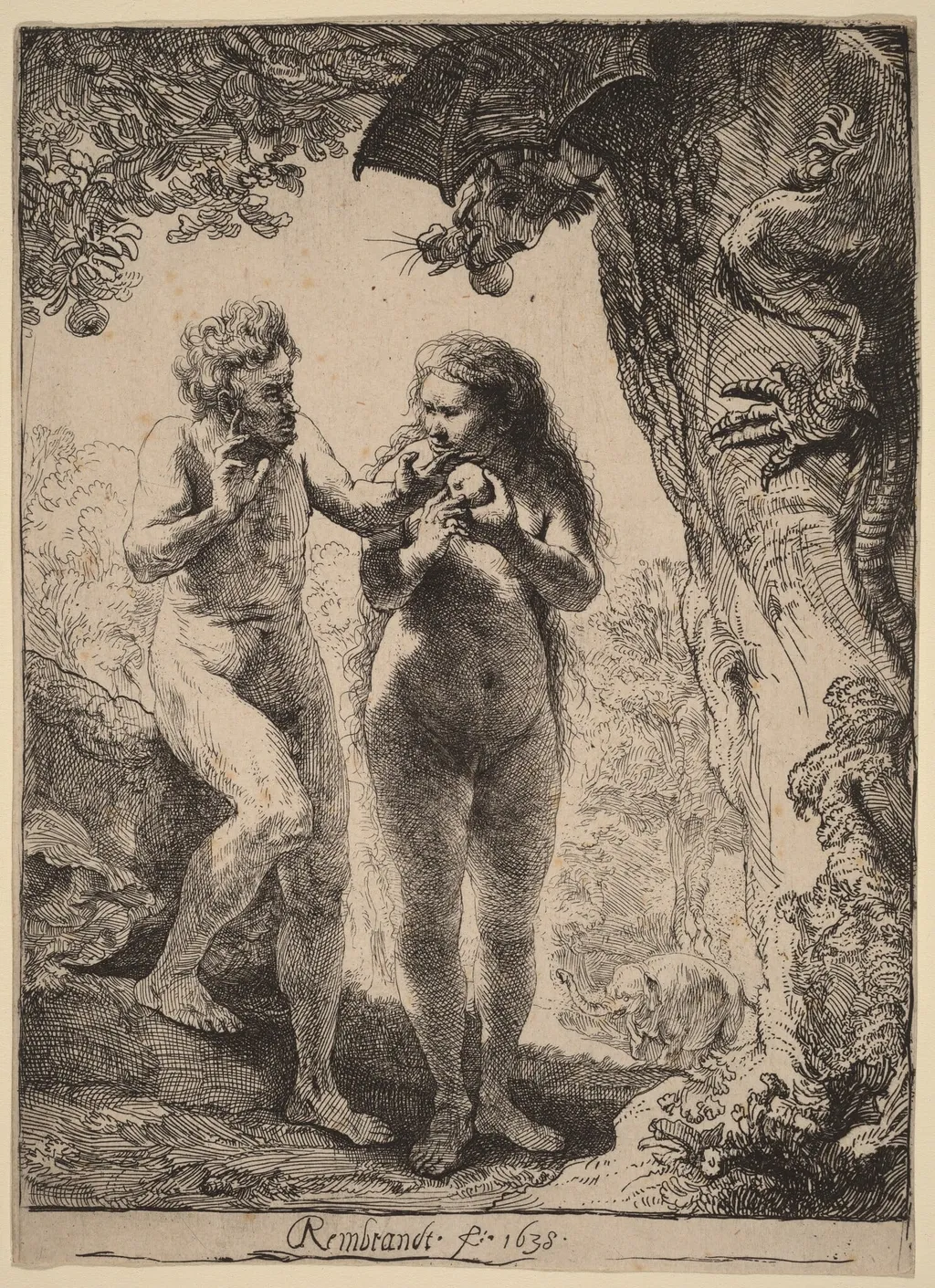
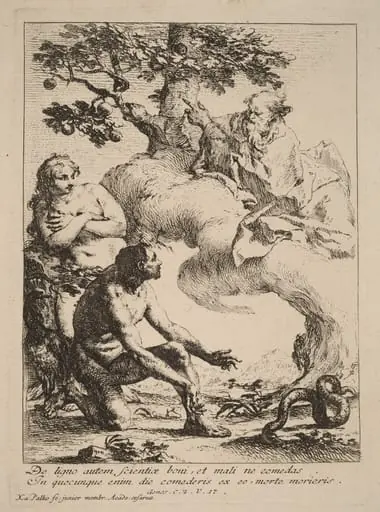
Adam and Eve is an ink print by the Baroque artist Rembrandt. It dates from 1638 and is held in the collection of the National Gallery of Art.
About this work
Overview
Rembrandt’s 1638 etching titled “Adam and Eve” presents the biblical pair in a tranquil outdoor setting. Executed as a monochrome print, the work measures the artist’s mature handling of line and tone, offering a contemplative glimpse of the first humans within a natural landscape.
Subject & Meaning
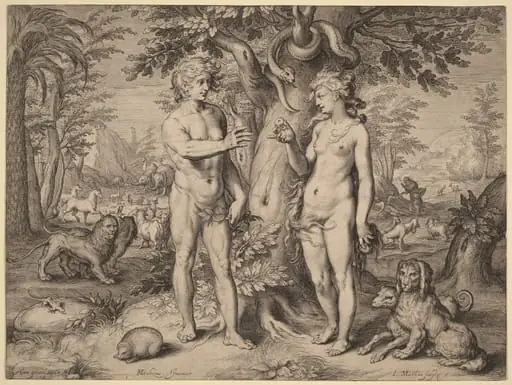
The composition places Adam on the left and Eve on the right, their bodies relaxed and closely aligned, suggesting intimacy and mutual awareness. A small dog rests at their feet, a subtle symbol of loyalty. The surrounding foliage and trees frame the figures, emphasizing their connection to the created world before the fall.
Technique & Style
Rembrandt employs bold, sweeping lines characteristic of his etching practice, while varied hatching creates a rich tonal spectrum from light grays to deep shadows. The contrast of illuminated flesh against darker foliage generates a palpable sense of volume, and the textured marks lend the scene a dramatic, expressive quality.
History & Provenance
The print was produced in 1638, during a prolific period for Rembrandt’s graphic work. Original impressions were likely pulled from a copper plate owned by the artist, and the etching has since entered several public and private collections, documented in early catalogues of Dutch printmaking.
Artist & collection
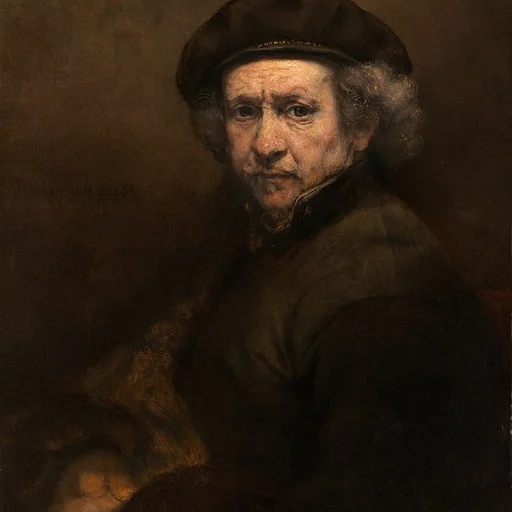
Artist
Rembrandt Harmenszoon van Rijn (15 July 1606 – 4 October 1669), known mononymously as Rembrandt, was a Dutch Golden Age painter, printmaker, and draughtsman.