Artwork
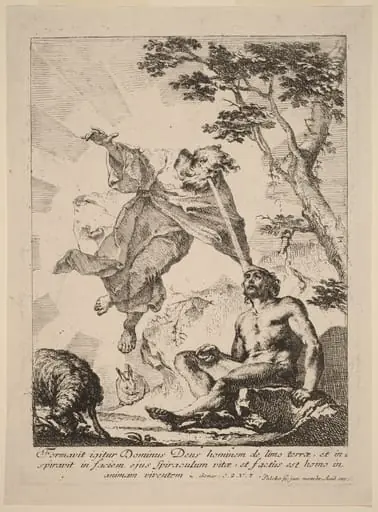
God Commanding Adam and Eve
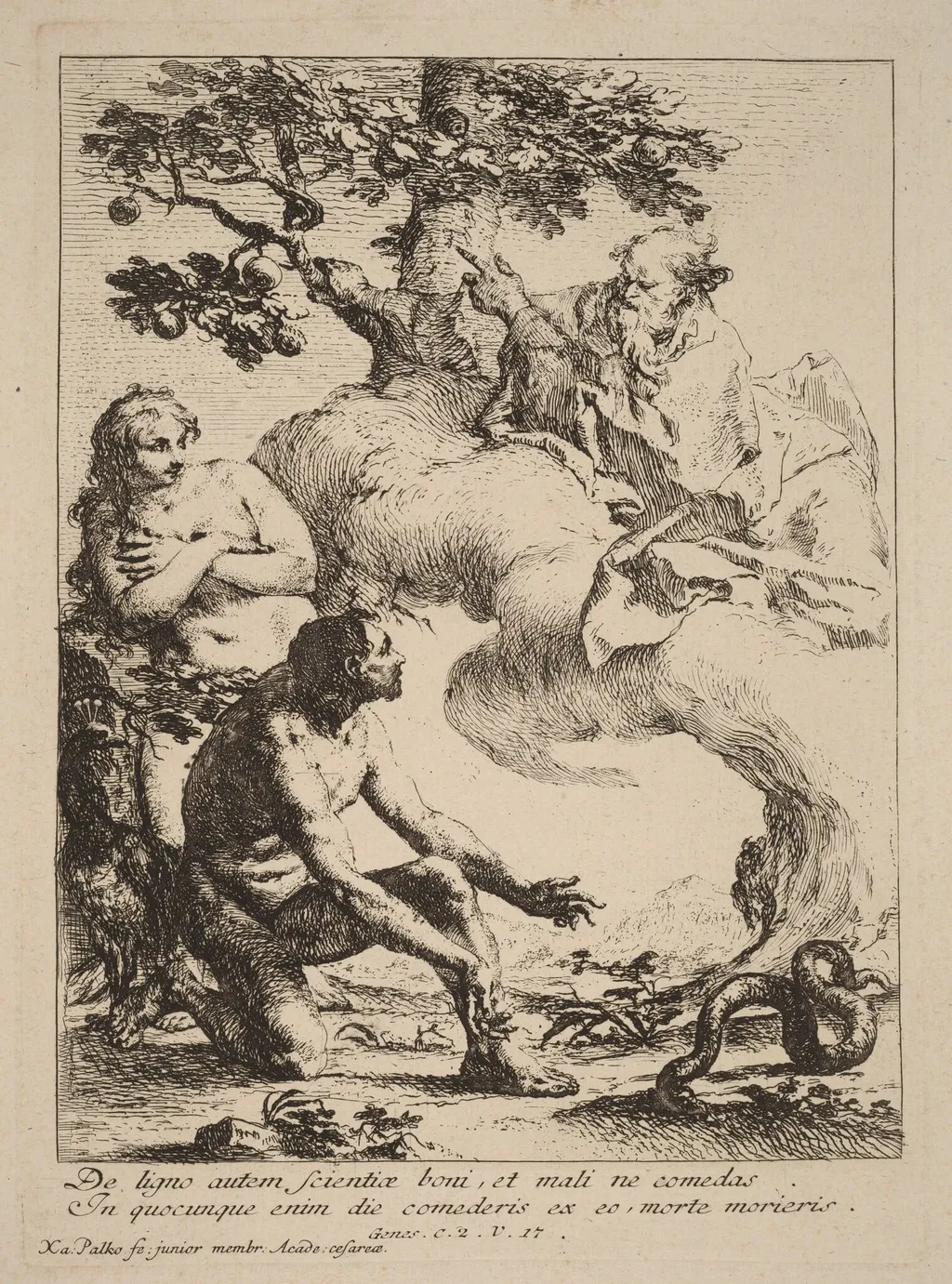
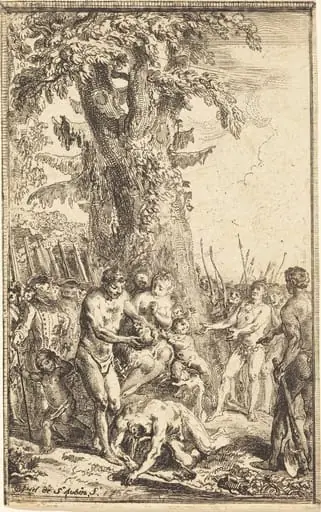
God Commanding Adam and Eve is an ink print by the Romanticist artist Franz Karl Palko. It dates from 1764 and is held in the collection of the National Gallery of Art.
About this work
Overview
Created around 1764, this etching on laid paper is attributed to the Austrian artist Franz Karl Palko. It presents a biblical tableau in which the divine figure addresses the first humans, set within a lush garden environment. The work is executed as a print, allowing multiple impressions of the scene.
Subject & Meaning
The composition depicts God, identifiable by his flowing hair, beard, and robe, confronting the nude figures of Adam and Eve. A serpent lies at their feet, reinforcing the narrative of the Genesis account and the moment of divine admonition.
Technique & Style
Palko employs fine line work and careful hatching to render textures of fabric, foliage, and flesh. Variations in shading generate a sense of depth, while the contrast between illuminated figures and darker background enhances the dramatic tension typical of late‑Baroque printmaking.
Context
The piece emerges in the mid‑18th century, a period when Romantic sensibilities began to influence visual arts. Its emphasis on emotional intensity and imaginative rendering aligns it with the early currents that would later define Romanticism.
History & Provenance
The etching is known primarily through catalogues of Palko’s oeuvre; specific ownership records are limited. As a work on paper, it has survived in several collections, indicating its circulation among connoisseurs of print media during the era.
Artist & collection