Artwork
Beggar Man and Woman behind a Bank
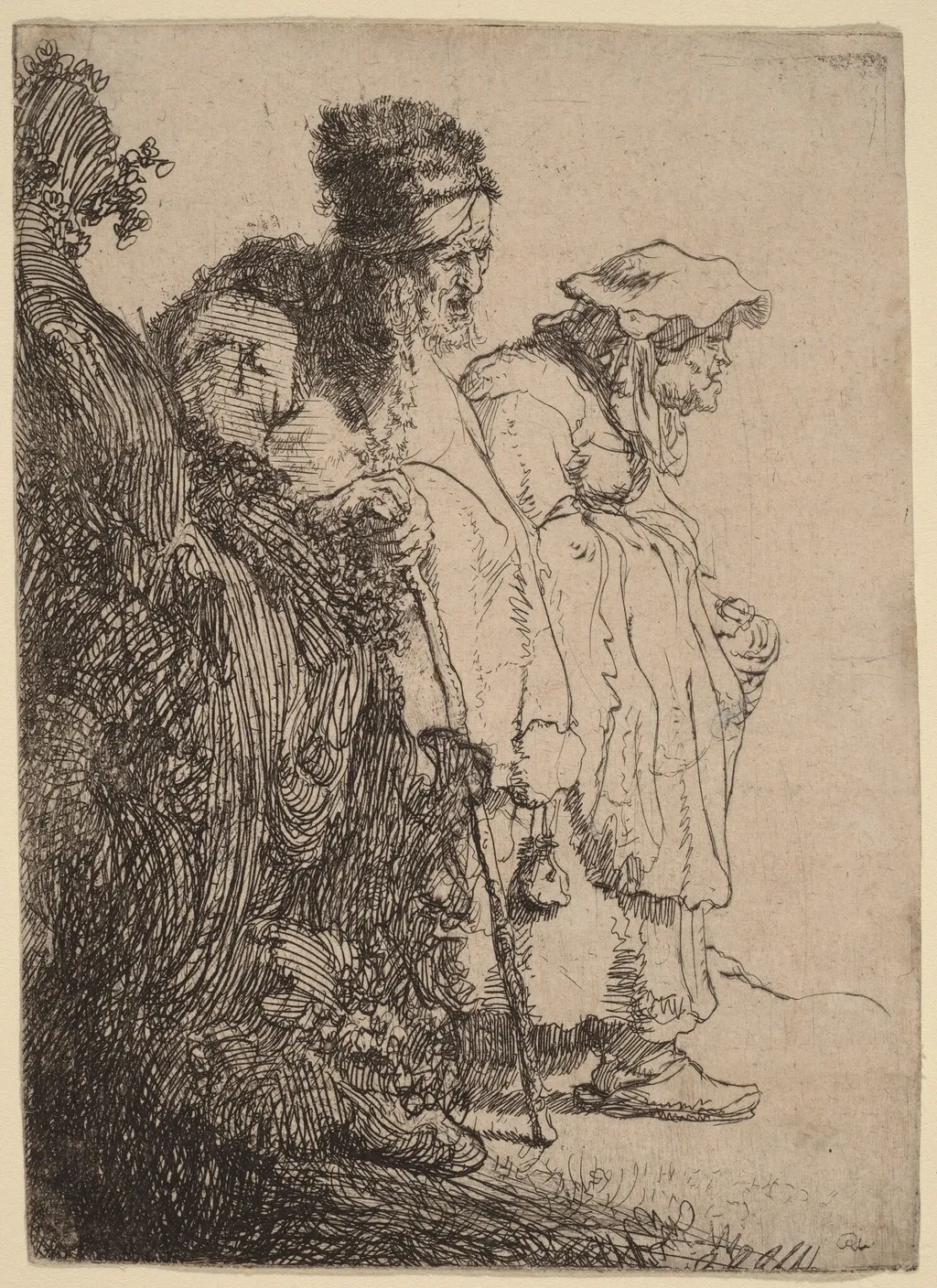
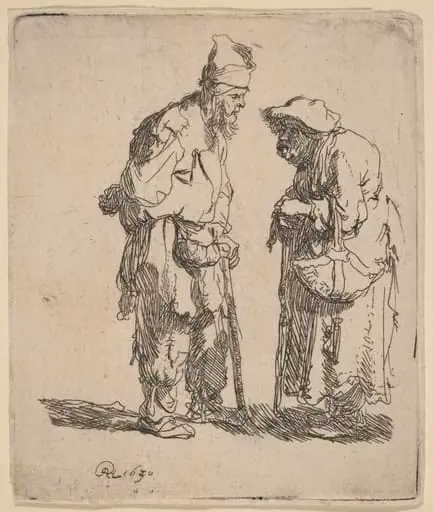
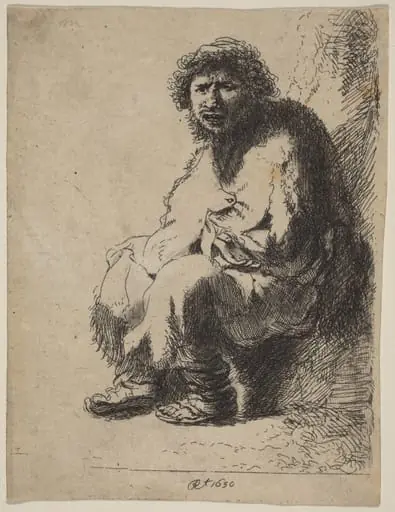
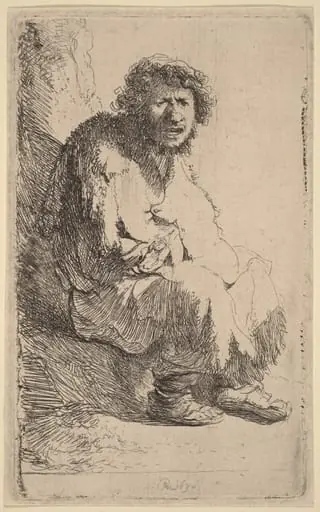
Beggar Man and Woman behind a Bank is an ink print by the Baroque artist Rembrandt. It dates from 1630 and is held in the collection of the National Gallery of Art.
About this work
Overview
The composition is tightly framed, with minimal background detail, focusing attention on the figures’ physical and emotional state.
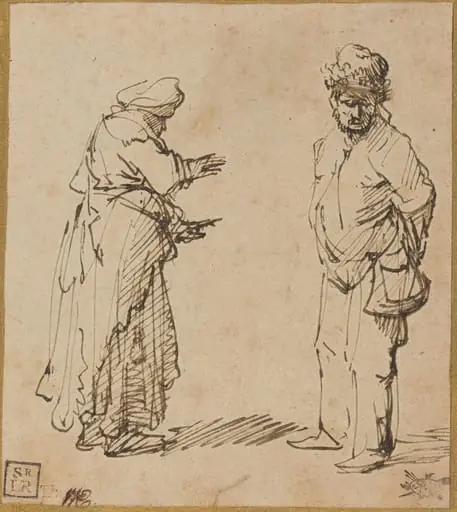
Created around 1630, this print by Rembrandt van Rijn depicts two impoverished figures positioned behind a stone structure, their postures conveying exhaustion and mutual dependence. Executed in etching, drypoint, and burin, the work captures a fleeting, unidealized moment of urban hardship. The composition is tightly framed, with minimal background detail, focusing attention on the figures’ physical and emotional state.
Subject & Meaning
The two figures, dressed in tattered garments and leaning heavily on one another, suggest a bond forged by shared destitution. One faces away, withdrawn; the other gazes downward, gripping a staff as if for stability. Their anonymity and lack of narrative context emphasize the universality of poverty, presenting them not as characters but as silent witnesses to social neglect.
Technique & Style
Rembrandt employed a combination of etching, drypoint, and burin to achieve varied textures: coarse lines render frayed fabric and weathered skin, while soft, smudged drypoint strokes suggest shadow and fatigue. The thick tree trunk on the left anchors the composition, contrasting the organic roughness of nature with the rigid architecture behind the figures. The technique prioritizes emotional resonance over polish.
History & Provenance
The print emerged during Rembrandt’s early Amsterdam years, a period when he increasingly turned to everyday subjects. While no specific early ownership records survive, it was widely circulated among collectors and artists in the 17th century. Its survival in multiple impressions reflects its resonance within printmaking circles, though it was never signed or dated by the artist.
Context
In early 1630s Amsterdam, economic disparity was visible in public spaces, and Rembrandt’s interest in marginalized figures aligned with broader humanist currents in Dutch art. Unlike idealized religious or mythological scenes, this work reflects a direct engagement with urban life, capturing the quiet dignity of those excluded from mainstream society.
Legacy
This print influenced later artists drawn to social realism, particularly those seeking to portray the unvarnished human condition. Its raw technique and empathetic gaze contributed to the evolving perception of printmaking as a medium capable of profound psychological insight, not merely reproduction or decoration.
Artist & collection
Artist
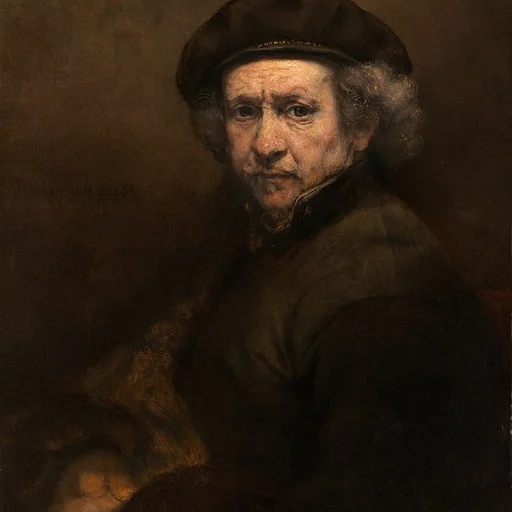
Rembrandt Harmenszoon van Rijn (15 July 1606 – 4 October 1669), known mononymously as Rembrandt, was a Dutch Golden Age painter, printmaker, and draughtsman.