Artwork
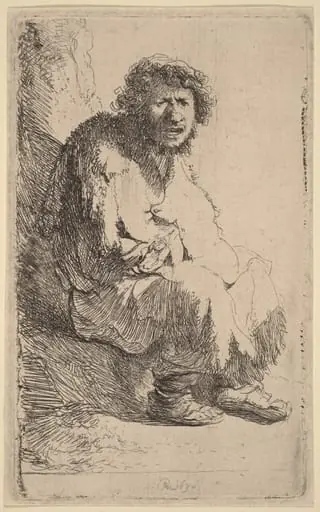
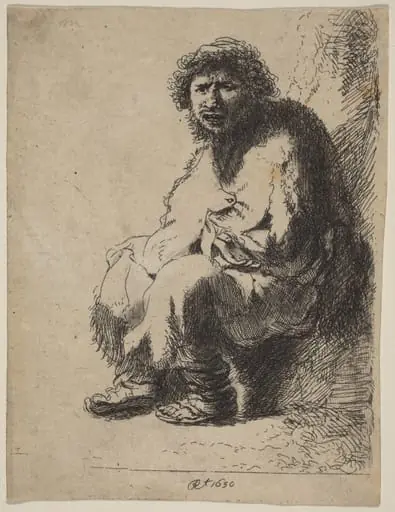
Beggar Seated on a Bank
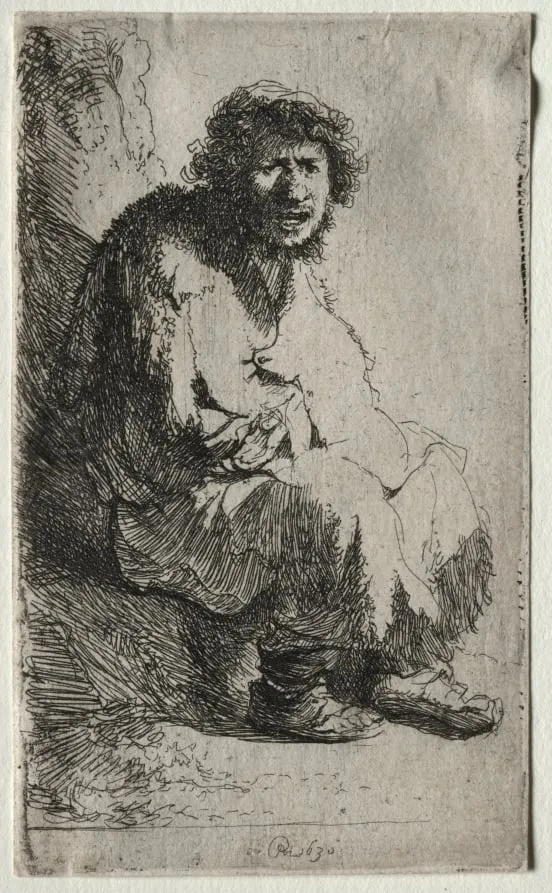
Beggar Seated on a Bank is a print by the Baroque artist Rembrandt. It dates from 1630 and is held in the collection of the Cleveland Museum of Art.
About this work
Overview
Created in 1630, this ink drawing by Rembrandt van Rijn depicts a destitute figure seated on a low stone barrier. Executed with rapid, expressive strokes, the work reflects Rembrandt’s early interest in human condition and everyday life. It resides in The Cleveland Museum of Art as part of its collection of Dutch graphic art from the 17th century.
Subject & Meaning
The figure is a marginalized individual, hunched and worn, clutching a small object—perhaps a coin or scrap of food. The posture and weathered appearance suggest exhaustion and isolation. Rembrandt avoids idealization, presenting the subject with quiet dignity amid hardship, reflecting a humanist focus common in his early career.
Technique & Style
Using pen and ink, Rembrandt applied loose, uneven lines to convey texture and movement. Shadows are built through hatched strokes rather than solid fills, giving the figure a sense of volume without detail. The background is minimal—just a few gestural marks suggesting a wall—emphasizing the solitary presence of the figure.
History & Provenance
The drawing entered The Cleveland Museum of Art’s collection in the 20th century, having passed through private hands since its creation. Its attribution to Rembrandt is supported by stylistic analysis and comparison with other early works. No definitive record of its original commission or owner survives.
Context
In early 1630s Leiden, Rembrandt was developing his signature approach to portraiture, often turning to street life for subjects. This drawing aligns with a broader trend among Dutch artists to depict common people with psychological depth, moving beyond religious or mythological themes toward secular realism.
Legacy
Though not widely exhibited, this sketch exemplifies Rembrandt’s early commitment to observing the marginalized with empathy. Its raw technique influenced later generations of draftsmen who valued immediacy over polish. It remains a quiet testament to his ability to convey humanity through minimal means.
Artist & collection
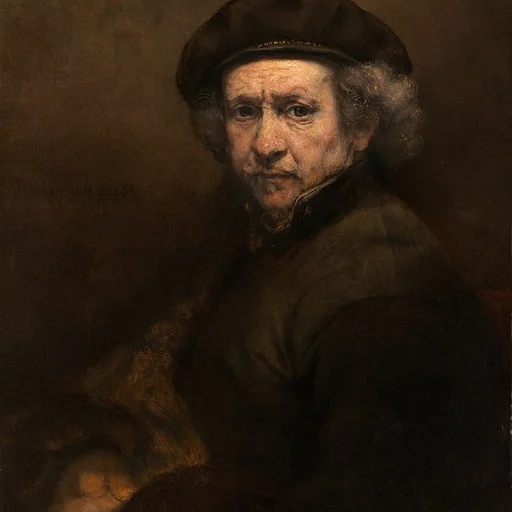
Artist
Rembrandt Harmenszoon van Rijn (15 July 1606 – 4 October 1669), known mononymously as Rembrandt, was a Dutch Golden Age painter, printmaker, and draughtsman.