Artwork
Beggar Seated Warming His Hands at a Chafing Dish
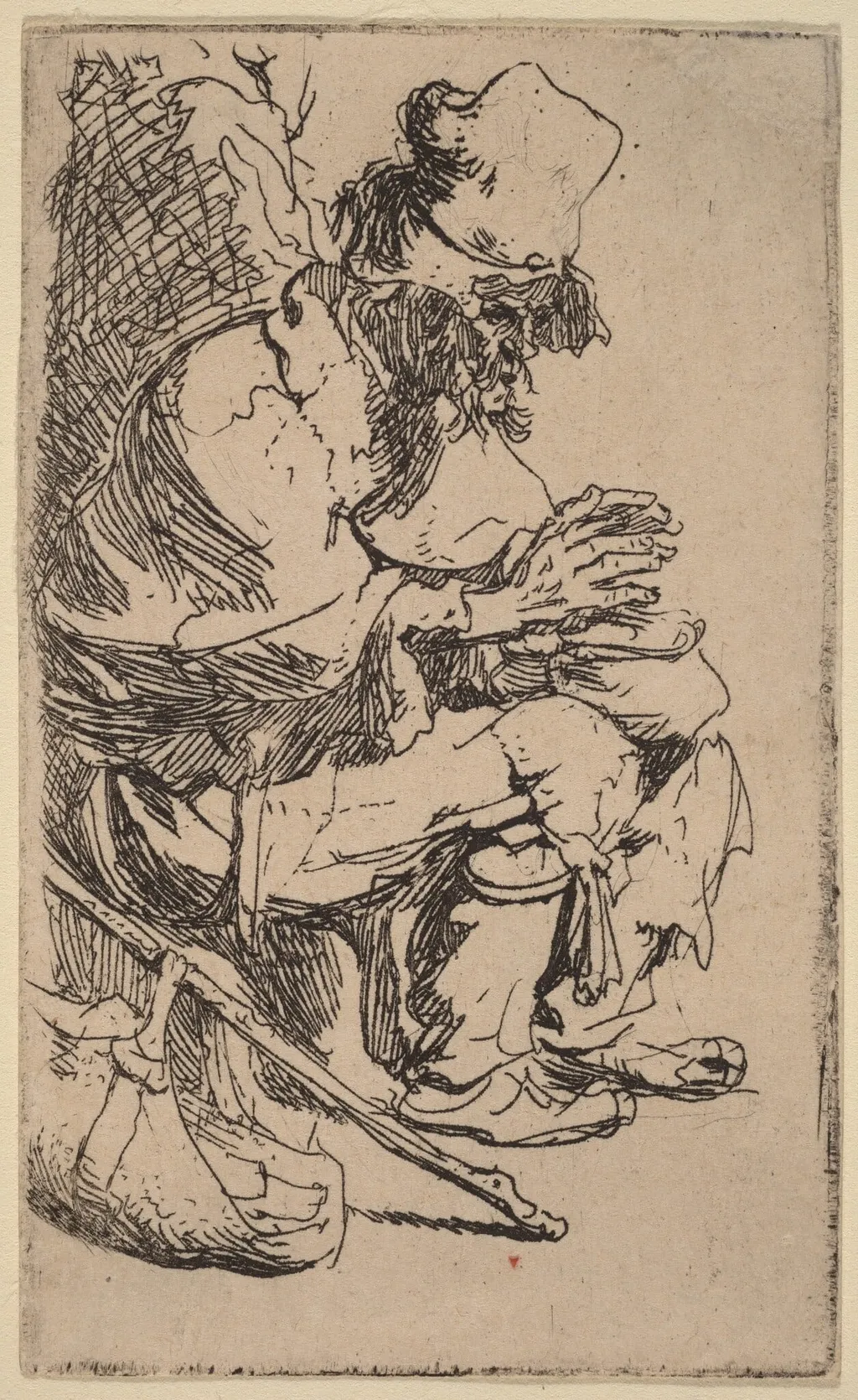
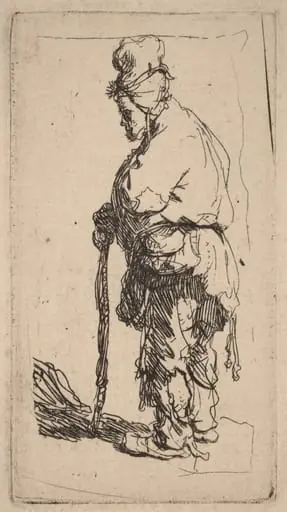
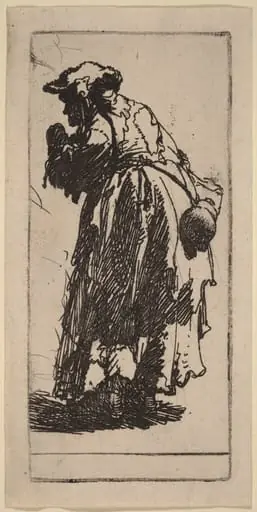
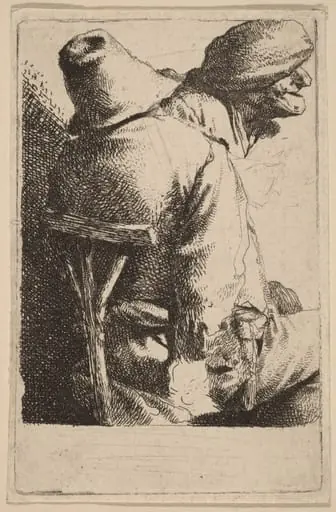
Beggar Seated Warming His Hands at a Chafing Dish is an ink print by the Baroque artist Rembrandt. It dates from 1630 and is held in the collection of the National Gallery of Art.
About this work
Overview
Rembrandt van Rijn produced the etching titled Beggar Seated Warming His Hands at a Chafing Dish around 1630. The work is a small-scale print that captures a solitary, impoverished figure huddled over a metal dish, suggesting a moment of fleeting warmth. Executed in the early phase of Rembrandt’s career, the image exemplifies his interest in everyday humanity rendered with stark realism.
Subject & Meaning
The composition centers on a hunched beggar wrapped in a torn cloak, his hands cupped around a modest chafing dish that emits a faint glow. The figure’s obscured face and tightly clenched fingers convey both physical need and emotional resignation, inviting contemplation of poverty, survival, and the quiet dignity of a momentary respite from cold.
Technique & Style
Rembrandt employed the traditional etching process, incising lines into a copper plate and allowing ink to settle in the resulting grooves. The lines are deliberately rough and uneven, producing a gritty texture that heightens the immediacy of the scene. This raw handling of the medium creates deep shadows and a sense of movement, as if the artist captured a spontaneous glimpse.
History & Provenance
Created circa 1630, the print belongs to the period when Rembrandt was establishing his reputation in Amsterdam. While specific ownership records are scarce, the work has been documented in several major collections of Dutch printmaking, reflecting its recognition as an early example of Rembrandt’s mastery of the etching medium.
Artist & collection
Artist
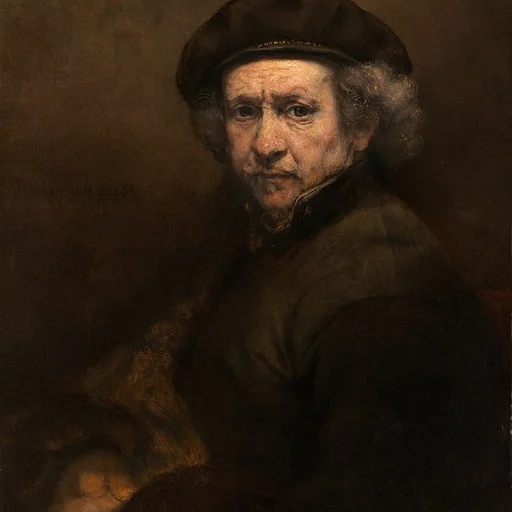
Rembrandt Harmenszoon van Rijn (15 July 1606 – 4 October 1669), known mononymously as Rembrandt, was a Dutch Golden Age painter, printmaker, and draughtsman.