Artwork
Old Beggar Woman with a Gourd
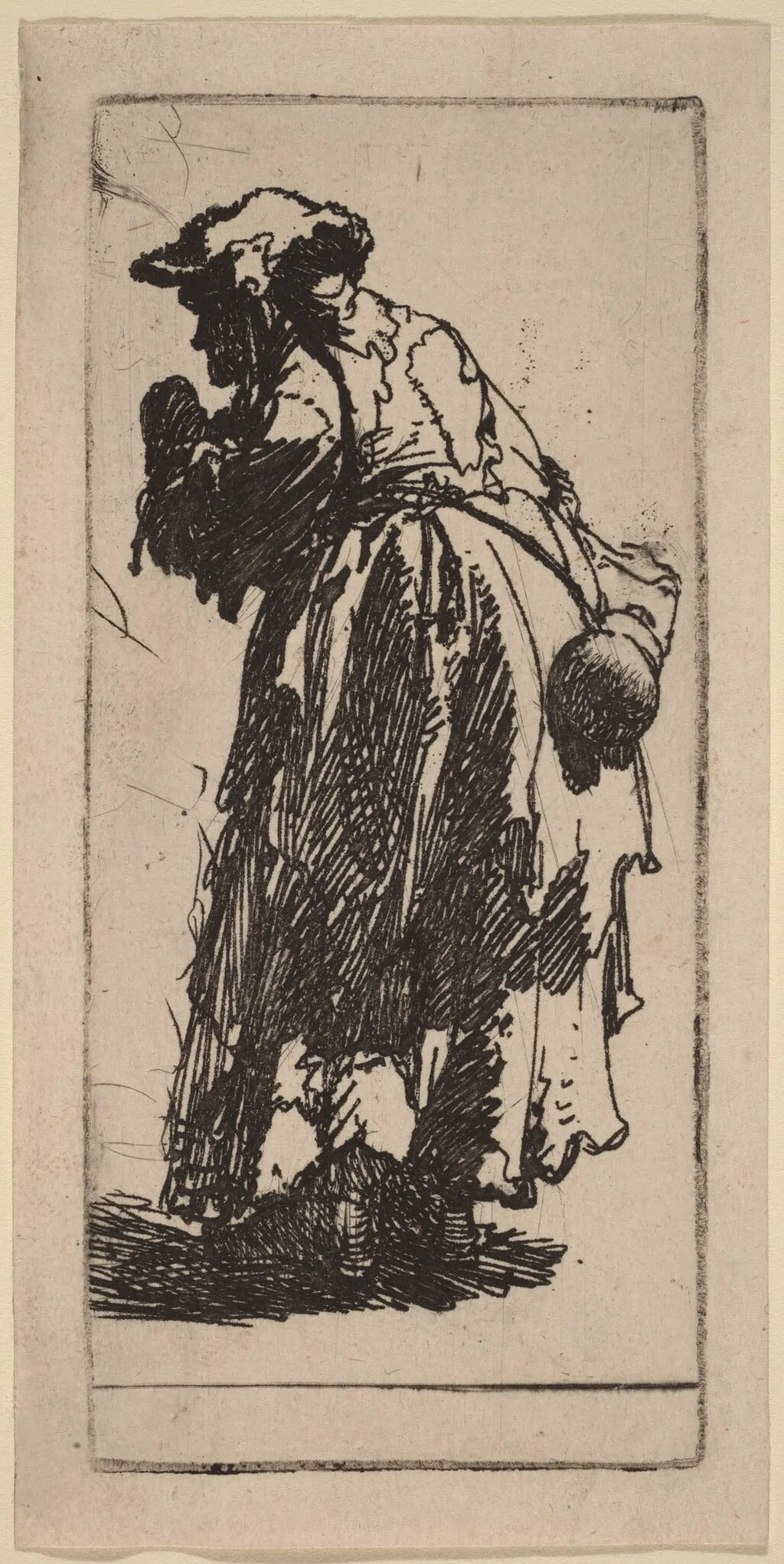
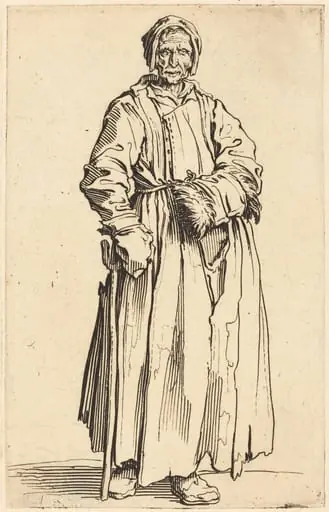
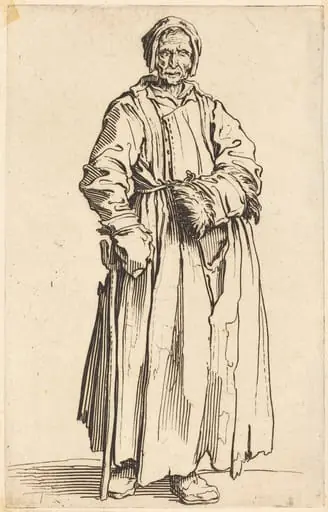
Old Beggar Woman with a Gourd is an ink print by the Baroque artist Rembrandt. It dates from 1630 and is held in the collection of the National Gallery of Art.
About this work
Overview
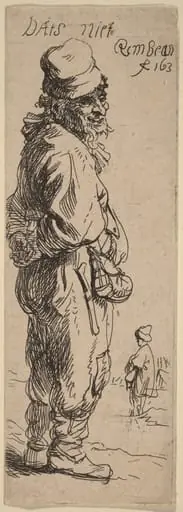
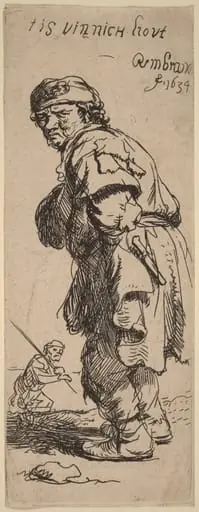
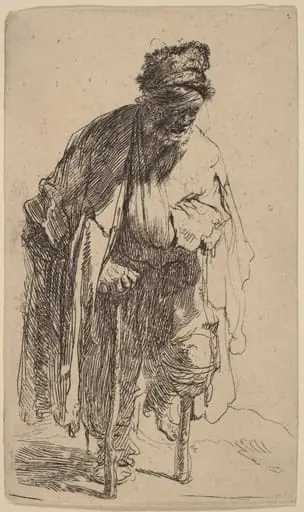
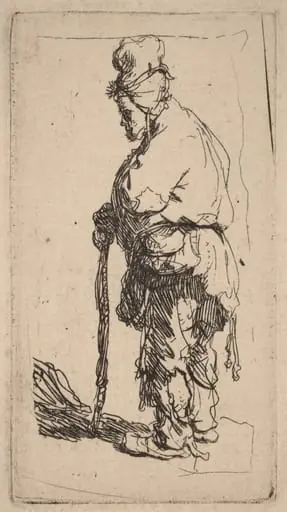
Created around 1630, this etching by Rembrandt van Rijn portrays an elderly woman in a modest, draped outfit, clutching a gourd. The composition is simple, with the figure turned slightly to the right and her head inclined downward, set against an almost empty background that emphasizes her solitary presence.
Subject & Meaning
The work focuses on a hunched, aged figure whose face is largely concealed by shadow, suggesting anonymity and introspection. The gourd she holds may allude to sustenance or humble livelihood, reinforcing themes of poverty and the quiet dignity of ordinary life in the artist’s era.
Technique & Style
Executed in etching, the piece relies on bold, expressive lines that render the texture of the woman’s clothing and the curvature of the gourd with fine detail. Stark contrasts of light and dark create depth, while the largely vacant background allows the figure’s form and shading to dominate the visual field.
History & Provenance
The print originates from Rembrandt’s early Dutch period, a time when he explored everyday subjects through printmaking. While specific ownership records are limited, the work is catalogued among his early etchings and appears in several major museum collections, reflecting its recognition as a representative example of his formative graphic practice.
Artist & collection
Artist
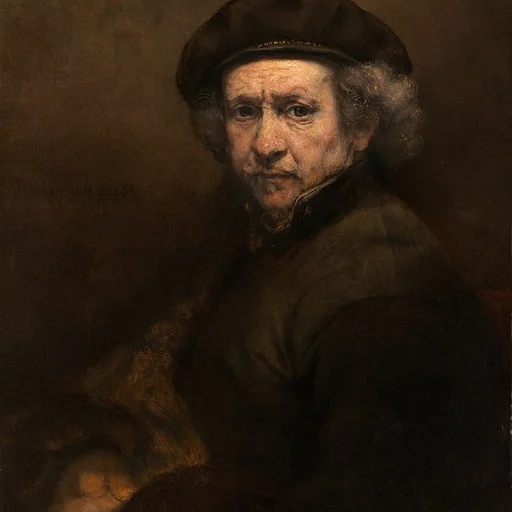
Rembrandt Harmenszoon van Rijn (15 July 1606 – 4 October 1669), known mononymously as Rembrandt, was a Dutch Golden Age painter, printmaker, and draughtsman.