Artwork
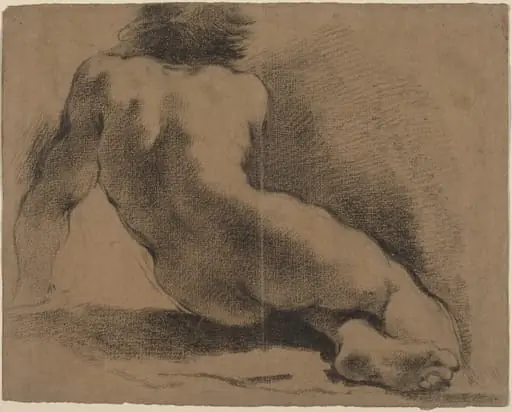
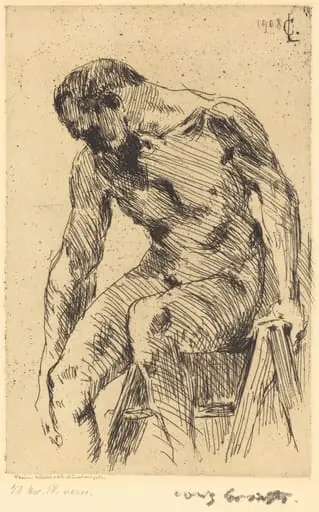
Nude Man Seated on the Ground with One Leg Extended
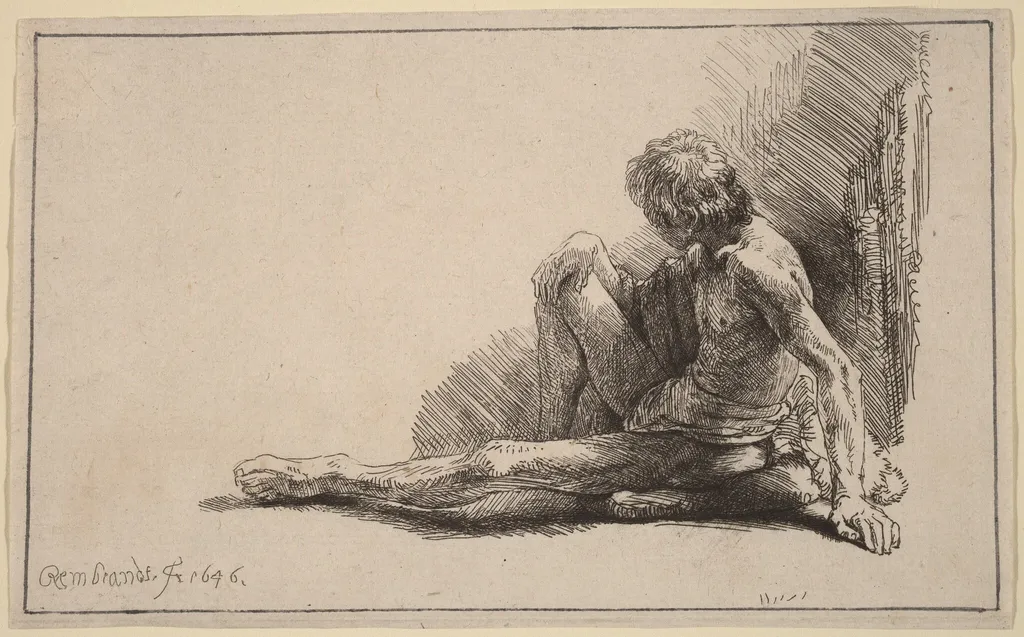
Nude Man Seated on the Ground with One Leg Extended is an ink print by the Baroque artist Rembrandt. It dates from 1646 and is held in the collection of the National Gallery of Art.
About this work
Overview
Created in 1646, this work is an etching on laid paper by the Dutch artist Rembrandt van Rijn. It depicts a solitary male figure, nude, seated on the ground with one leg extended. The composition is rendered in a loose, sketch‑like manner, emphasizing texture and immediacy rather than finished polish.
Subject & Meaning
The figure is shown barefoot, his back turned toward the viewer, leaning against a rough wall. The pose, with one leg stretched outward, suggests a moment of quiet repose or contemplation, inviting reflection on the human form in an unidealized, everyday setting.
Technique & Style
Rembrandt employed the etching process, allowing ink to spread unevenly across the plate. This results in a scratchy, spontaneous line quality, with varied shading that conveys the texture of skin and stone. The rapid, unrefined execution highlights the artist’s interest in capturing immediate observation.
History & Provenance
The print belongs to Rembrandt’s mature period, when he frequently explored the nude in intimate, informal studies. While specific ownership records are scarce, the work is catalogued among his 1640s prints and is held in several major museum collections that specialize in Dutch graphic art.
Artist & collection
Artist
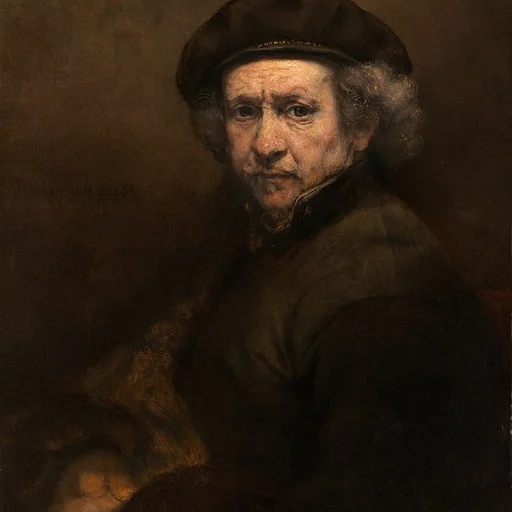
Rembrandt Harmenszoon van Rijn (15 July 1606 – 4 October 1669), known mononymously as Rembrandt, was a Dutch Golden Age painter, printmaker, and draughtsman.