Artwork
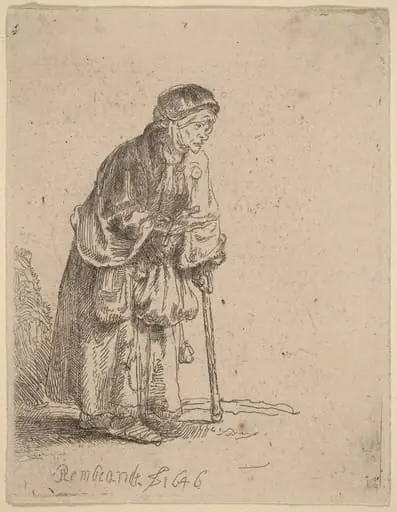
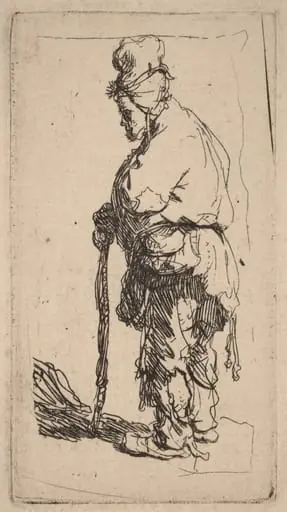
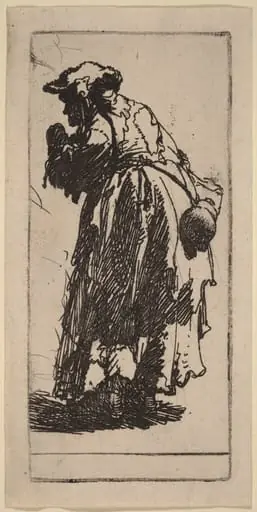
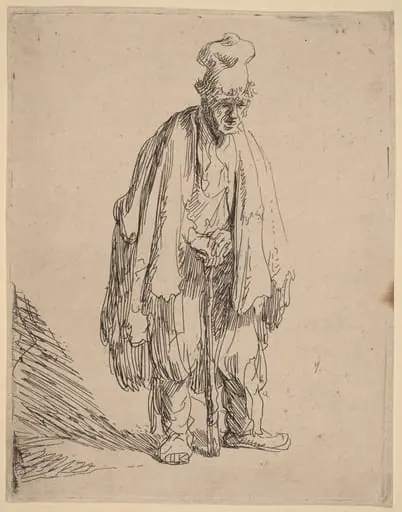
Beggar Woman Leaning on a Stick
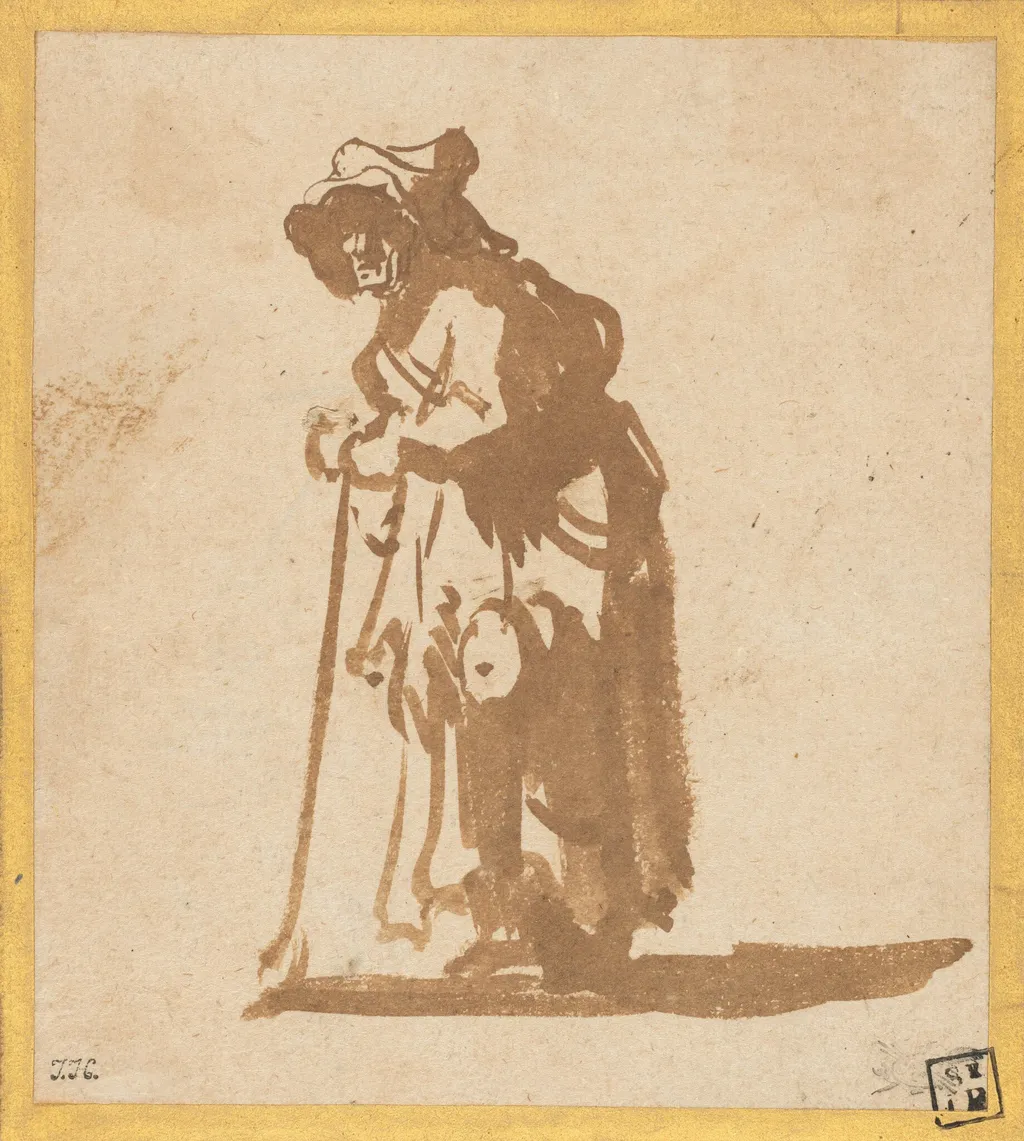
Beggar Woman Leaning on a Stick is a paint drawing by the Baroque artist Rembrandt. It dates from 1629 and is held in the collection of the National Gallery of Art.
About this work
Overview
Created in 1629, this drawing by Rembrandt van Rijn records a solitary figure of a woman supported by a staff. Executed with brush and brown wash on laid paper, the work forms part of a larger album sheet associated with the collector Richardson. The composition is modest in scale yet conveys a quiet, introspective presence that reflects the artist’s early interest in everyday subjects.
Subject & Meaning
The figure is shown bent slightly forward, cloaked in a long, draped garment with a hood that conceals her face. The anonymity of her features and the simplicity of her attire suggest a beggar or itinerant woman, aligning with the title. The pose, leaning on a stick, emphasizes a state of dependence and the precariousness of her condition.
Technique & Style
Rembrandt employed a brown wash applied with brush on laid paper, allowing the texture of the support to emerge through subtle tonal variations. The wash creates a warm, earthy atmosphere, while the delicate lines define the folds of the clothing and the curvature of the staff. The drawing anticipates the chiaroscuro and expressive handling of form that would later characterize Baroque painting.
History & Provenance
The work is mounted on a sheet from the Richardson album, a collection assembled by the 17th‑century English collector John Richardson. Its inclusion in this album indicates the drawing’s circulation among connoisseurs shortly after its creation. The piece has remained in the album’s holdings, providing insight into the early phase of Rembrandt’s career and his engagement with genre subjects.
Artist & collection
Artist
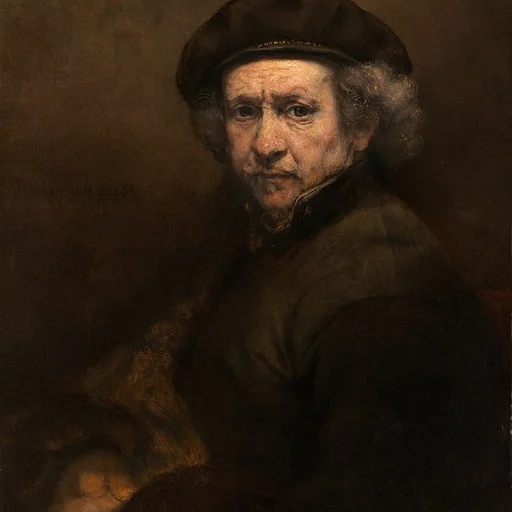
Rembrandt Harmenszoon van Rijn (15 July 1606 – 4 October 1669), known mononymously as Rembrandt, was a Dutch Golden Age painter, printmaker, and draughtsman.