Artwork
The Second Oriental Head
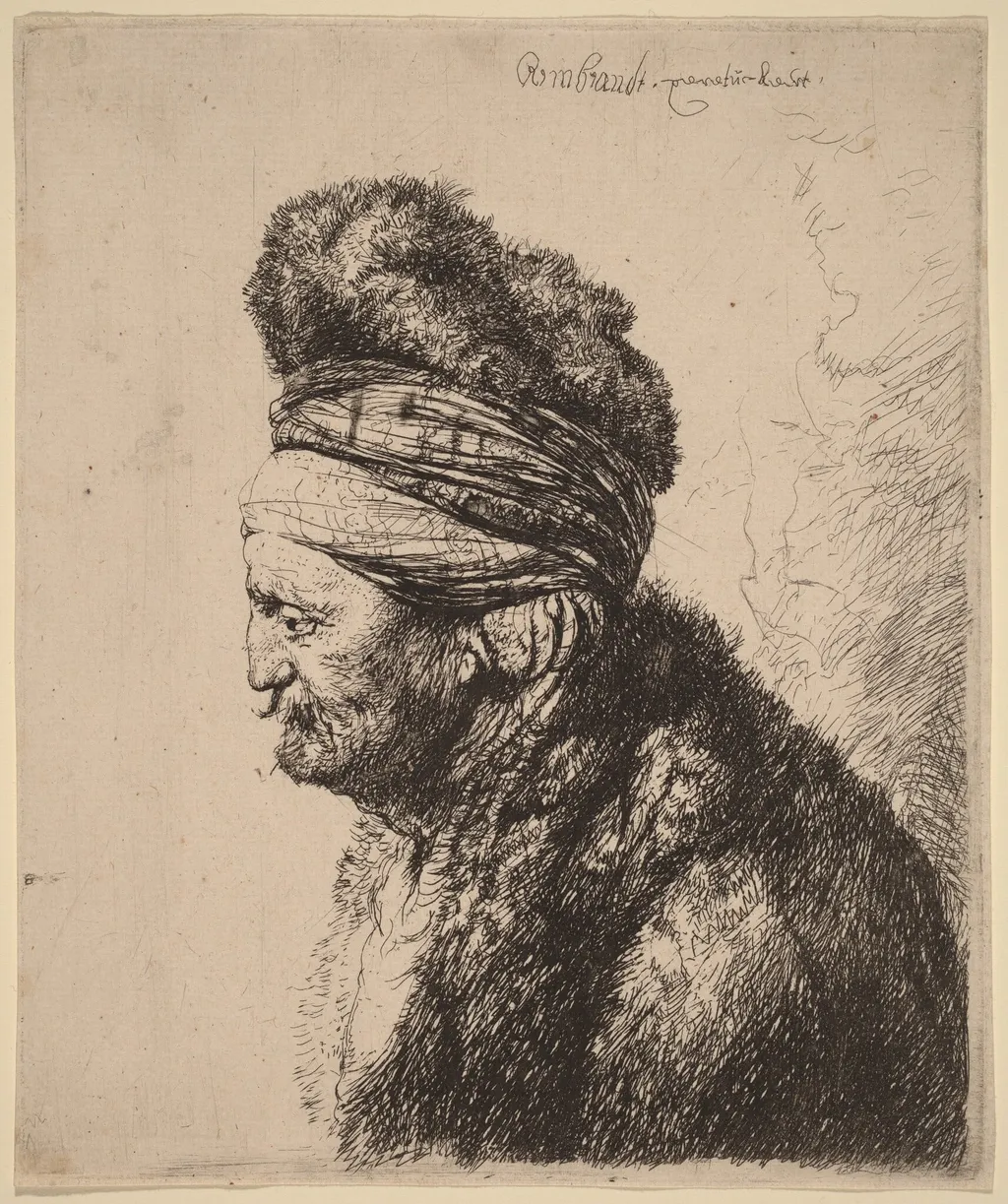
The Second Oriental Head is an ink print by the Baroque artist Dutch 17th Century. It dates from 1635 and is held in the collection of the National Gallery of Art. This etching depicts a male figure in profile, wearing a tall hat lined with fur.
About this work
Overview
The work belongs to a series of orientalizing studies made by the artist during a period of interest in non-European subjects.
This etching depicts a male figure in profile, wearing a tall hat lined with fur. The image is rendered in a loose, expressive manner, with dense, irregular lines that create a sense of texture and shadow. As a print, it was produced through an etching process, allowing for multiple impressions from a single metal plate. The work belongs to a series of orientalizing studies made by the artist during a period of interest in non-European subjects.
Subject & Meaning
The figure’s attire and facial features suggest a representation of an Eastern or Middle Eastern man, interpreted through a 19th-century European lens. The pose, with the head turned slightly away, conveys a sense of distance or anonymity. The lack of contextual detail focuses attention on the individual’s appearance, reflecting contemporary fascination with exoticized identities rather than specific cultural accuracy.
Technique & Style
The artist employed etching, a printmaking method involving acid-bitten lines on a metal plate. The scratchy, dark strokes were achieved by biting into the plate with varying pressure, allowing ink to pool in the grooves. This produced strong contrasts between black lines and the white paper. The rough, unfinished quality suggests spontaneity, aligning with the artist’s interest in capturing immediate impressions over polished finish.
History & Provenance
The etching was created during a phase of the artist’s career when he explored non-Western subjects through sketches and prints. It was likely made in the mid-19th century, possibly as a study for larger works or as part of a private collection of ethnographic-inspired imagery. No definitive record of its first owner exists, but it appears in later catalogues of the artist’s graphic works.
Context
This work emerged amid European artistic trends that romanticized the Orient, fueled by colonial expansion and travel literature. Artists often relied on secondhand descriptions or staged models rather than direct observation. The etching reflects this broader cultural impulse, presenting a stylized, generalized figure rather than a documented individual from a specific region or community.
Legacy
Though not widely exhibited during the artist’s lifetime, this etching contributes to understanding his graphic output and engagement with orientalist themes. It stands as an example of how printmaking enabled artists to experiment with form and subject outside the constraints of painting. Today, it is studied for its technical approach and its place in the history of cross-cultural representation in Western art.
Artist & collection

Artist
This Dutch artist made small, sharp engravings and etchings—mostly portraits and sea battles—printed from metal plates.

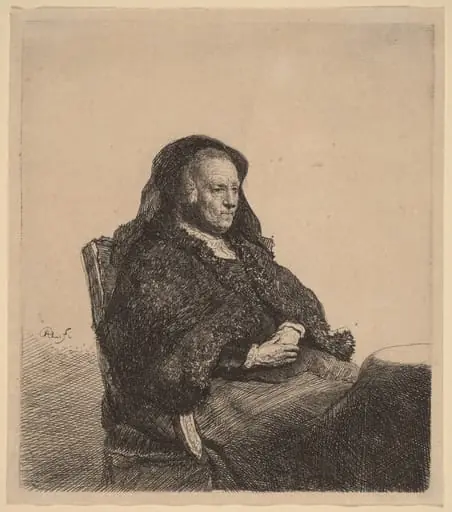 The Artist's Mother Seated at a Table, Looking Right
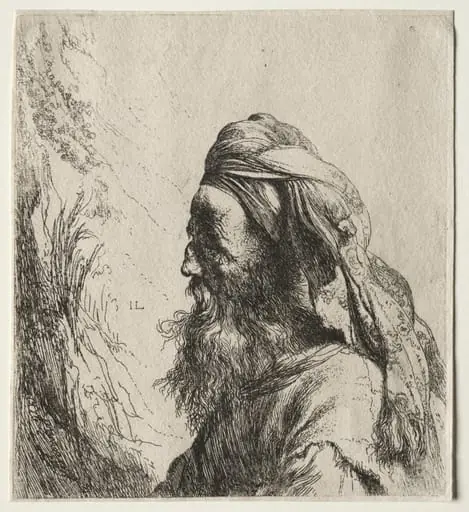 Head of an Oriental
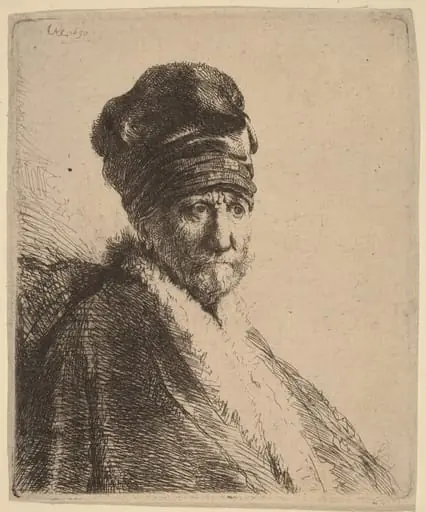 Bust of a Man Wearing a High Cap, Three-Quarters Right (The Artist's Father?)
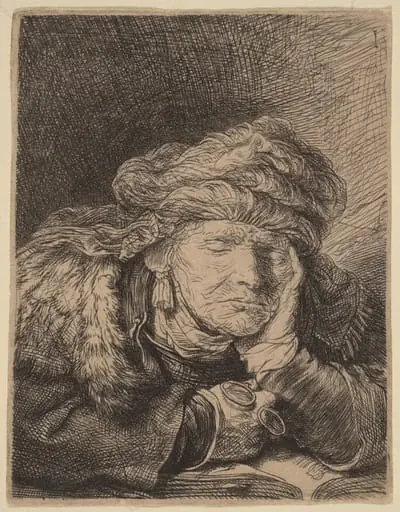 Old Woman Sleeping
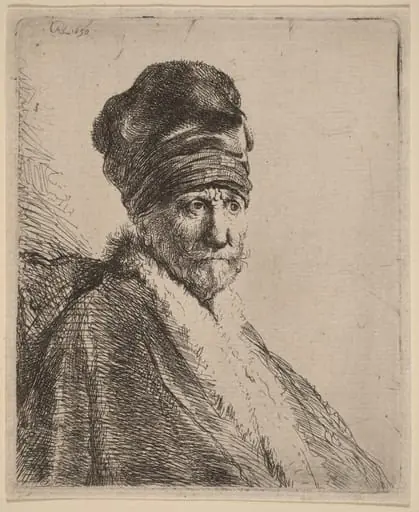 Bust of a Man Wearing a High Cap, Three-Quarters Right (The Artist's Father?)
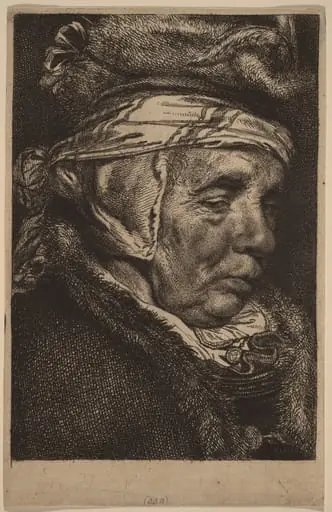 Head of an Old Woman (Visscher's Mother)
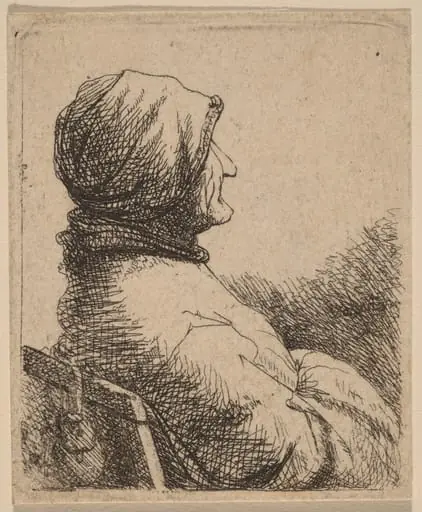 Bust of an Old Woman Turned in Profile to the Right
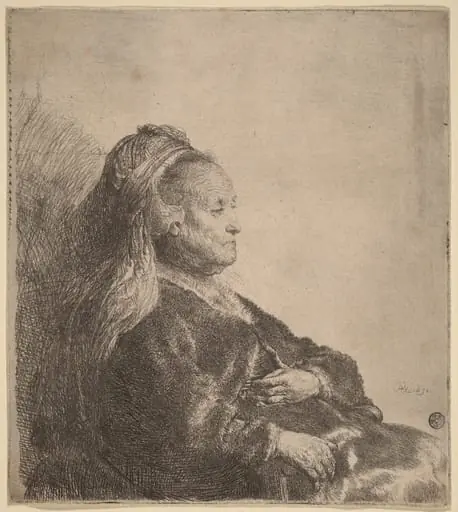 The Artist's Mother Seated, in an Oriental Headdress
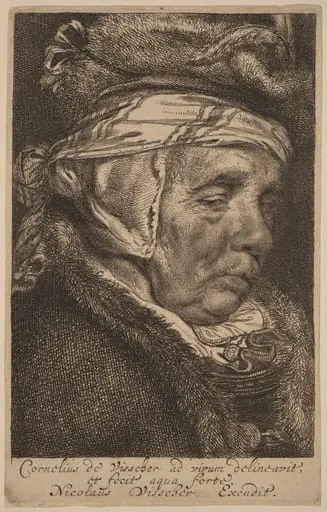 Head of an Old Woman (Visscher's Mother)
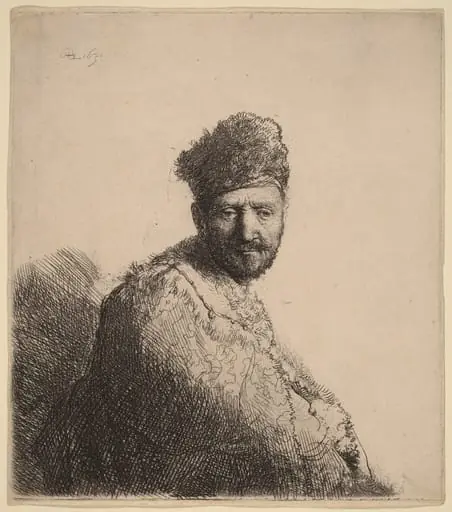 Bearded Man, in a Furred Oriental Cap and Robe: the Artist's Father