Artwork
Christ Preaching (The Hundred Guilder Print)
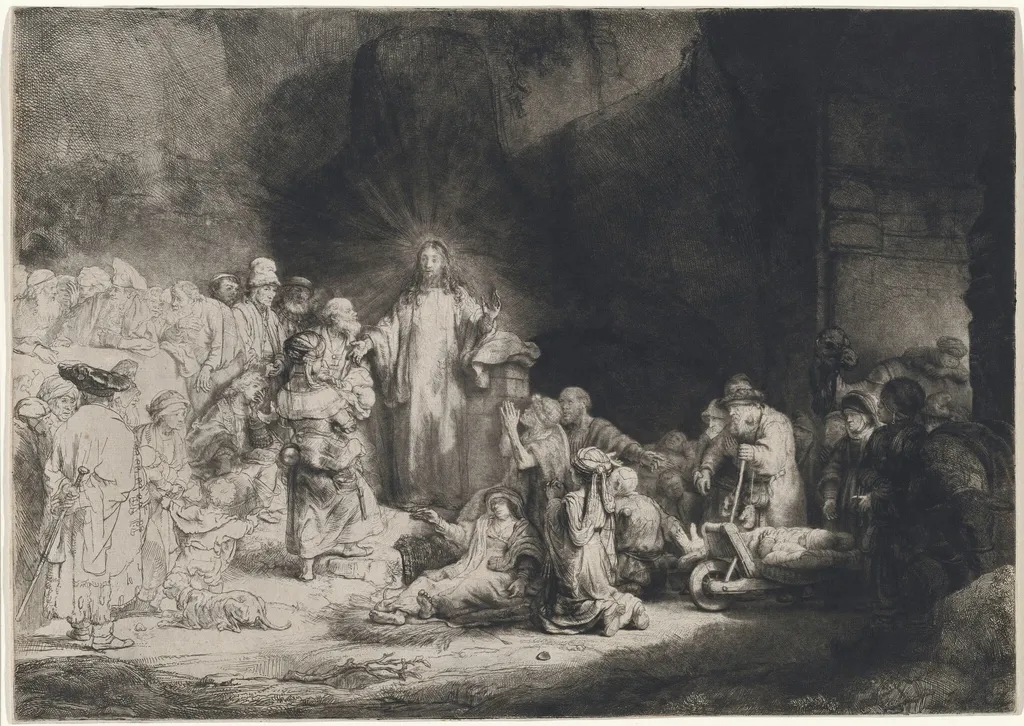
Christ Preaching (The Hundred Guilder Print) is an ink print by the Baroque artist Rembrandt. It dates from 1646 and is held in the collection of the National Gallery of Art.
About this work
Overview
The work is notable for its intricate layering of lines and tonal variation, achieved through multiple printings and careful ink manipulation.
Created around 1646, Christ Preaching, often called The Hundred Guilder Print, is a complex etching by Rembrandt van Rijn. It combines etching, drypoint, and burin techniques on white European paper. The work is notable for its intricate layering of lines and tonal variation, achieved through multiple printings and careful ink manipulation. Its size and detail suggest it was intended as a serious artistic statement rather than a mass-produced image.
Subject & Meaning
The scene depicts Christ surrounded by a diverse crowd—poor, sick, and laboring individuals—gathered in a dim, rocky enclosure. Figures kneel, lean, or sit in quiet reverence, while animals rest nearby, grounding the moment in everyday reality. The central figure emits a soft, directional light, symbolizing spiritual presence. The composition reflects themes of compassion, humility, and divine attention to the marginalized, drawn from the Gospel of Matthew.
Technique & Style
Rembrandt employed etching for fine lines, drypoint for rich, velvety blacks, and burin for sharp, incised contours. He built depth through layered ink application and selective wiping, creating dramatic contrasts between light and shadow. The textures of clothing, skin, and stone are rendered with varied line weights and densities. Unlike conventional prints of the time, this work prioritizes emotional resonance over clarity, using chiaroscuro to guide the viewer’s focus.
History & Provenance
The print gained its nickname in the 18th century due to its high value among collectors, reportedly selling for the equivalent of a hundred guilders—an extraordinary sum. Rembrandt produced few impressions, and surviving copies are rare. Ownership records trace it through Dutch and later European collections, with major institutions now holding key examples. Its reputation grew not from popularity but from its technical ambition and emotional depth.
Context
Made during Rembrandt’s mature period in Amsterdam, the print coincides with his deepening interest in biblical narratives and human psychology. While religious imagery was common, few artists rendered sacred scenes with such intimate realism. The work reflects the influence of Dutch Calvinism’s emphasis on personal faith and the quiet dignity of ordinary life, diverging from idealized Baroque religious art.
Legacy
Christ Preaching became a touchstone for later printmakers and artists studying tonal gradation and expressive line. Its influence extended beyond technique to how sacred subjects could be portrayed with psychological nuance. Though not widely reproduced in its time, it was studied closely by 19th-century artists and remains a key reference in the history of printmaking for its fusion of technical innovation and spiritual quietude.
Own this work as a print
Artist & collection
Artist
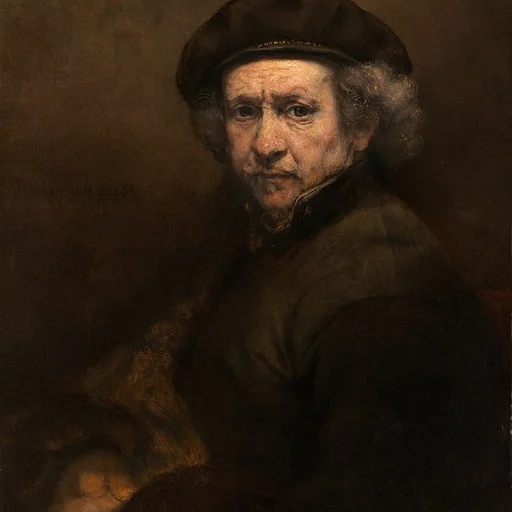
Rembrandt Harmenszoon van Rijn (15 July 1606 – 4 October 1669), known mononymously as Rembrandt, was a Dutch Golden Age painter, printmaker, and draughtsman.

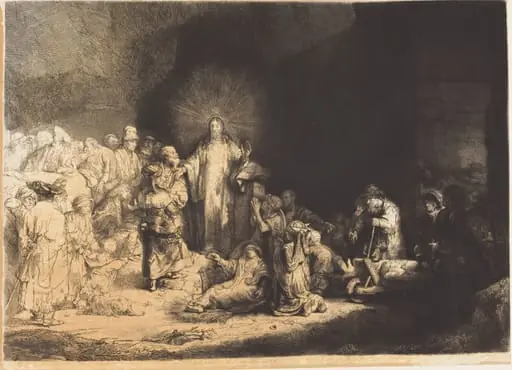 Christ Preaching (The Hundred Guilder Print)
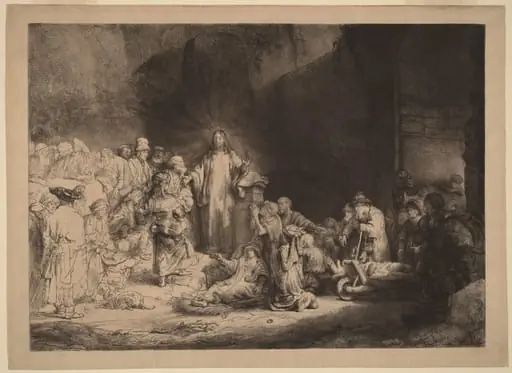 Christ Preaching (The Hundred Guilder Print)
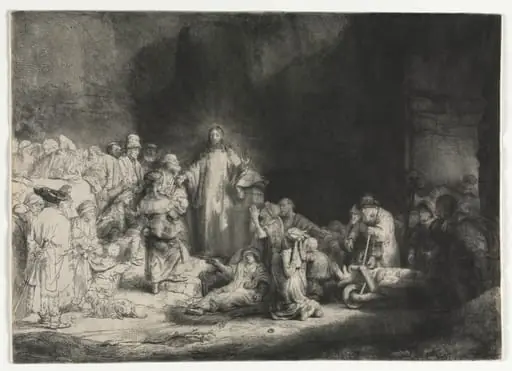 The Hundred Guilder Print
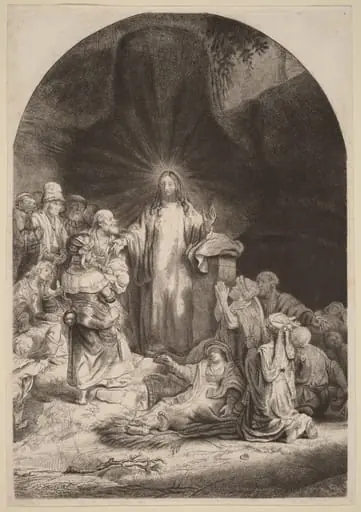 Christ Preaching and Healing (Fragment from the Hundred Guilder Print)
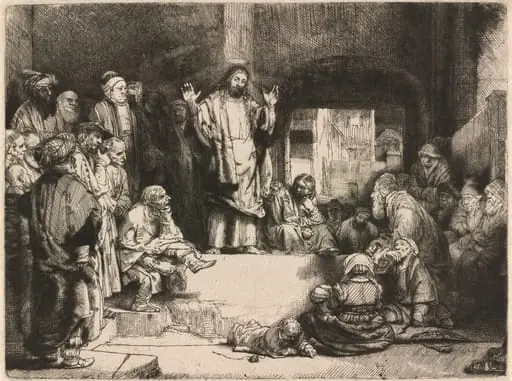 Christ Preaching (La petite Tombe)
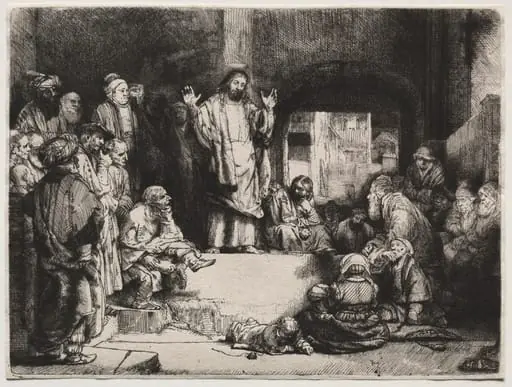 Christ Preaching ('La Petite Tombe')
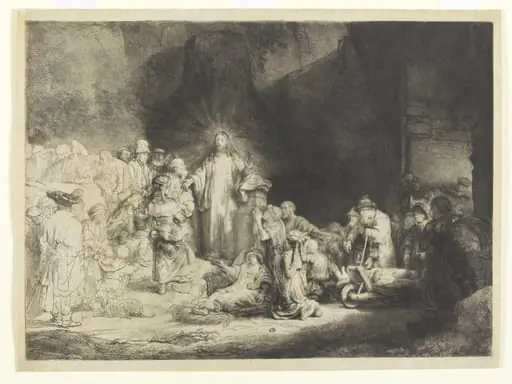 Christ healing the sick: 'The hundred guilder print'