Artwork
Adam and Eve
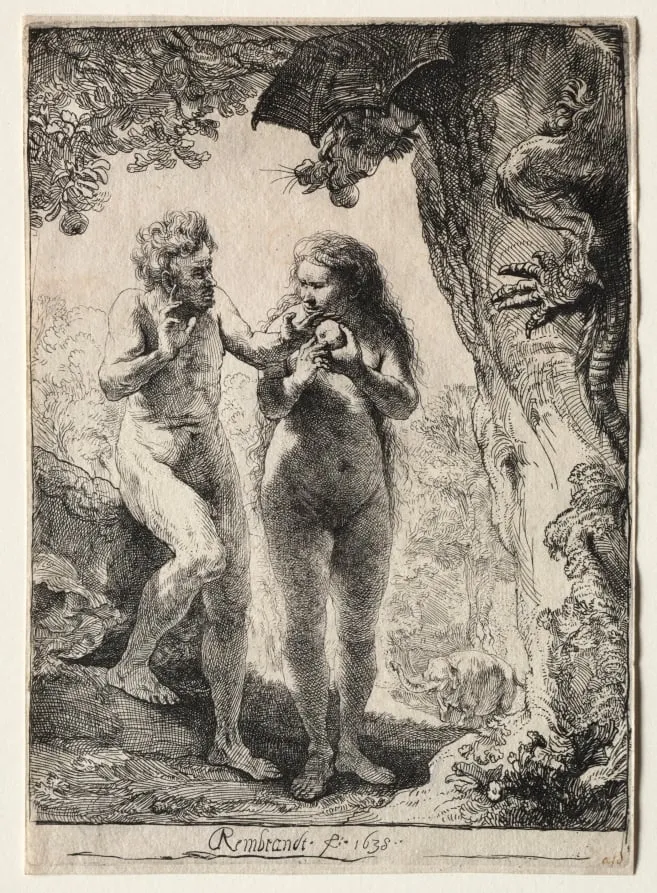
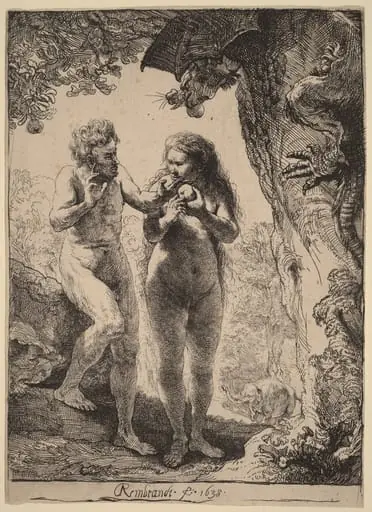
Adam and Eve is a print by the Baroque artist Rembrandt. It dates from 1638 and is held in the collection of the Cleveland Museum of Art.
About this work
Overview
Rembrandt’s 1638 print titled “Adam and Eve” presents a nocturnal woodland scene in which the biblical pair stand unclothed beneath a looming, shadow‑filled tree. The composition captures a moment of quiet exchange, the figures rendered in stark contrast against the surrounding darkness, and is currently part of the collection at the Cleveland Museum of Art.
Subject & Meaning
The work depicts the first humans of Judeo‑Christian tradition, positioned in a forest that suggests both the Garden of Eden and a place of concealment. One figure clasps his hands and looks downward, while the other leans forward, gesturing toward an object held in the palm, hinting at the secret of the forbidden fruit and the impending loss of innocence.
Technique & Style
Executed as an etching, the image relies on pronounced chiaroscuro, with deep blacks carving out the silhouettes of the bodies and the tree, while delicate lines define the faces and the small animal peeking from the underbrush. Rembrandt’s manipulation of light and shadow creates a palpable tension between what is illuminated and what remains hidden.
History & Provenance
Created in 1638, the print has survived in relatively good condition and entered the Cleveland Museum of Art’s holdings through acquisition in the 20th century. Its presence in the museum’s print and drawing department allows scholars to study Rembrandt’s printmaking practice during a prolific period of his career.
Artist & collection
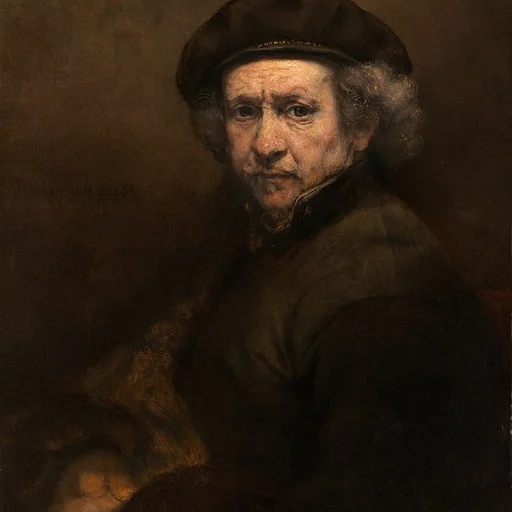
Artist
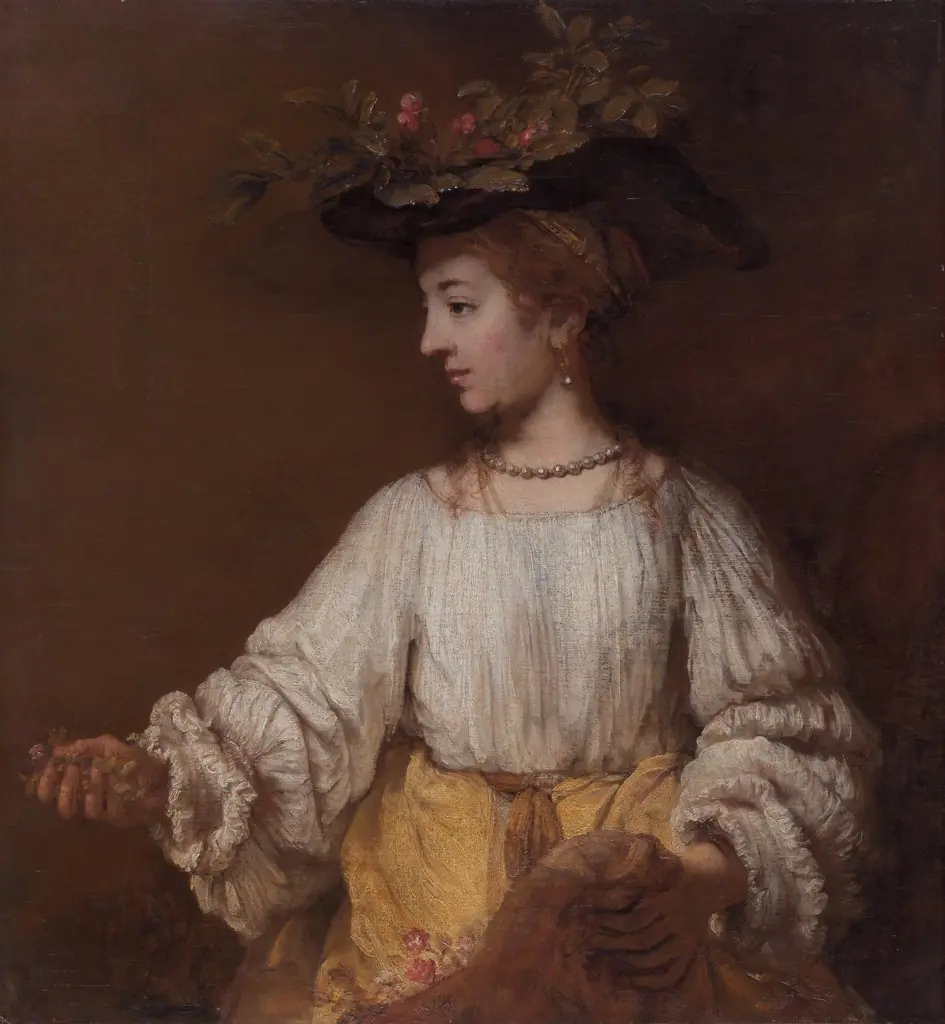
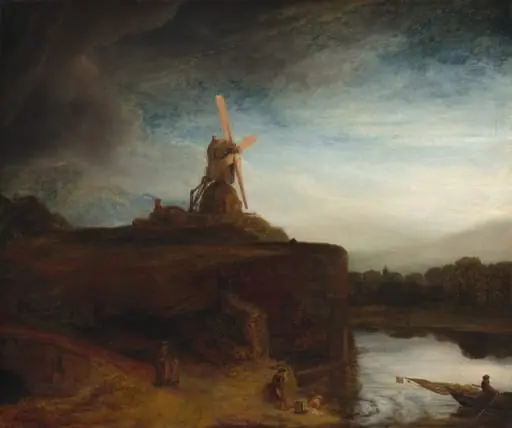
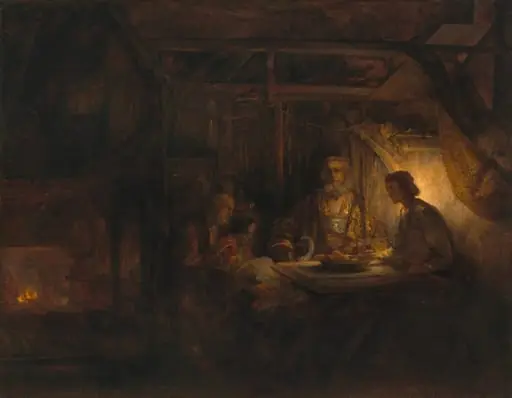
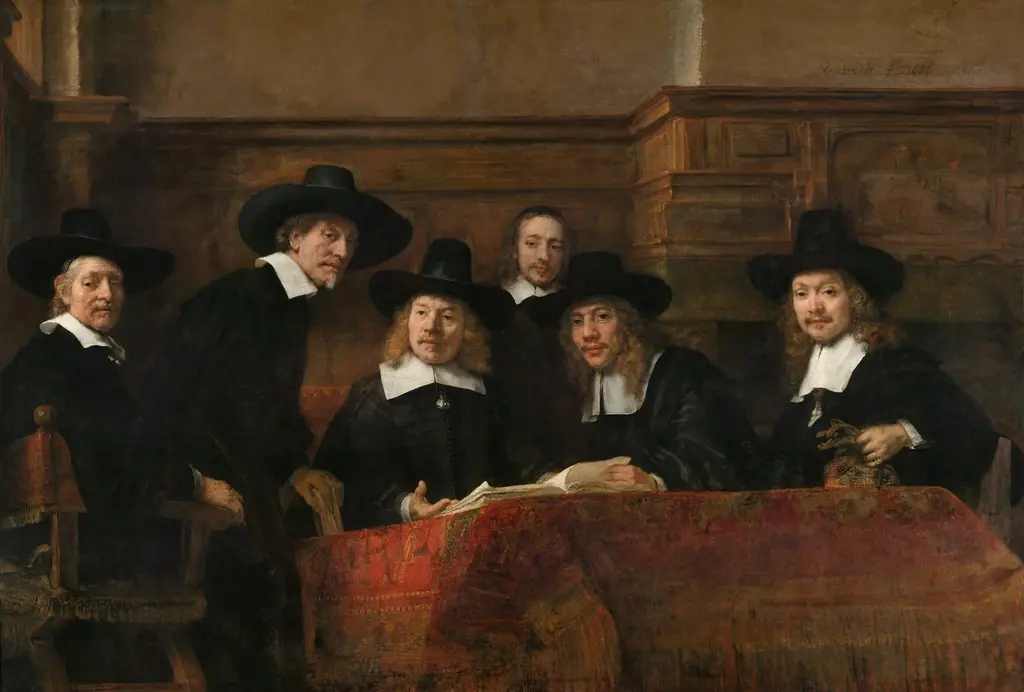
Rembrandt Harmenszoon van Rijn (15 July 1606 – 4 October 1669), known mononymously as Rembrandt, was a Dutch Golden Age painter, printmaker, and draughtsman.