Artwork
Christ Crucified Between the Two Thieves: 'The Three Crosses'
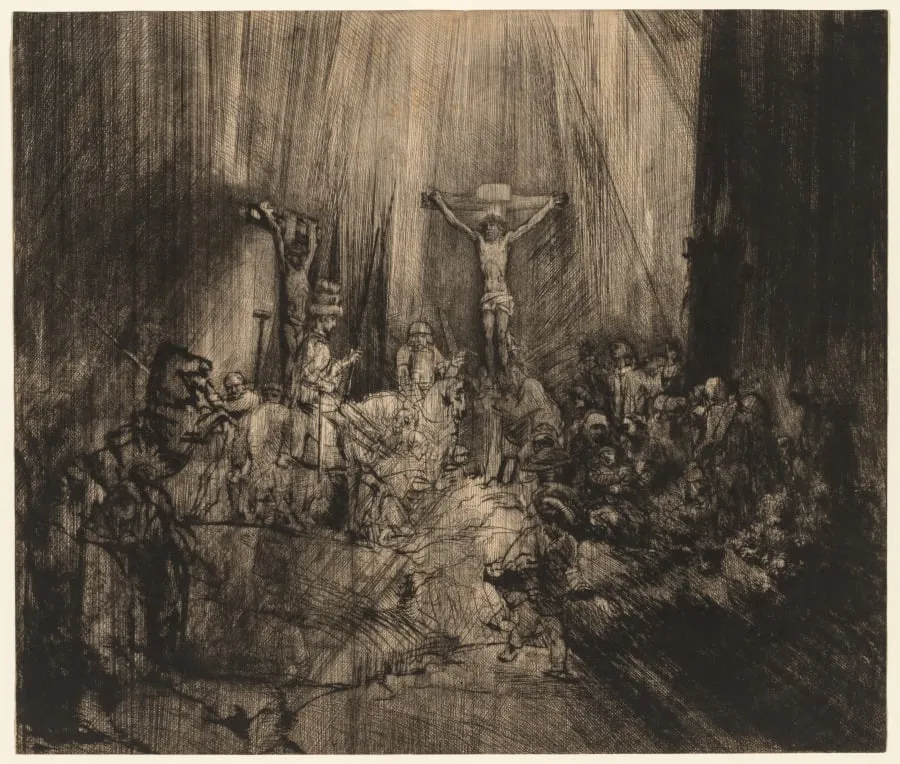
Christ Crucified Between the Two Thieves: 'The Three Crosses' is a print by the Baroque artist Rembrandt. It dates from 1653 and is held in the collection of the Cleveland Museum of Art.
About this work
The crowd below blurs into swirling lines, leaving only Christ’s body lit by a faint glow.
This drypoint print shows three crosses on a dark hill, Christ in the center. The crowd below blurs into swirling lines, leaving only Christ’s body lit by a faint glow. The plate was reworked four times—each change made the scene darker and more dramatic.
Rembrandt used drypoint, scratching lines into metal to hold ink. Later states deepen shadows over the faces of the thieves and spectators. Notice how the light cuts across Christ’s body, making him stand out.
Want to see more like it? Look up Rembrandt van Rijn (Dutch, 1606–1669).
Overview
Christ Crucified Between the Two Thieves, known as 'The Three Crosses', is a drypoint print by Rembrandt. The work depicts the crucifixion of Christ between two thieves on a dark hill, with a crowd below. The image emphasizes Christ, illuminated by a faint, celestial glow amidst a tenebrous setting.
Subject & Meaning
The print illustrates a biblical scene from Luke’s Gospel, where darkness falls over the earth during Christ’s crucifixion. The contrast between light and darkness symbolizes the spiritual significance of the event, with Christ’s illuminated body drawing focus amidst the enveloping shadows.
Technique & Style
Rembrandt exploited drypoint’s linear nature to achieve painterly tonal effects. By scratching lines into a copper plate, he created deep shadows and a sense of volume. Successive reworkings of the plate intensified the darkness, heightening the dramatic impact.
History & Provenance
The copper plate was reworked four times. After approximately 40 impressions of the first three states, the plate’s wear prompted Rembrandt to re-etch, obscuring spectators and deepening shadows in the fourth state. Only about 40 impressions of the early states exist.
Context
Created in the 17th century, 'The Three Crosses' reflects Rembrandt’s innovative approach to etching techniques and his exploration of light and shadow, characteristic of Dutch Golden Age art.
Artist & collection
Artist
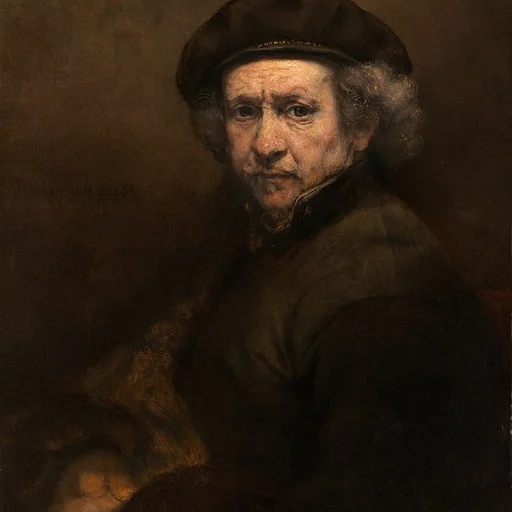
Rembrandt Harmenszoon van Rijn (15 July 1606 – 4 October 1669), known mononymously as Rembrandt, was a Dutch Golden Age painter, printmaker, and draughtsman.

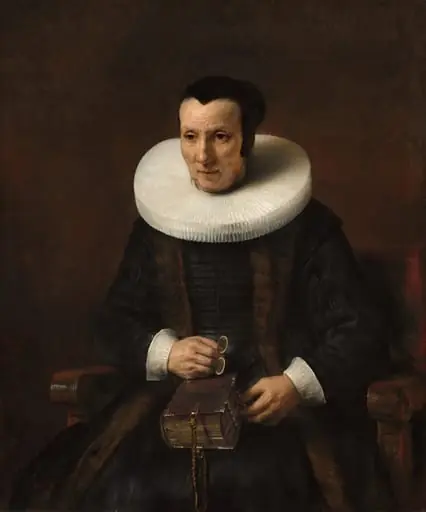
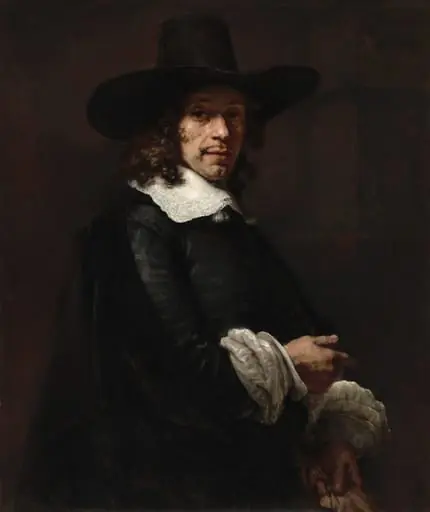
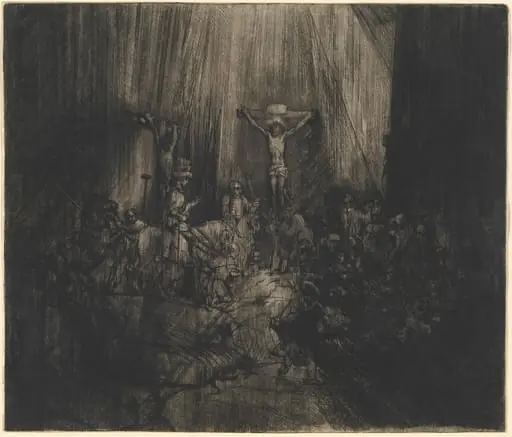 Christ Crucified between the Two Thieves (The Three Crosses)
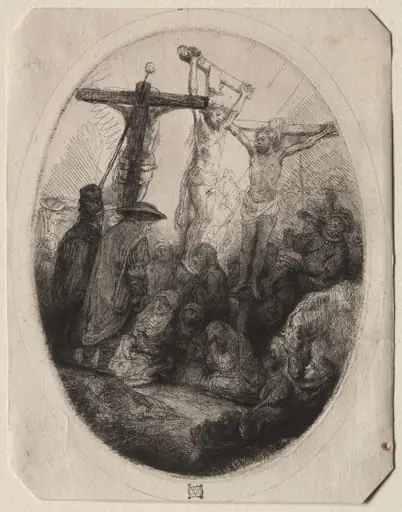 Christ Crucfied Between Two Thieves: An Oval Plate
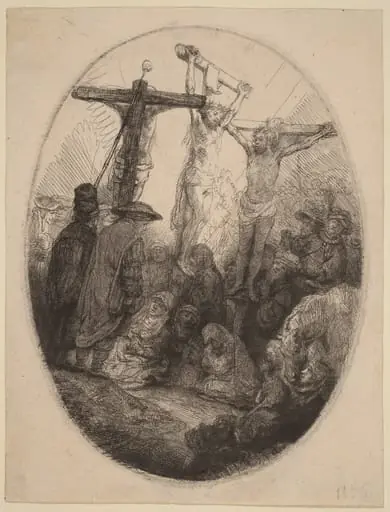 Christ Crucified between the Two Thieves: an Oval Plate
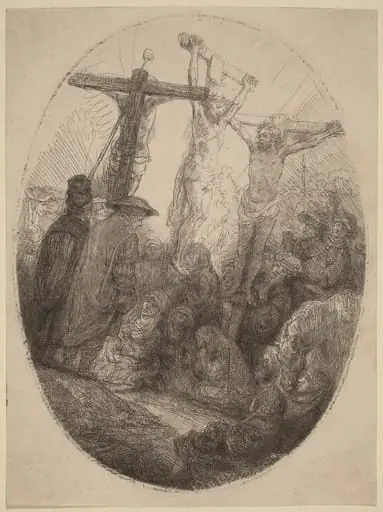 Christ Crucified between the Two Thieves: an Oval Plate
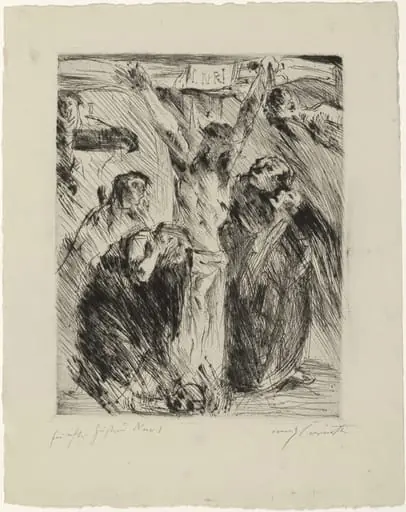 Untitled
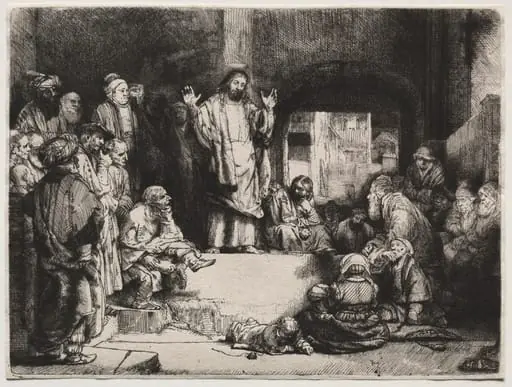 Christ Preaching ('La Petite Tombe')
 The Presentation in the Temple
 Untitled