Artwork
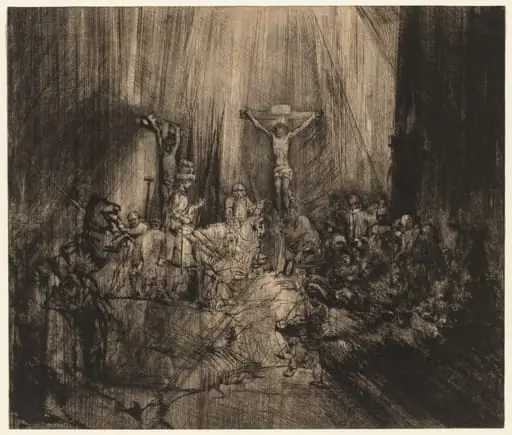
Christ Crucified between the Two Thieves (The Three Crosses)
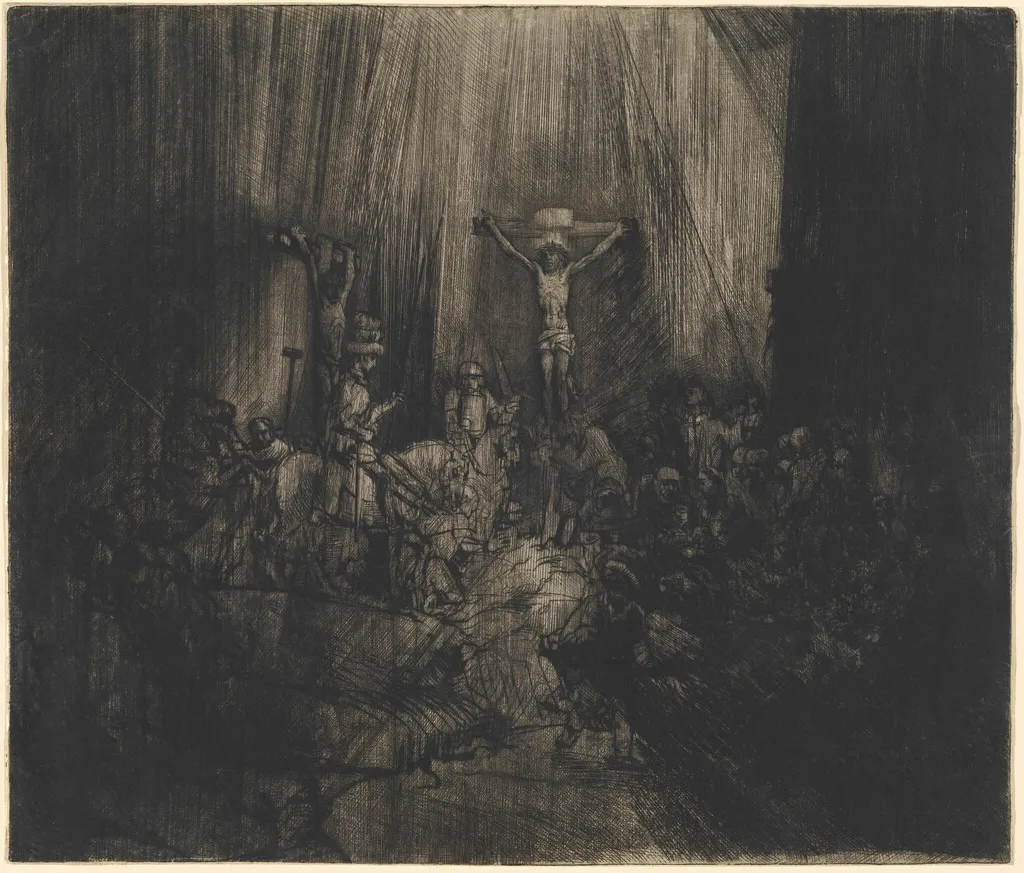
Christ Crucified between the Two Thieves (The Three Crosses) is an ink print by the Baroque artist Rembrandt. It dates from 1653 and is held in the collection of the Rosenwald Collection.
About this work
Overview
Rembrandt’s 1653 drypoint print presents the crucifixion scene with three wooden crosses. The central figure is Christ, flanked by the two thieves. Executed on laid paper, the work relies on the stark contrast of illuminated forms against deep shadows, emphasizing the solemnity of the moment.
Subject & Meaning
The composition focuses on the biblical narrative of the crucifixion, positioning Jesus as the focal point between the two condemned men. The arrangement underscores themes of sacrifice and redemption, inviting contemplation of the theological significance of Christ’s suffering.
Technique & Style
Created by incising lines directly into a copper plate with a sharp needle, the drypoint method yields rich, velvety blacks and fine burr lines. Rembrandt’s handling of light follows chiaroscuro principles, using strong illumination to model the figures and generate pronounced chiaroscuro effects across the paper surface.
History & Provenance
The print was produced in the later period of Rembrandt’s career, a time when he increasingly turned to printmaking. It has been documented in several collections of his graphic works and remains an example of his mature approach to religious subjects in the medium of drypoint.
Artist & collection
Artist
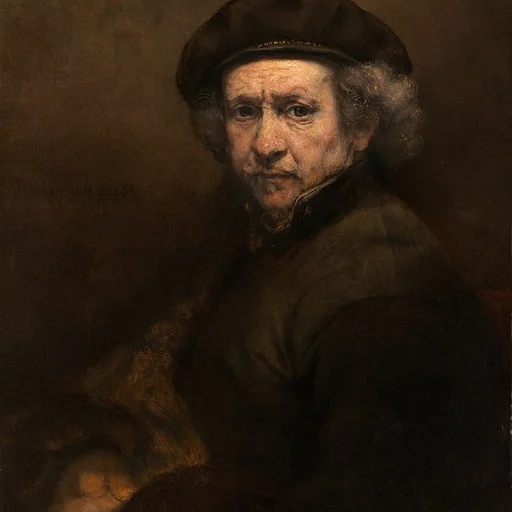
Rembrandt Harmenszoon van Rijn (15 July 1606 – 4 October 1669), known mononymously as Rembrandt, was a Dutch Golden Age painter, printmaker, and draughtsman.
 Christ Crucified Between the Two Thieves: 'The Three Crosses'
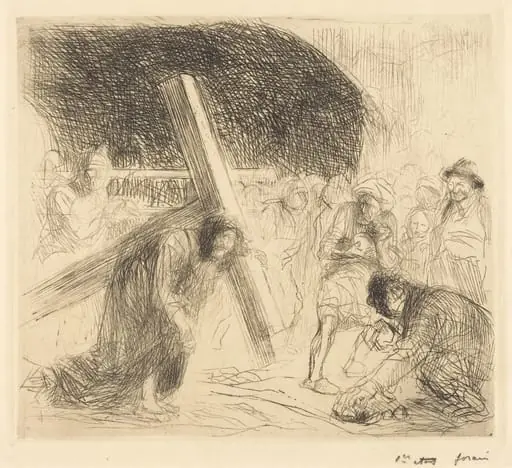 Le Christ portant sa croix (7e planche) (Christ Carrying the Cross) (seventh plate)
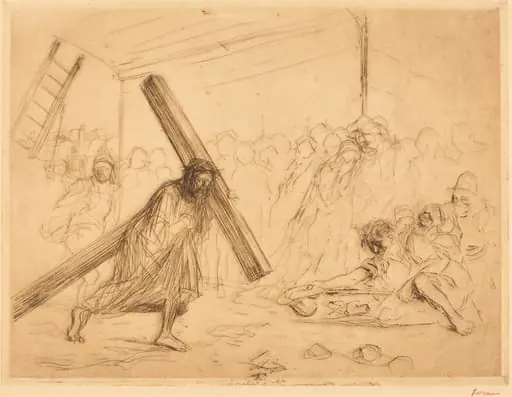 Le Christ portant sa croix (4e planche) (Christ Carrying the Cross) (fourth plate)
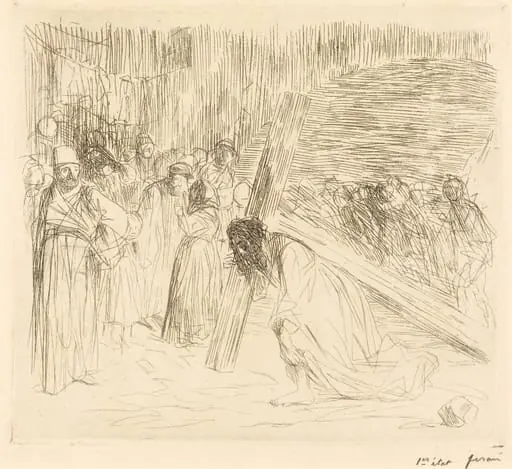 Le Christ portant sa croix (5e planche) (Christ Carrying the Cross) (fifth plate)
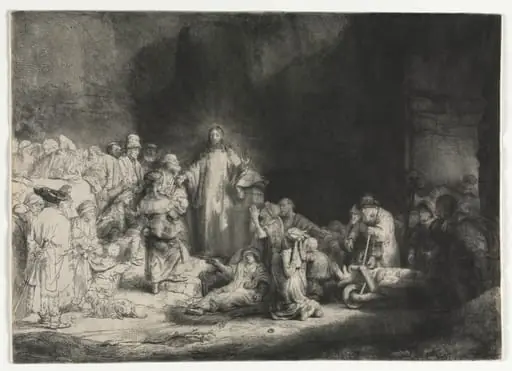 The Hundred Guilder Print
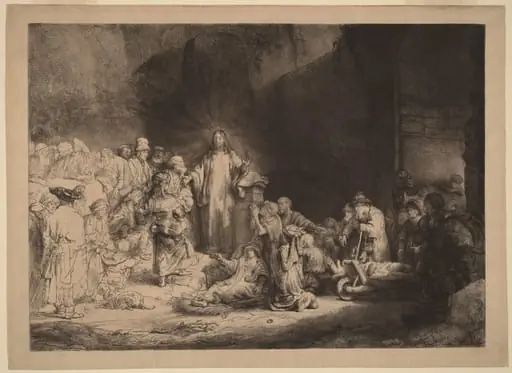 Christ Preaching (The Hundred Guilder Print)
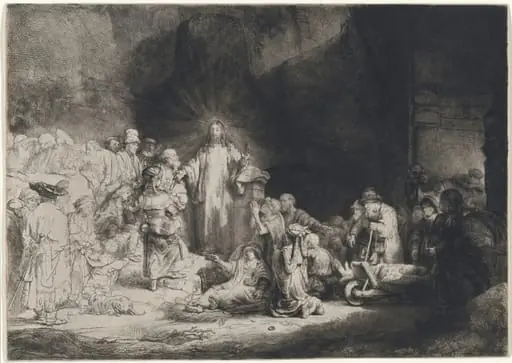 Christ Preaching (The Hundred Guilder Print)
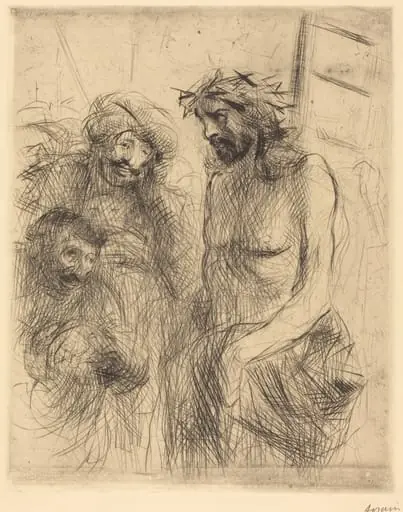 Le Christ aux outrages (The Mocking of Christ)
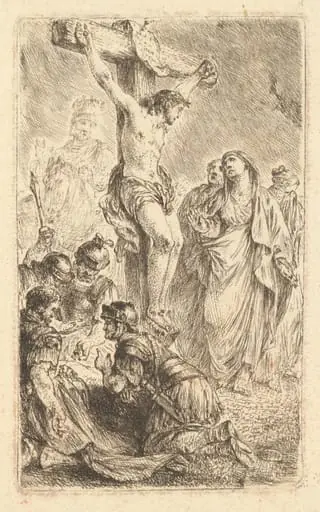 Christ on the Cross