Artwork
Self-Portrait Frowning: Bust
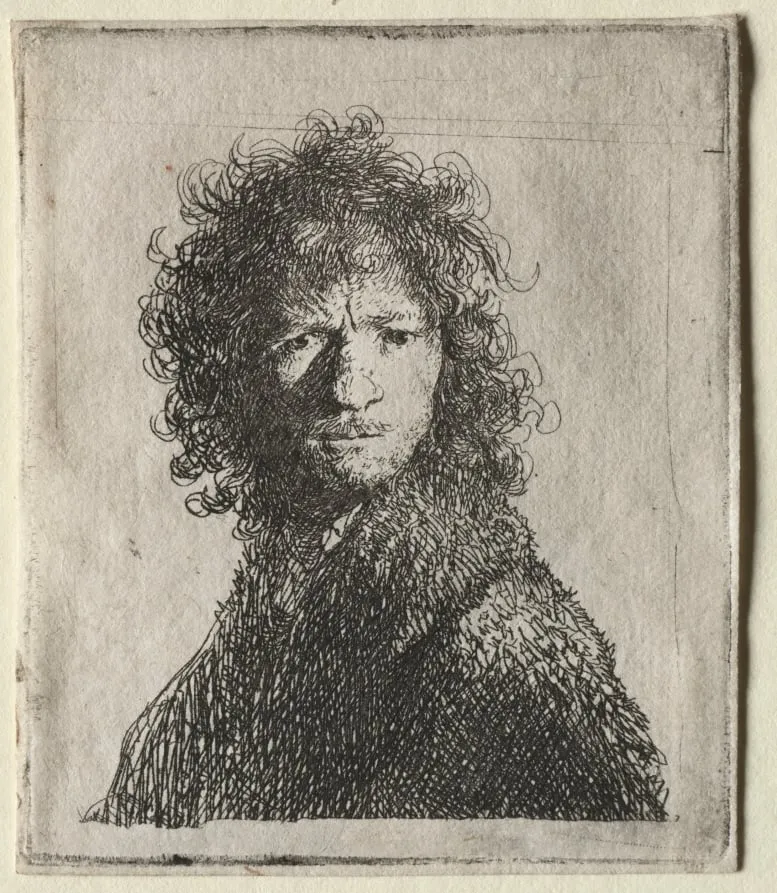
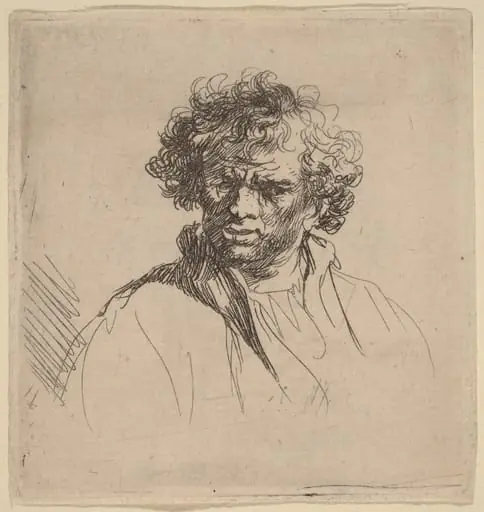
Self-Portrait Frowning: Bust is a print by the Baroque artist Rembrandt. It dates from 1630 and is held in the collection of the Cleveland Museum of Art.
About this work
Overview
Created in 1630, this etching by Rembrandt van Rijn presents a close-up view of the artist’s own face, rendered in monochrome ink on paper.
Created in 1630, this etching by Rembrandt van Rijn presents a close-up view of the artist’s own face, rendered in monochrome ink on paper. The composition focuses tightly on the head and upper shoulders, capturing a moment of introspection. The work is part of a broader series of self-portraits Rembrandt produced during his early career, reflecting his ongoing engagement with personal representation and expressive possibility.
Subject & Meaning
The subject is Rembrandt himself, depicted with a furrowed brow and downward gaze, suggesting contemplation or emotional intensity. His curly hair and thick beard frame a face turned slightly away, avoiding direct eye contact with the viewer. The frown, combined with the high collar that encloses the neck, conveys a sense of inward focus rather than outward display, aligning with the introspective tone common in his self-studies of this period.
Technique & Style
Rembrandt employed etching to achieve a range of tonal effects, using dense, cross-hatched lines to model form and shadow. The darkest areas—on the forehead and cheeks—contrast sharply with the lighter, more open strokes defining the collar and hair. The fur collar is rendered with layered, textured marks that suggest volume and materiality, demonstrating his mastery of chiaroscuro to create depth without color.
History & Provenance
The print entered the collection of The Cleveland Museum of Art in the 20th century, having passed through several private collections since its creation. It was produced during Rembrandt’s formative years in Leiden, when he was experimenting with printmaking as a medium for personal and artistic exploration. Its survival in good condition reflects careful handling over centuries.
Context
In the early 1630s, Rembrandt was refining his approach to self-portraiture across multiple media, including painting, drawing, and etching. This period coincided with his rising reputation in Amsterdam, yet he continued to turn inward, using his own image as a vehicle for technical and psychological study. The work reflects broader Dutch interest in individual identity and the artist’s role as observer.
Legacy
This etching contributes to a body of self-portraits that helped redefine the genre in Western art. Rather than idealizing his appearance, Rembrandt presented himself with unflinching honesty, influencing later artists to treat self-representation as a space for emotional and formal inquiry. Its emphasis on texture and shadow remains a reference point in the study of printmaking technique.
Artist & collection
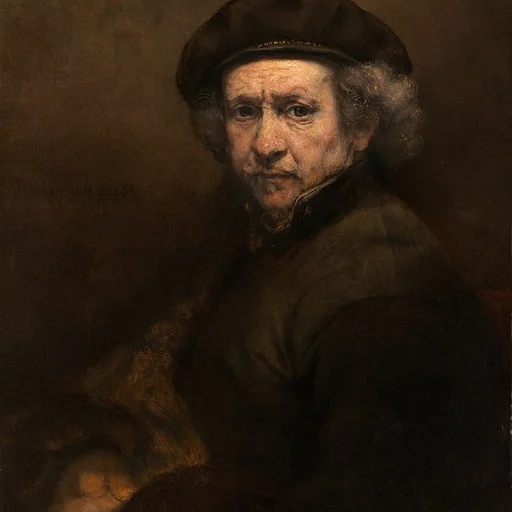
Artist
Rembrandt Harmenszoon van Rijn (15 July 1606 – 4 October 1669), known mononymously as Rembrandt, was a Dutch Golden Age painter, printmaker, and draughtsman.