Artwork
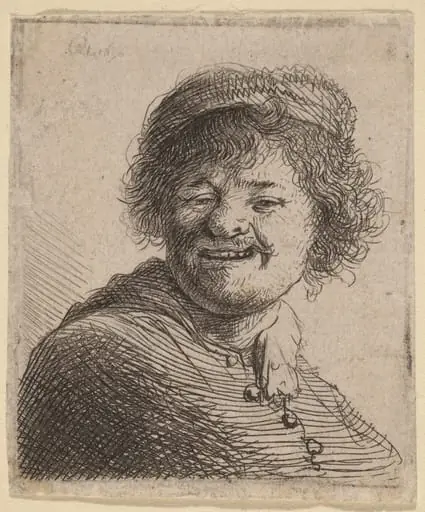
Self-Portrait in a Cap, Open-Mouthed
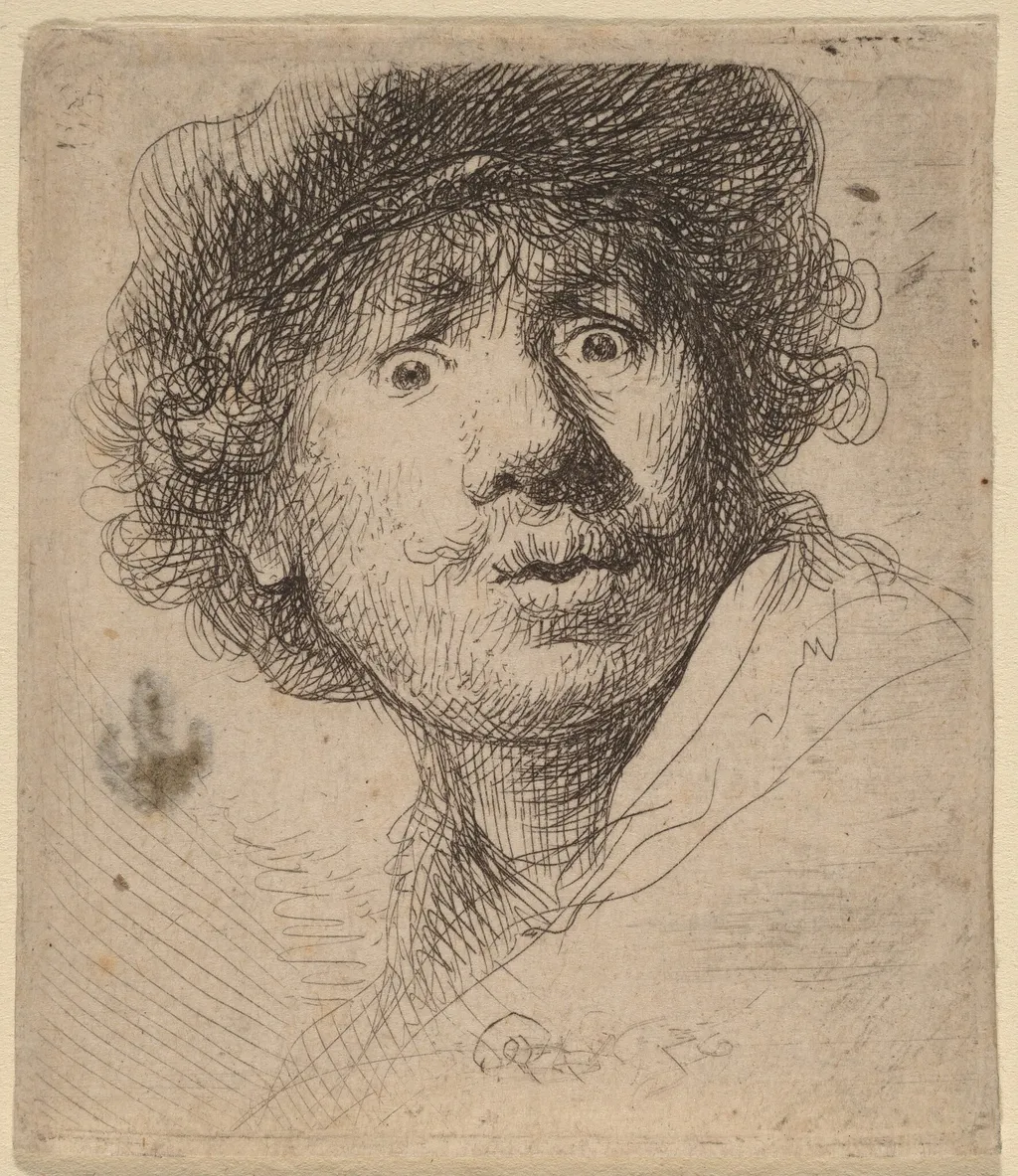
Self-Portrait in a Cap, Open-Mouthed is an ink print by the Baroque artist Rembrandt. It dates from 1630 and is held in the collection of the National Gallery of Art.
About this work
Overview
Rembrandt van Rijn produced this self‑portrait etching in 1630. The work presents the artist’s head turned slightly toward the viewer, wearing a cap and captured with an open mouth. Executed as a single‑plate print, the image functions as a rapid study rather than a polished composition, reflecting the artist’s interest in spontaneous expression.
Subject & Meaning
The portrait depicts Rembrandt himself, focusing on the facial features rather than elaborate costume or background. The open mouth and direct gaze suggest a moment of vocal or emotional intensity, while the untidy hair conveys a sense of immediacy. The work can be read as an exploration of the artist’s own physiognomy and expressive potential.
Technique & Style
Created with a metal plate and a burin, the etching relies on swift, tangled lines to render hair and facial contours. Areas of the chin and jaw remain loosely rendered, with smudged marks that hint at unfinished intention. This sketch‑like approach aligns with Rembrandt’s practice of using etching to experiment with light, shadow, and fleeting gestures.
History & Provenance
The print dates to the early 1630s, a period when Rembrandt was establishing his reputation in Amsterdam. It is catalogued among his numerous self‑portraits, many of which served as studies for later paintings or as means of disseminating his image. Surviving impressions are held in several major museum collections, confirming its circulation during the artist’s lifetime.
Own this work as a print
Artist & collection
Artist
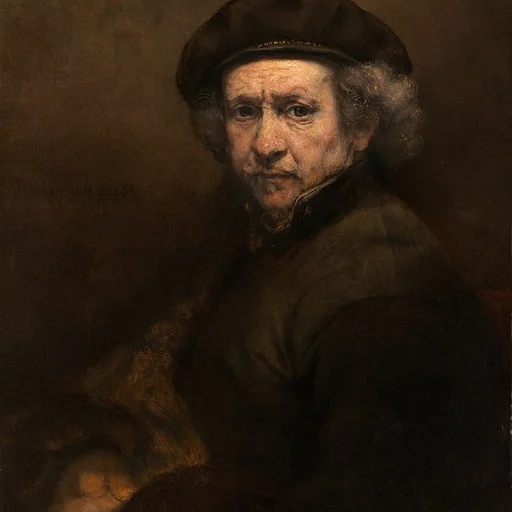
Rembrandt Harmenszoon van Rijn (15 July 1606 – 4 October 1669), known mononymously as Rembrandt, was a Dutch Golden Age painter, printmaker, and draughtsman.