Artwork
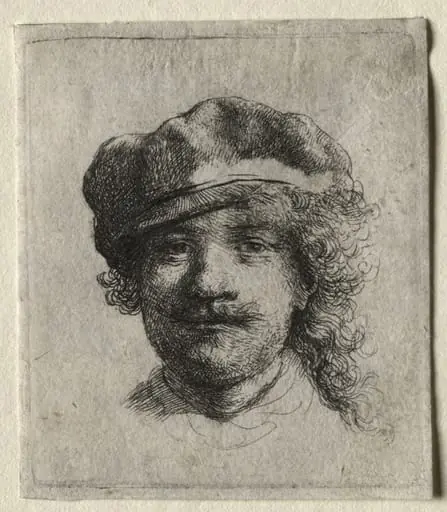
Self-Portrait in a Fur Cap
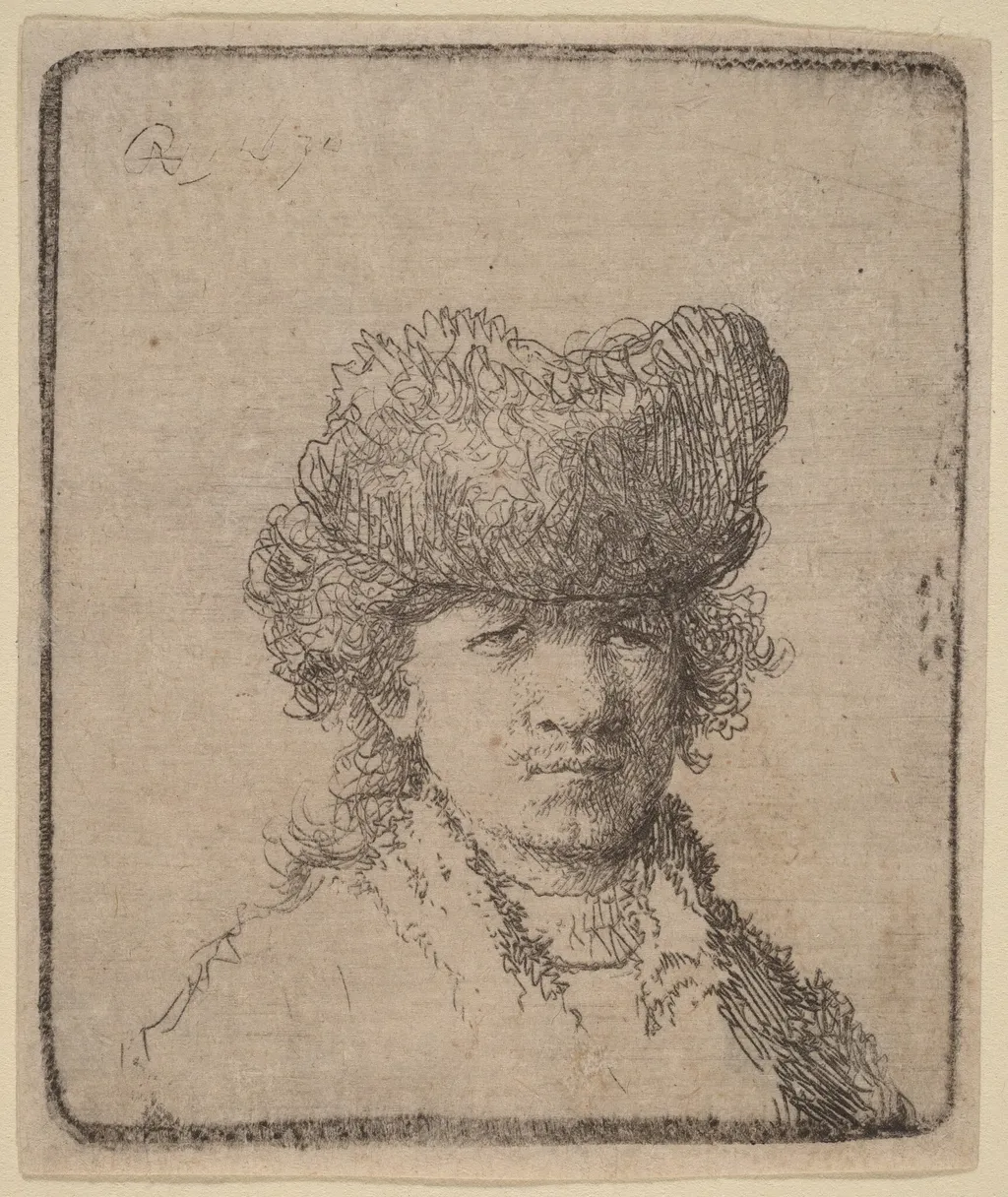
Self-Portrait in a Fur Cap is an ink print by the Baroque artist Rembrandt. It dates from 1630 and is held in the collection of the National Gallery of Art.
About this work
Overview
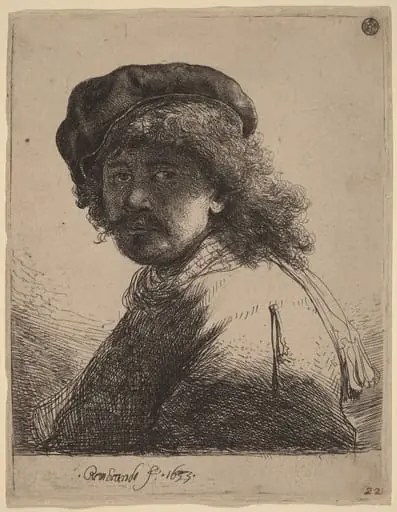
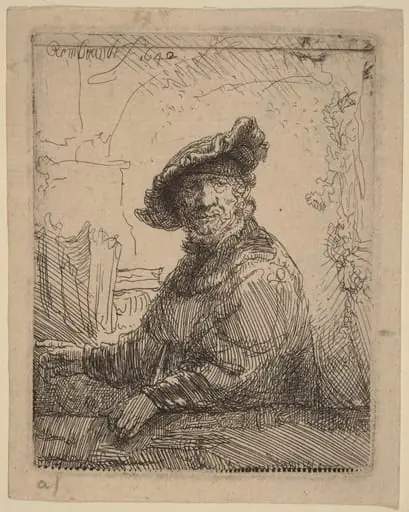
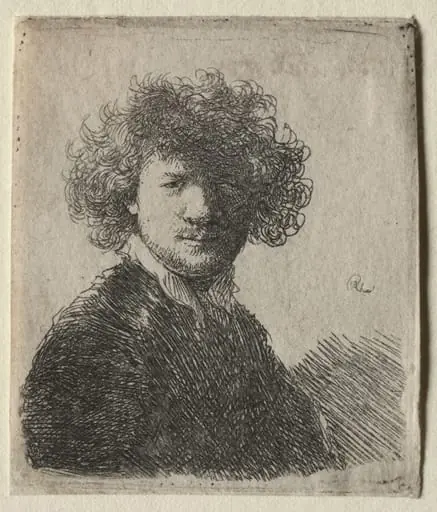
Rembrandt van Rijn produced this self‑portrait etching in 1630. The work presents the artist’s head turned slightly, covered by a voluminous fur cap. Executed on a metal plate and printed on paper with a yellowed, worn margin, the image conveys a spontaneous, sketch‑like quality.
Subject & Meaning
The composition focuses on the artist’s face, partially obscured by the cap, suggesting a private, informal moment rather than a formal commission. The turned gaze and informal attire hint at self‑reflection and the everyday persona that Rembrandt explored in his numerous self‑portraits.
Technique & Style
Created through etching, Rembrandt incised the design with a needle into a ground‑coated copper plate, then immersed it in acid to bite the lines. The resulting prints display loose, ragged strokes, especially in the fur and hair, giving the surface a tactile, almost fuzzy appearance that contrasts with the smoother facial features.
History & Provenance
The print dates to the early 1630s, a period when Rembrandt was establishing his reputation in Amsterdam. Surviving impressions are held in several European collections, and the work’s worn paper edge indicates it has been handled and exhibited over centuries, reflecting its continued scholarly interest.
Artist & collection
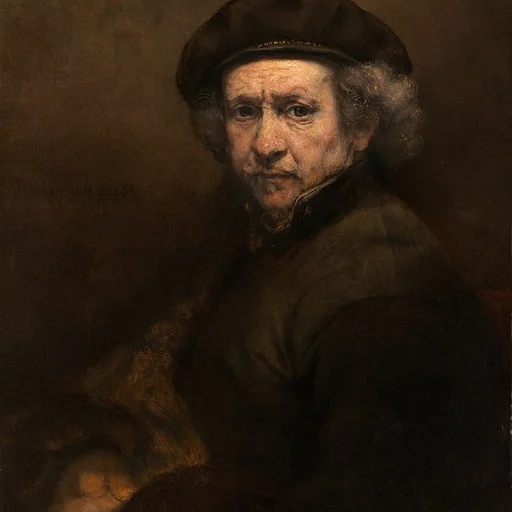
Artist
Rembrandt Harmenszoon van Rijn (15 July 1606 – 4 October 1669), known mononymously as Rembrandt, was a Dutch Golden Age painter, printmaker, and draughtsman.