Artwork
The Blindness of Tobit: The Large Plate
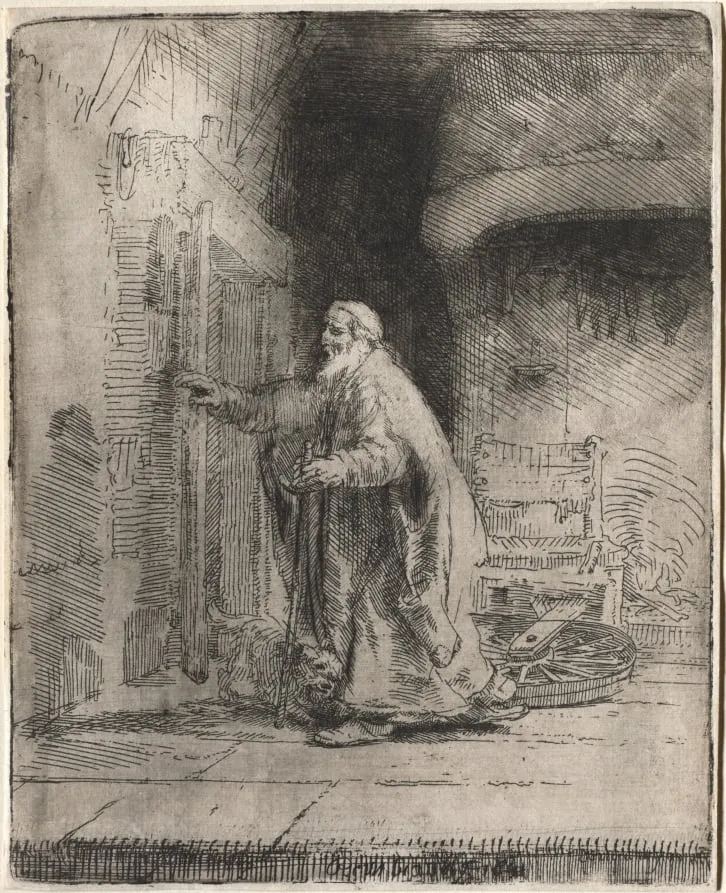
The Blindness of Tobit: The Large Plate is a print by the Baroque artist Rembrandt. It dates from 1651 and is held in the collection of the Cleveland Museum of Art.
About this work
Overview
This large etching by Rembrandt depicts Tobit, a blind patriarch, in a moment of emotional turmoil as he fumbles through his home, anticipating the return of his son Tobias. The scene captures tactile urgency and psychological depth, rendered through meticulous plate manipulation that heightens contrast and emotional resonance.
Subject & Meaning
Tobit, having been blind for years, reacts to the prospect of his son’s return by knocking over a spinning wheel and reaching toward the doorway. His physical disorientation mirrors spiritual longing, while the absence of ink on his beard intensifies his expression of hope and anguish. The shadow cast by firelight suggests his distance from both physical sight and divine favor.
Technique & Style
Rembrandt employed selective inking and wiping of the copper plate to create stark tonal contrasts. Areas of deep shadow isolate Tobit’s form, while uninked regions—particularly his beard—catch the light, drawing focus to his face. This controlled chiaroscuro enhances emotional gravity without overt theatricality, grounding the scene in intimate realism.
History & Provenance
The print belongs to Rembrandt’s mature period, likely produced in the 1650s. It survives in a small number of impressions, many of which show variations in ink application, indicating the artist’s hands-on approach to each impression. The plate was later reworked, suggesting ongoing experimentation with the composition’s emotional impact.
Context
Tobit’s story, drawn from the deuterocanonical Book of Tobit, was familiar in Dutch Reformed households as a tale of faith, suffering, and divine intervention. Rembrandt’s focus on the father’s vulnerability reflects broader 17th-century interest in personal piety and the inner life of biblical figures, moving beyond narrative spectacle to psychological nuance.
Legacy
This print influenced later artists through its use of light and touch to convey inner states. Its restrained drama and emphasis on tactile experience set a precedent for intimate biblical scenes in printmaking, distinguishing Rembrandt’s approach from more ornate contemporaries and reinforcing his reputation for psychological depth.
Artist & collection
Artist
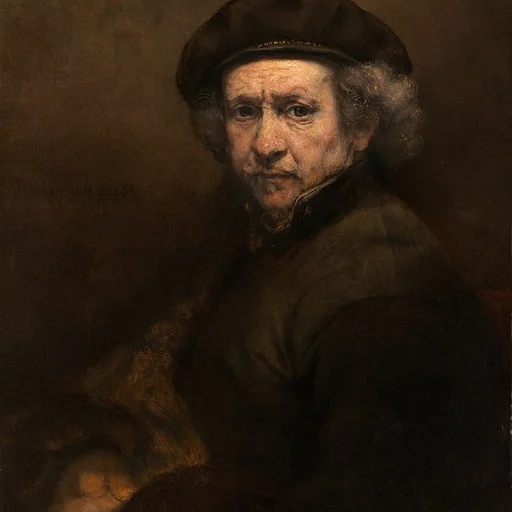
Rembrandt Harmenszoon van Rijn (15 July 1606 – 4 October 1669), known mononymously as Rembrandt, was a Dutch Golden Age painter, printmaker, and draughtsman.