Artwork
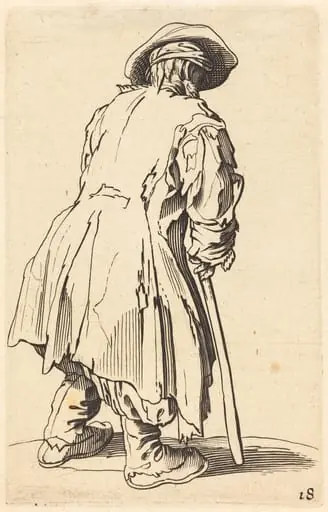
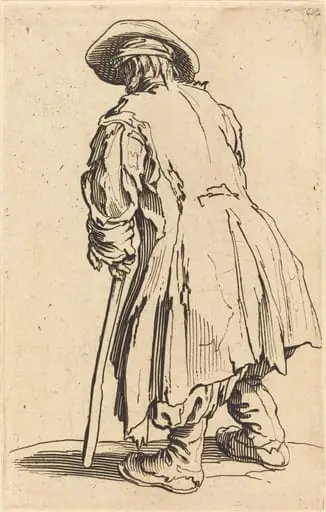
Beggar with a Wooden Leg
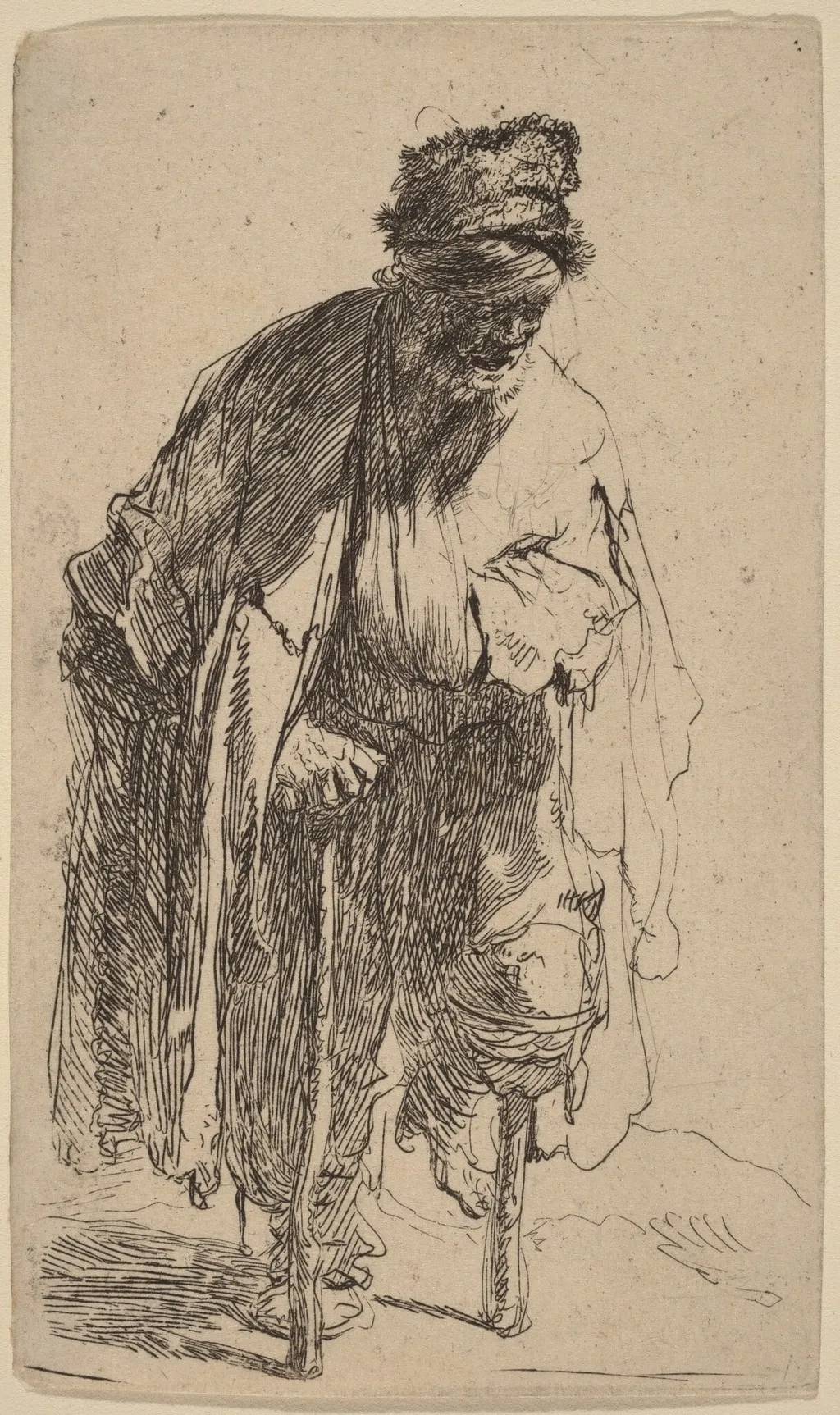
Beggar with a Wooden Leg is an ink print by the Baroque artist Rembrandt. It dates from 1630 and is held in the collection of the National Gallery of Art.
About this work
Overview
Rembrandt’s etching *Beggar with a Wooden Leg*, dated to around 1630, presents a solitary figure whose physical impairment is emphasized by a wooden prosthetic and a supporting crutch. The composition isolates the subject against an empty background, drawing attention to his posture and the texture of his loosely draped clothing.
Subject & Meaning
The work portrays a disabled beggar, his face obscured by shadow, suggesting anonymity and the universal plight of poverty. The figure’s reliance on a crutch and the stark simplicity of the scene invite contemplation of vulnerability and resilience within the social fabric of 17th‑century Dutch life.
Technique & Style
Executed in etching, Rembrandt employs fine line work to render the folds of the coat and the grain of the wooden leg, while broader washes create deep shadows that conceal facial details. The contrast between delicate hatching and bold, unfilled spaces reflects the artist’s early exploration of chiaroscuro in printmaking.
History & Provenance
Created circa 1630, the print belongs to the early period of Rembrandt’s career, when he was establishing his reputation in Amsterdam. It has passed through several private collections before entering public holdings, though specific ownership records remain limited.
Context
The image aligns with the Baroque era’s interest in everyday subjects and dramatic lighting. By focusing on a marginalized individual, Rembrandt joins contemporary Dutch artists who documented the lives of common people, reflecting the period’s growing attention to social realism.
Artist & collection

Artist
Rembrandt Harmenszoon van Rijn (15 July 1606 – 4 October 1669), known mononymously as Rembrandt, was a Dutch Golden Age painter, printmaker, and draughtsman.