Artwork
The Blindness of Tobit: The Larger Plate
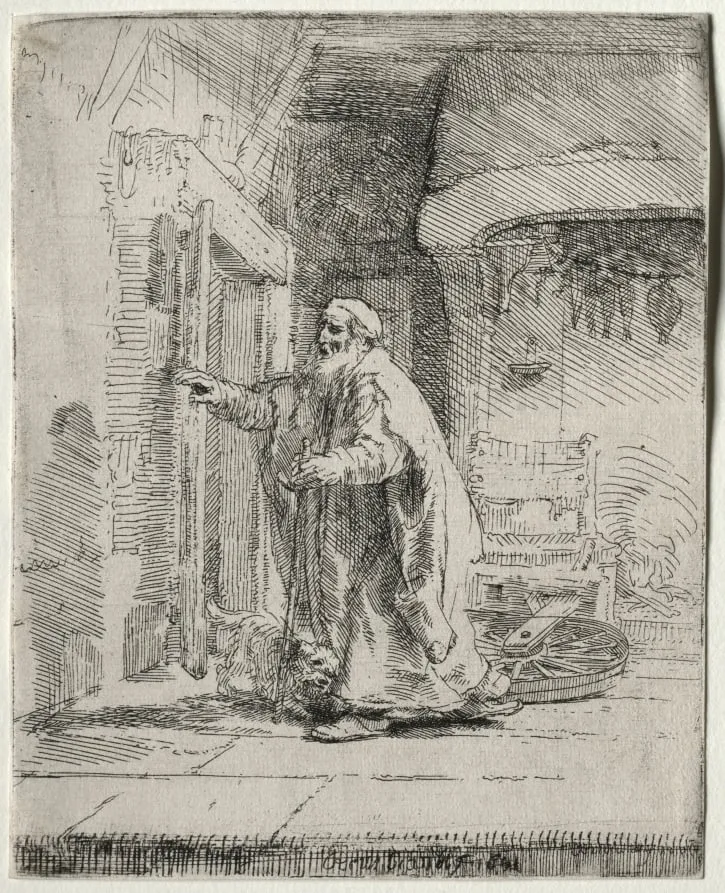
The Blindness of Tobit: The Larger Plate is a print by the Baroque artist Rembrandt. It dates from 1651 and is held in the collection of the Cleveland Museum of Art.
About this work
Overview
Rendered in ink on paper, it is one of two versions the artist produced of the scene, distinguished by its larger format and heightened emotional intensity.
Created in 1651, this etching by Rembrandt van Rijn depicts a moment from the biblical Book of Tobit. Rendered in ink on paper, it is one of two versions the artist produced of the scene, distinguished by its larger format and heightened emotional intensity. The work is part of the collection at The Cleveland Museum of Art, where it is valued for its intimate portrayal of human vulnerability and technical mastery in printmaking.
Subject & Meaning
The scene illustrates Tobit, an elderly man rendered blind, being guided by his son Tobias. Tobit leans heavily on a staff, his face turned away, suggesting inner turmoil or resignation. Tobias crouches beside him, offering support through touch rather than words. The moment captures quiet dependence and familial duty, emphasizing spiritual and physical fragility over dramatic action, aligning with Rembrandt’s interest in quiet human moments.
Technique & Style
Rembrandt employed etching with burin and drypoint to achieve rich tonal contrasts. Deep shadows envelop the interior space, while selective light falls on the figures’ hands and faces, heightening emotional focus. The rough textures of stone walls and wooden furniture are suggested through varied line weight and hatching, not detailed rendering. The composition’s asymmetry and cropped doorway enhance the sense of intimacy and immediacy.
History & Provenance
The print was made during Rembrandt’s later years, a period marked by personal hardship and artistic experimentation. It entered The Cleveland Museum of Art’s collection in the 20th century through established acquisition channels. While its early ownership history is not fully documented, its presence in major collections since the 1800s confirms its recognized significance among Rembrandt’s graphic works.
Context
In mid-17th century Amsterdam, biblical subjects remained central to artistic production, especially among Protestant audiences. Rembrandt’s approach diverged from idealized narratives, favoring psychological depth and everyday realism. This print reflects his engagement with domestic spirituality and his interest in portraying aging, disability, and compassion without theatricality, aligning with broader trends in Dutch religious art.
Legacy
This etching is regarded as a pivotal example of Rembrandt’s mature graphic style, influencing later artists through its emotional restraint and technical innovation. Its emphasis on tactile connection and subdued lighting became a reference point for 19th-century printmakers seeking authenticity over ornamentation. Though not widely reproduced in its time, it remains a touchstone in studies of narrative intimacy in printmaking.
Artist & collection
Artist
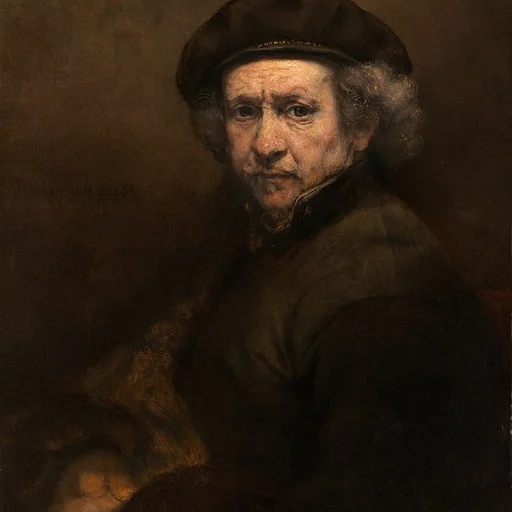
Rembrandt Harmenszoon van Rijn (15 July 1606 – 4 October 1669), known mononymously as Rembrandt, was a Dutch Golden Age painter, printmaker, and draughtsman.

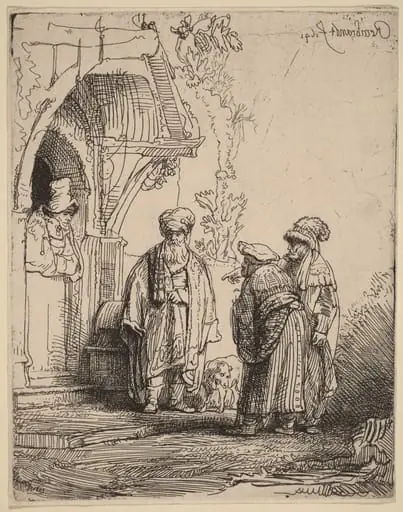 Three Oriental Figures (Jacob and Laban?)
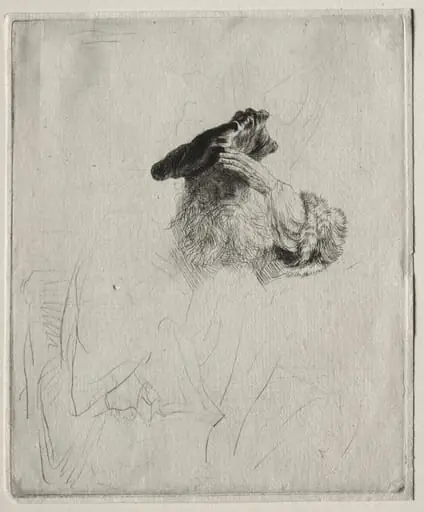 Old Man Shading his Eyes with His Hand
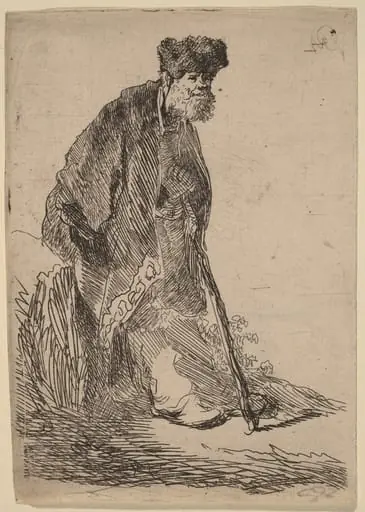 Man in a Coat and Fur Cap Leaning against a Bank
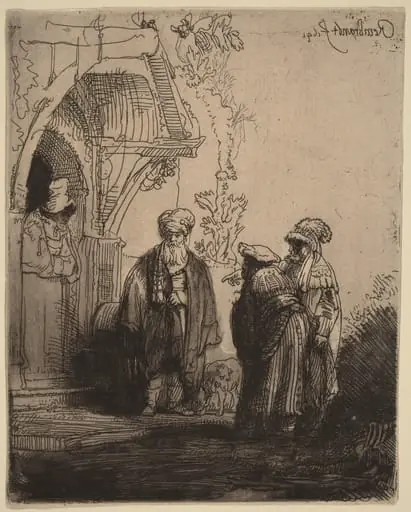 Three Oriental Figures (Jacob and Laban?)
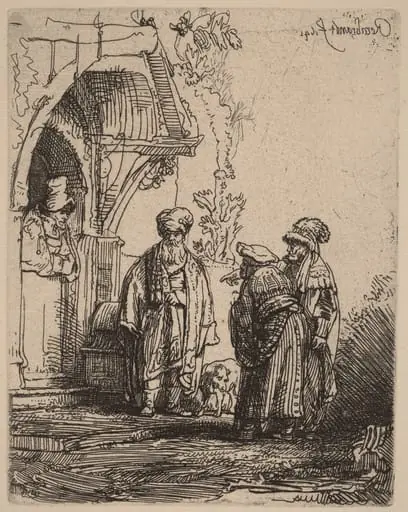 Three Oriental Figures (Jacob and Laban?)
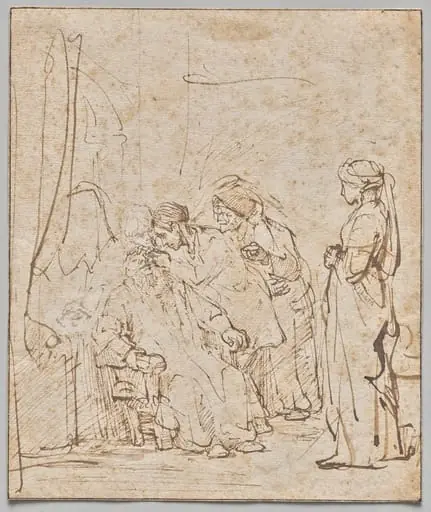 Tobias Healing His Father's Blindness
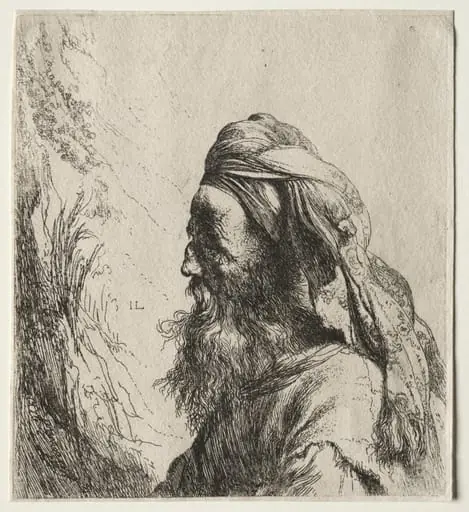 Head of an Oriental
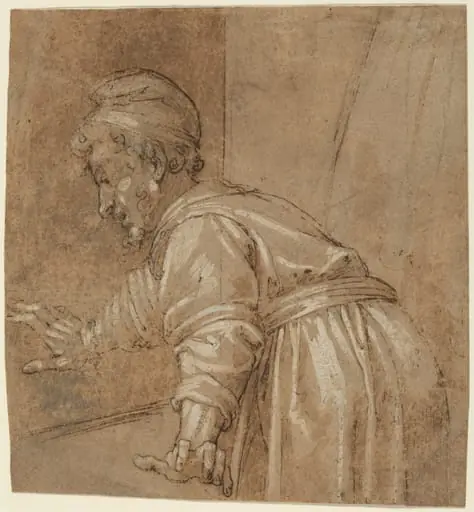 A Man Looking Out a Window
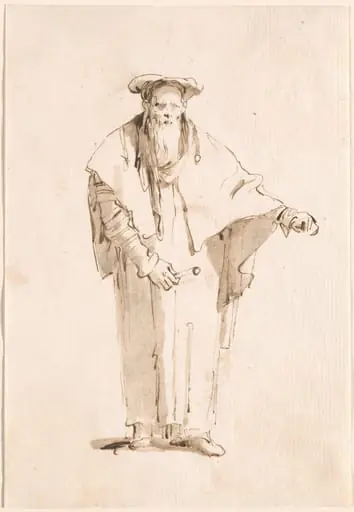 A Standing Oriental Holding a Rod