Artwork
Three Oriental Figures (Jacob and Laban?)
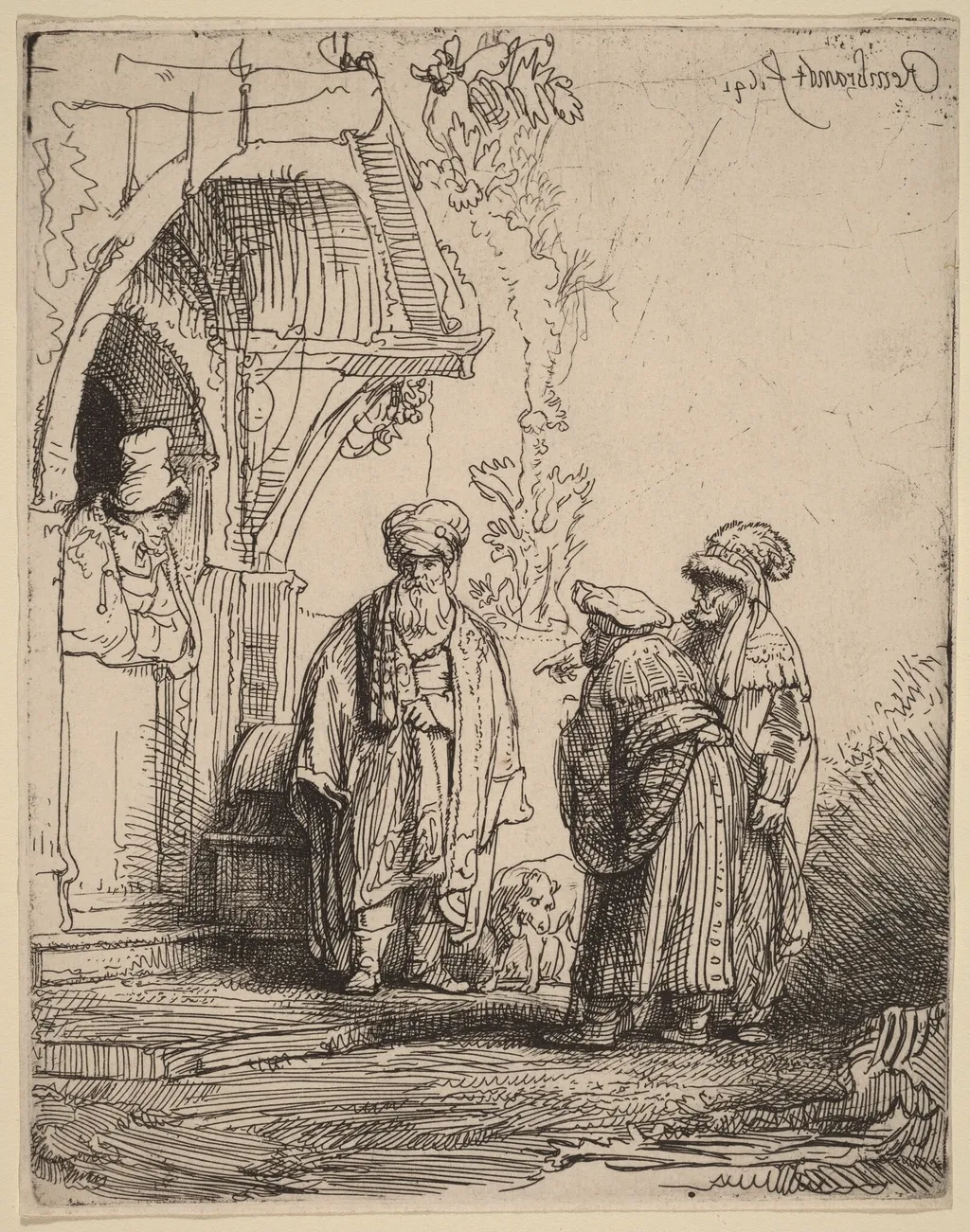
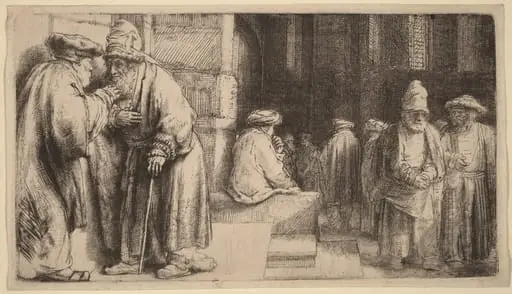
Three Oriental Figures (Jacob and Laban?) is an ink print by the Baroque artist Rembrandt. It dates from 1641 and is held in the collection of the National Gallery of Art.
About this work
Overview
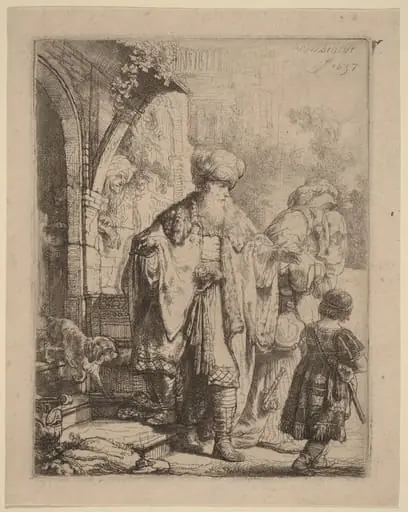
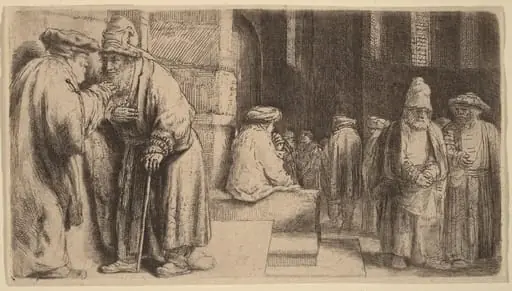
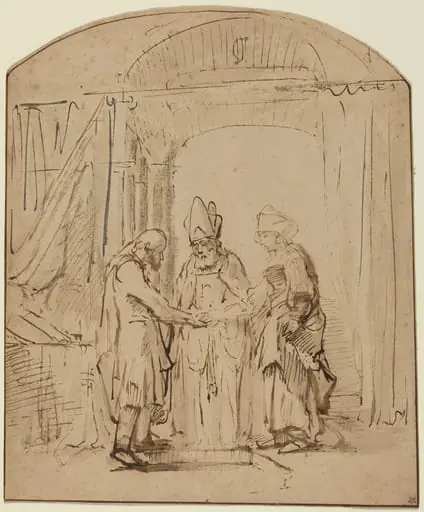
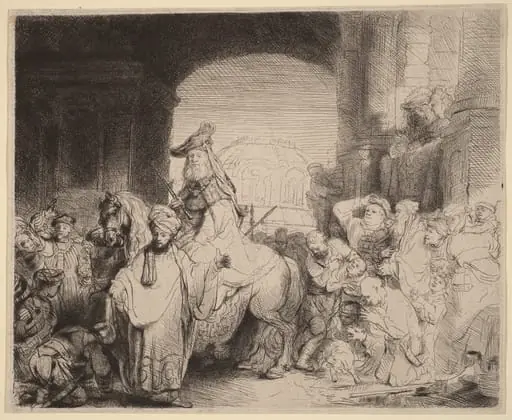
Created in 1641, this small-scale etching by Rembrandt van Rijn presents three figures dressed in period robes. The composition is restrained, focusing attention on the men’s solemn expressions against an unadorned backdrop. The work is catalogued under the title Three Oriental Figures, with a tentative identification of the subjects as Jacob and Laban from the biblical narrative.
Subject & Meaning
The three characters are rendered in traditional Eastern attire, suggesting a scene drawn from a scriptural episode, likely the encounter between Jacob and his father‑in‑law Laban. Their grave demeanors and the absence of overt action invite contemplation of the moral or emotional tension inherent in that story.
Technique & Style
Executed as an etching, the image was incised onto a copper plate and printed in multiple impressions. Rembrandt’s handling of line is economical yet expressive; fine hatching creates subtle shifts in light and shadow, while broader strokes suggest the texture of fabric and the spatial recession of the setting.
History & Provenance
The plate was produced in the early 1640s, a period when Rembrandt was refining his printmaking practice. Surviving impressions have passed through private collections and museum holdings, reflecting the artist’s reputation for producing limited, high‑quality editions of his graphic works.
Context
During the 1640s Rembrandt frequently turned to biblical themes, employing print media to disseminate his interpretations beyond the confines of oil painting. This work aligns with his broader interest in portraying narrative moments with psychological depth, using the intimacy of the etching process to reach a wider audience.
Legacy
Although not among Rembrandt’s most frequently reproduced prints, the etching exemplifies his mastery of line and his ability to convey narrative tension within a compact format. It continues to be studied for its technical finesse and its contribution to the development of narrative printmaking in the Dutch Golden Age.
Artist & collection
Artist
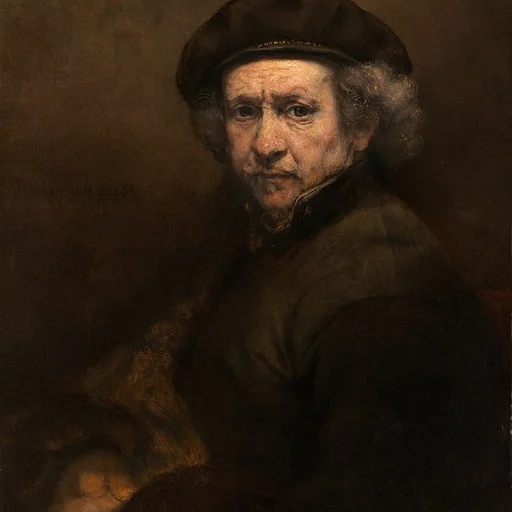
Rembrandt Harmenszoon van Rijn (15 July 1606 – 4 October 1669), known mononymously as Rembrandt, was a Dutch Golden Age painter, printmaker, and draughtsman.