Artwork
Three Oriental Figures (Jacob and Laban?)
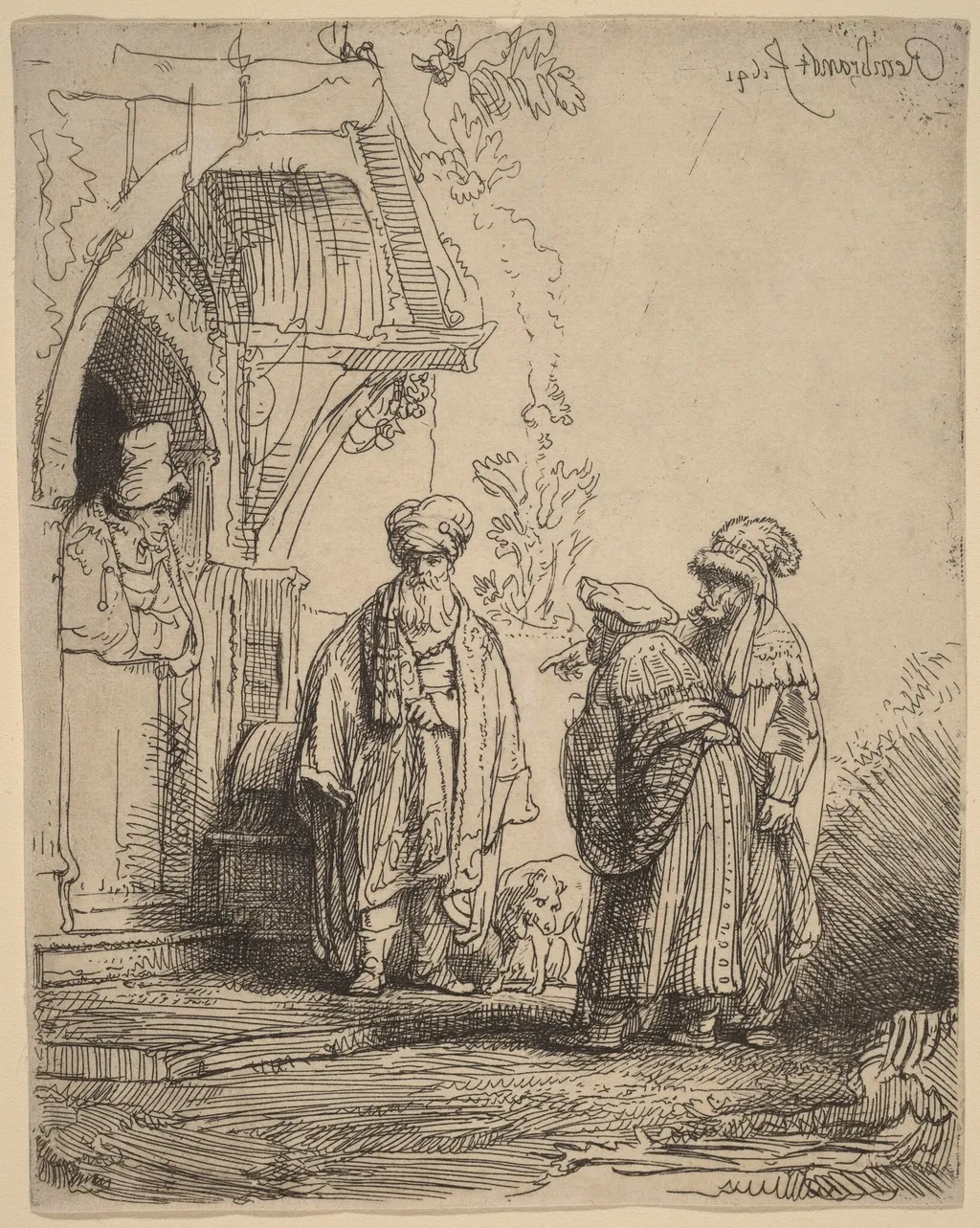
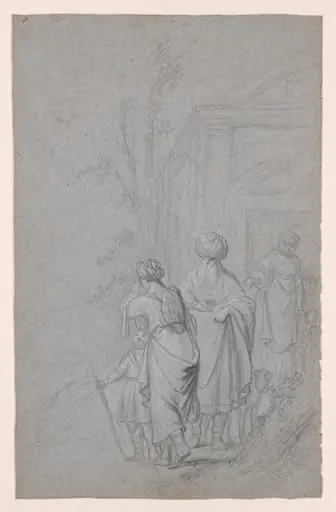
Three Oriental Figures (Jacob and Laban?) is an ink print by the Baroque artist Rembrandt. It dates from 1641 and is held in the collection of the National Gallery of Art.
About this work
Overview
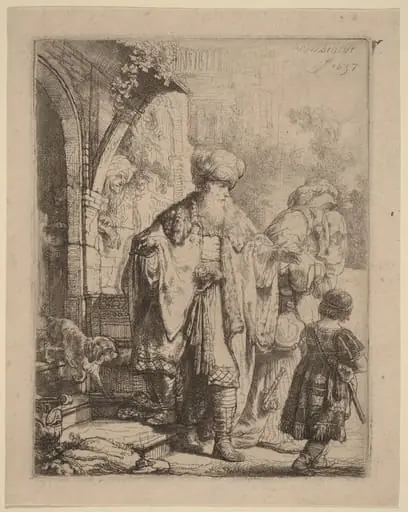
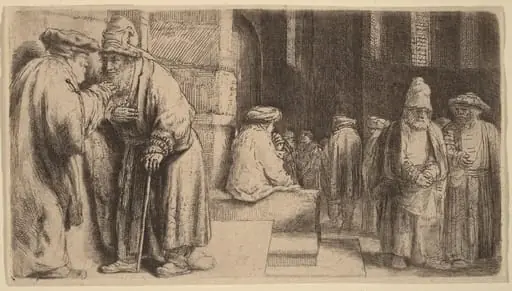
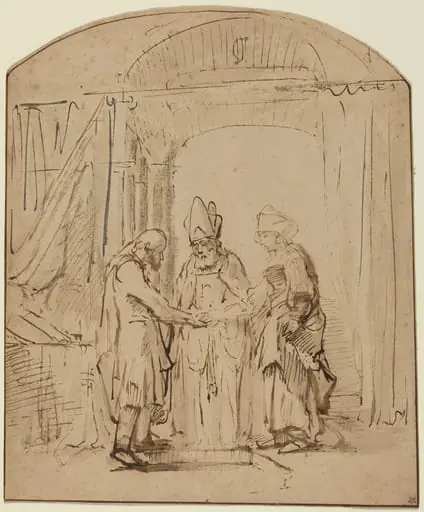
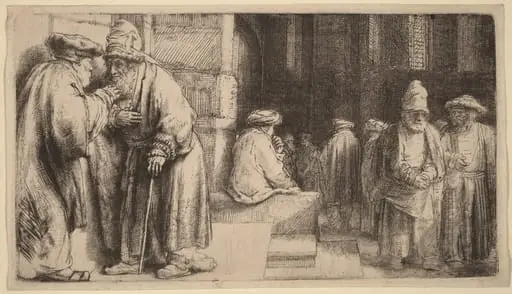
Created in 1641, this work is an etching by the Dutch artist Rembrandt van Rijn. It depicts three figures dressed in flowing robes and turbans, positioned closely together, with one individual gesturing toward an unseen object. The composition is rendered in soft, almost blurred lines that suggest a rapid, confident hand.
Subject & Meaning
The title proposes a biblical identification, possibly representing Jacob and Laban, though the scene is not directly sourced from scripture. The attire and setting evoke a generalized Eastern atmosphere rather than a specific narrative, reflecting contemporary Dutch imaginations of the Near East.
Technique & Style
Rembrandt employed the traditional etching process, incising the image onto a copper plate with acid and then transferring it to paper. The marks are characterized by delicate, smudged lines and a fluid handling of light and shadow, hallmarks of his mature printmaking style.
Context
Although Rembrandt never visited the Middle East, 17th‑century Amsterdam was a hub for imported fabrics and travel accounts, which informed his depiction of exotic dress. The work aligns with a broader European fascination with Oriental subjects during the period.
History & Provenance
The etching is catalogued among Rembrandt’s prints from the early 1640s, a prolific phase for his graphic output. It remains part of museum collections that focus on his printmaking legacy, though specific ownership history is limited in the surviving records.
Artist & collection
Artist
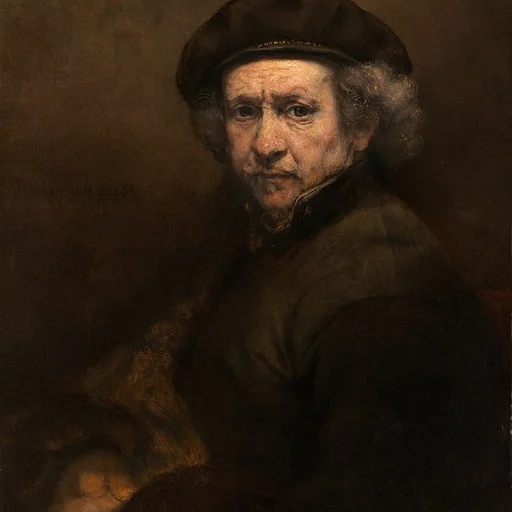
Rembrandt Harmenszoon van Rijn (15 July 1606 – 4 October 1669), known mononymously as Rembrandt, was a Dutch Golden Age painter, printmaker, and draughtsman.