Artwork
Jan Asselijn
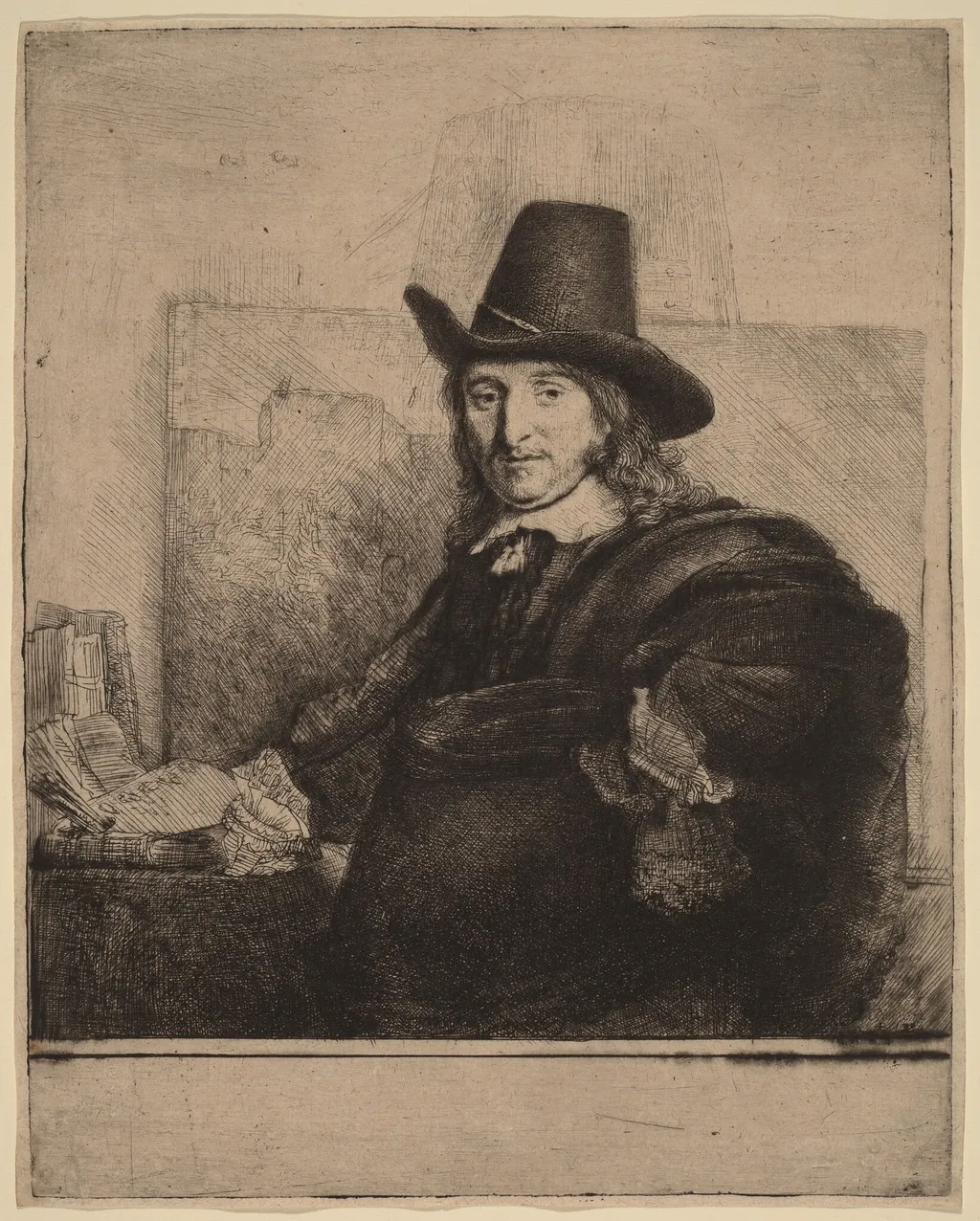
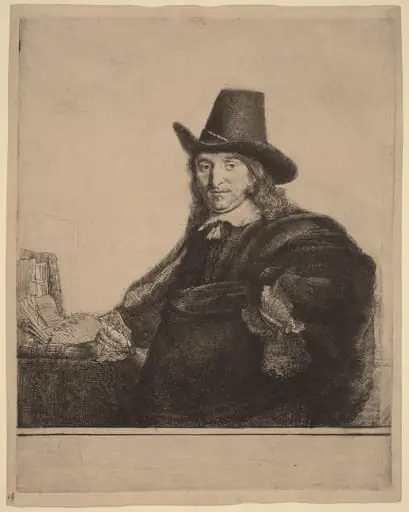
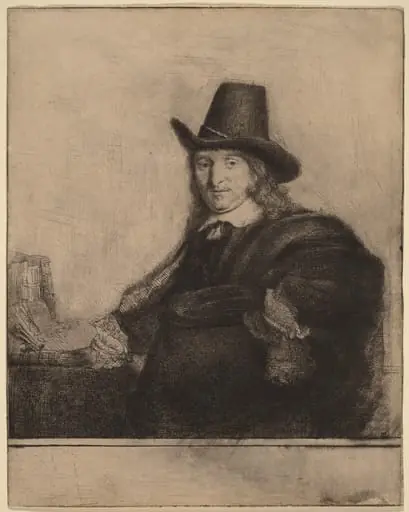
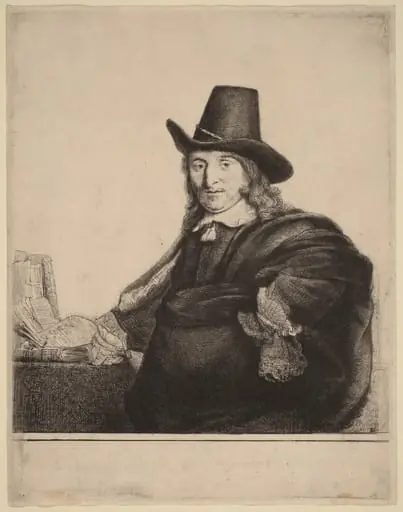
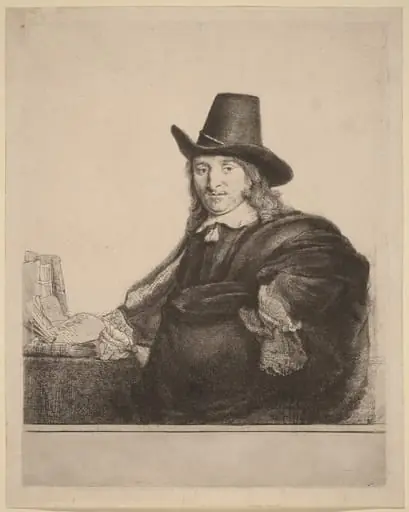
Jan Asselijn is an ink print by the Baroque artist Rembrandt. It dates from 1647 and is held in the collection of the National Gallery of Art.
About this work
Overview
This print, created around 1647, is a portrait of the Dutch artist Jan Asselijn, rendered by Rembrandt van Rijn using etching, drypoint, and burin.
This print, created around 1647, is a portrait of the Dutch artist Jan Asselijn, rendered by Rembrandt van Rijn using etching, drypoint, and burin. The composition captures Asselijn in a three-quarter view, his gaze steady and introspective. The textured surface and nuanced tonal gradations reflect Rembrandt’s mastery of printmaking techniques, emphasizing the sitter’s presence without overt embellishment.
Subject & Meaning
Jan Asselijn, a landscape painter known for his atmospheric scenes, is depicted here with quiet dignity. His long, wavy hair and broad-brimmed hat suggest a cultivated, perhaps scholarly demeanor. The direct gaze and stillness convey a sense of inner reflection, aligning with the intellectual and professional identity of a working artist in mid-17th century Holland, rather than a ceremonial portrayal.
Technique & Style
Rembrandt employed a combination of etching, drypoint, and burin to achieve rich contrasts and tactile depth. The roughness of drypoint lines enhances the texture of Asselijn’s clothing and hair, while the burin’s precision defines the edges of the desk and papers. The background is minimally suggested, focusing attention on the figure and the subtle play of light across his face and coat.
History & Provenance
The print was made during Rembrandt’s mature period, when he frequently portrayed fellow artists and intellectuals. It likely served as a personal or professional tribute, circulating among artistic circles. Early ownership records are sparse, but the work entered major collections in the 19th century, where it was recognized for its technical refinement and psychological insight.
Context
In 1640s Amsterdam, portraits of artists were uncommon as standalone subjects, especially in print form. Rembrandt’s depiction of Asselijn reflects a growing interest in the individuality of creative professionals. The somber tone and intimate scale align with the broader Baroque emphasis on psychological depth, though the work avoids theatricality in favor of quiet realism.
Legacy
This print remains a significant example of Rembrandt’s ability to convey character through minimal means. It influenced later artists interested in the portrait as a vehicle for inner life rather than status. Today, it is studied for its technical innovation and its contribution to the tradition of artist-portraits in Northern European printmaking.
Artist & collection
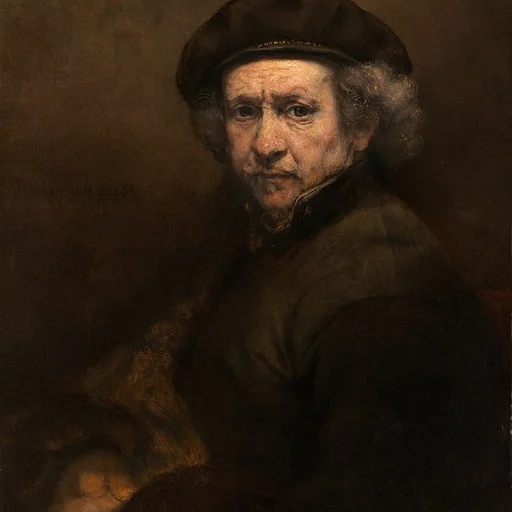
Artist
Rembrandt Harmenszoon van Rijn (15 July 1606 – 4 October 1669), known mononymously as Rembrandt, was a Dutch Golden Age painter, printmaker, and draughtsman.