Artwork
Jan de Vos
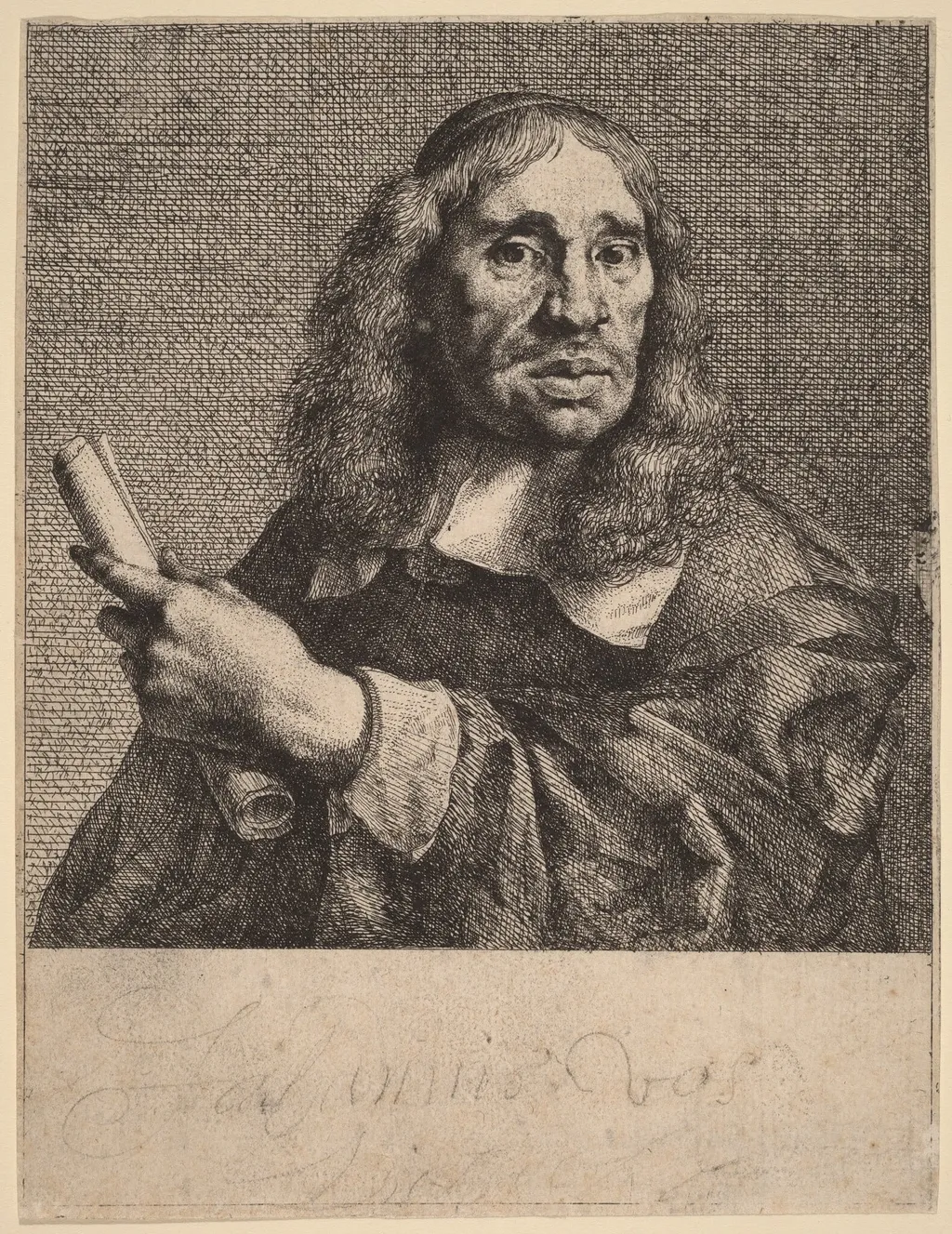
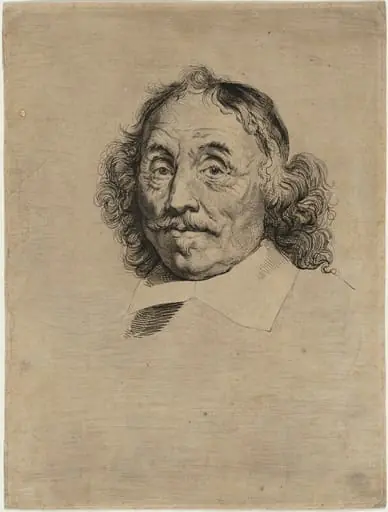
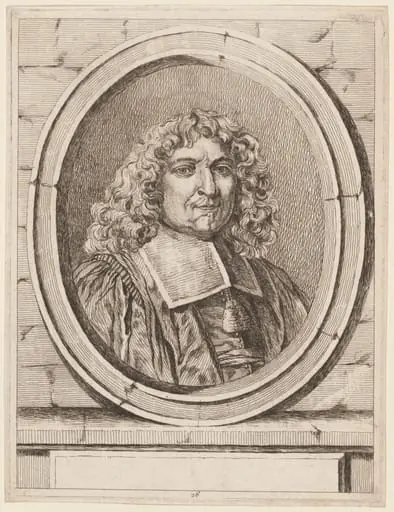
Jan de Vos is an ink print by the Baroque artist Karel Dujardin. It dates from 1657 and is held in the collection of the National Gallery of Art.
About this work
Overview
The composition emphasizes texture and subtle tonal variation, characteristic of mid-17th-century printmaking.
Created in 1657 by Karel Dujardin, this etching portrays Jan de Vos, a Dutch artist and engraver. Rendered in fine linear detail, the work captures a seated figure in quiet repose. The composition emphasizes texture and subtle tonal variation, characteristic of mid-17th-century printmaking. The subject’s stillness and focused gaze convey an introspective mood, typical of portraiture in this period.
Subject & Meaning
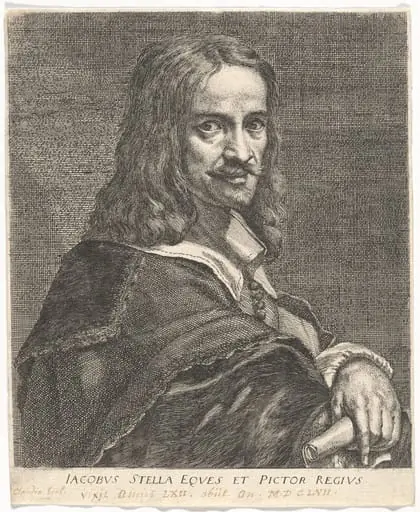
Jan de Vos is depicted as a man of intellectual bearing, dressed in a dark robe over a white shirt with crisp linen cuffs. His right hand holds a rolled document, suggesting scholarly or professional activity. The absence of overt symbolism and the direct, unadorned gaze imply a focus on character rather than status. The image reflects the era’s interest in individual dignity and quiet contemplation.
Technique & Style
Dujardin employed fine, controlled etching lines to model form and suggest depth. The textured background wall contrasts with the smooth rendering of fabric and skin, enhancing the figure’s presence. Delicate hatching and cross-hatching create gradations of light and shadow, while the high contrast between dark robe and pale collar draws attention to the face. The precision of the lines reveals the artist’s mastery of the medium.
History & Provenance
The etching was produced during Dujardin’s early career in Amsterdam, a hub for printmaking. Jan de Vos, a fellow artist, was likely a peer or acquaintance. The work was not widely circulated in its time but survived in private collections and later entered institutional holdings. Its survival reflects the value placed on artist portraits within Dutch print circles of the period.
Context
This portrait emerged during the Dutch Golden Age, when etching flourished as a medium for both artistic expression and documentation. Portraits of fellow artists were common, serving as records of professional networks. The restrained composition and psychological depth align with broader trends in Northern European art, where inner life was often prioritized over external grandeur.
Legacy
Though not among Dujardin’s most famous works, this etching exemplifies the quiet intensity of Dutch portrait prints. It contributes to the understanding of artist-to-artist representation in the 17th century and remains a reference for studies of printmaking technique. Its preservation allows ongoing analysis of how identity and profession were visually articulated in early modern Europe.
Artist & collection