Artwork
Jan Asselijn
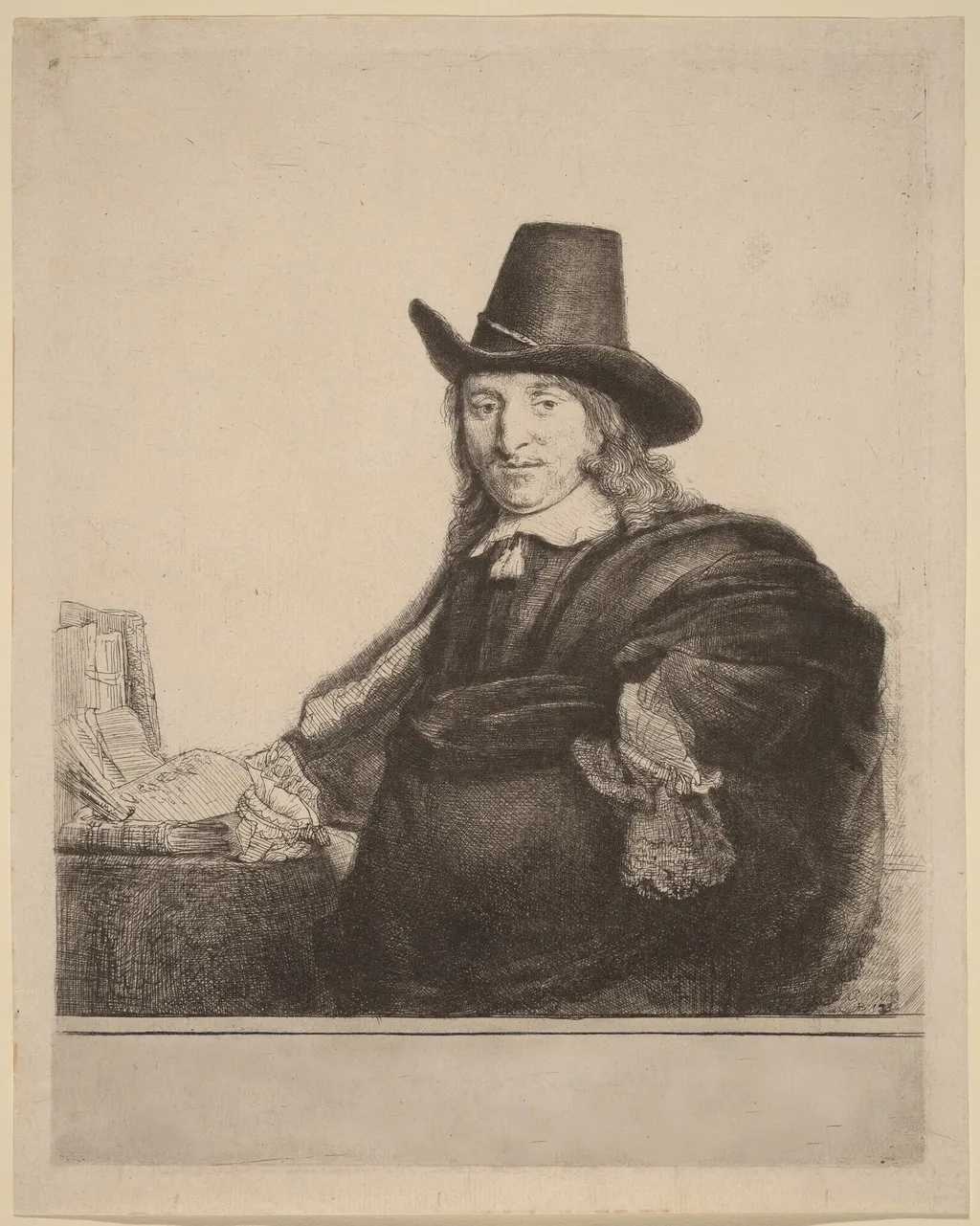
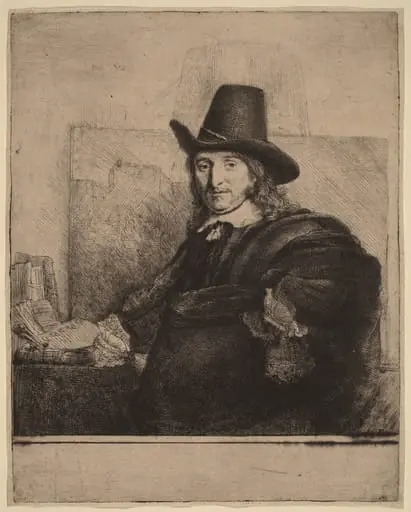
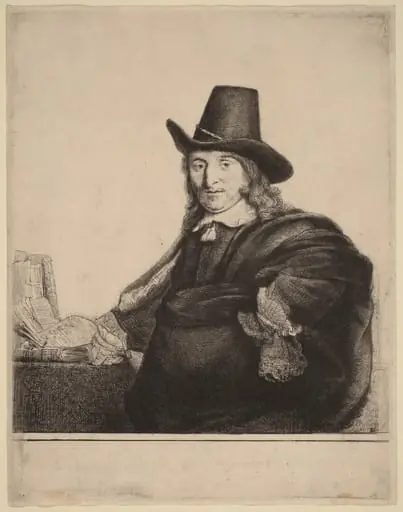
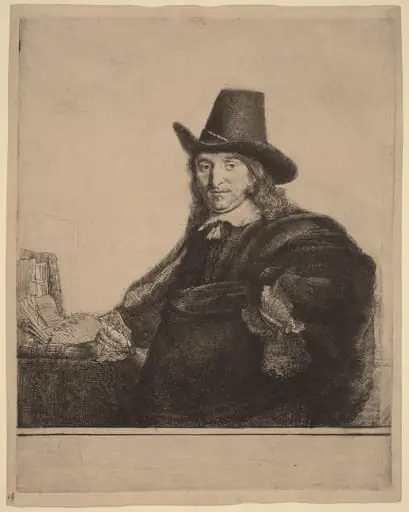
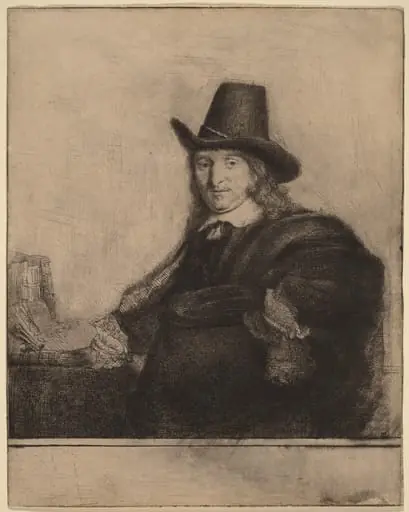
Jan Asselijn is an ink print by the Baroque artist Rembrandt. It dates from 1647 and is held in the collection of the National Gallery of Art. Created around 1647, this print combines etching, drypoint, and burin work.
About this work
Overview
Created around 1647, this print combines etching, drypoint, and burin work. Though traditionally attributed to Jan Asselijn, scholarly consensus now identifies Rembrandt van Rijn as the hand behind the image. The work presents a single figure seated at a desk, rendered in monochrome tones that emphasize texture and line.
Subject & Meaning
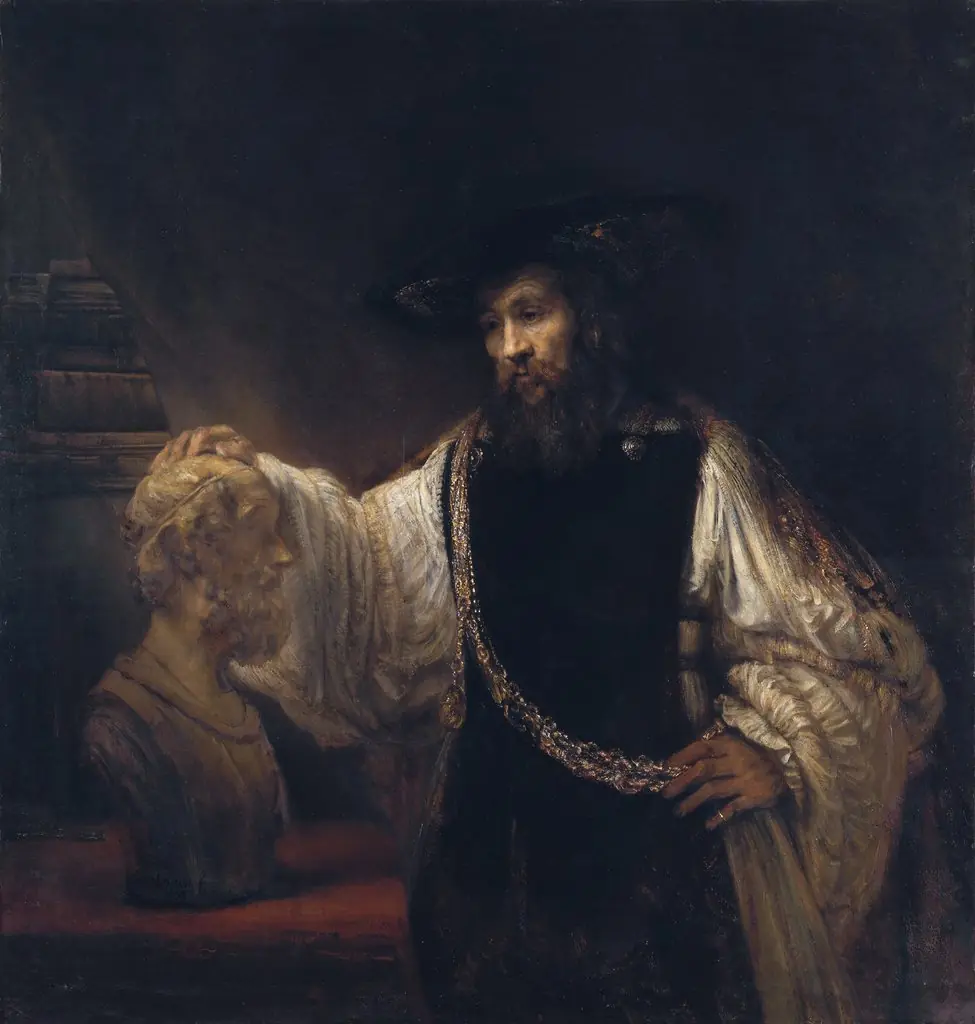
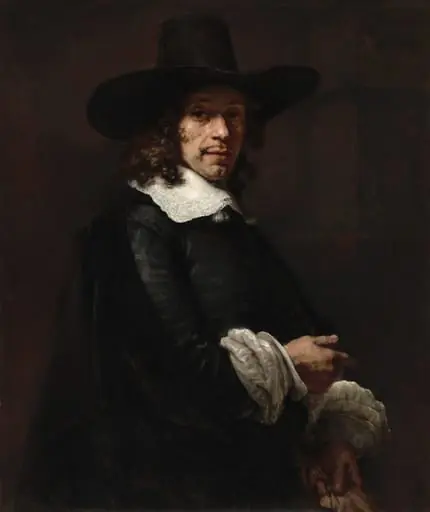
The sitter appears as a learned individual: a wide-brimmed hat crowns his head, a dark robe with a white collar frames his shoulders, and a stack of papers and books lies before him. His gaze meets the viewer directly, while his left hand holds a sheet of paper, suggesting a moment of contemplation or scholarly activity.
Technique & Style
Rembrandt employs a blend of etching, drypoint, and burin to achieve varied line quality. Fine cross-hatching creates subtle shadows on the face and fabric, while the drypoint’s burr adds a velvety darkness to the deeper areas of the desk. The combination of these methods produces a convincing sense of depth despite the flat background.
History & Provenance
The print emerged in the mid‑seventeenth century Dutch market, a period when Rembrandt frequently explored portraiture through printmaking. Its attribution shifted over time, originally linked to Jan Asselijn before later scholarship reassigned it to Rembrandt based on stylistic analysis and archival records.
Context
During the 1640s Rembrandt was experimenting with the expressive potential of drypoint and burin alongside his more familiar etching technique. This work reflects that experimental phase, illustrating his interest in depicting intellectual figures, a common theme in Dutch Golden Age art that celebrated learning and civic virtue.
Legacy
The print stands as an example of Rembrandt’s technical versatility and his ability to convey character through limited means. It continues to be cited in studies of his print oeuvre, illustrating how he merged multiple engraving methods to achieve nuanced tonal effects.
Artist & collection
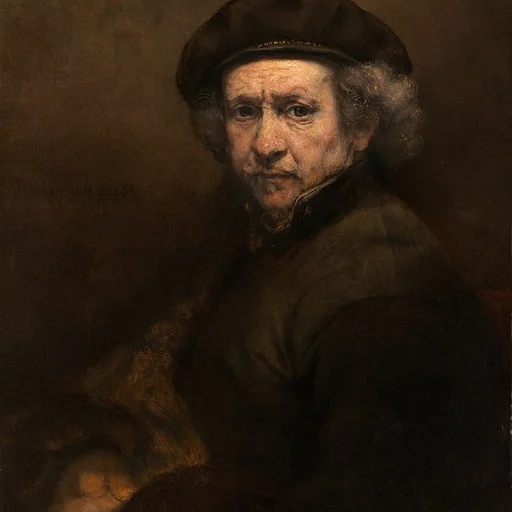
Artist
Rembrandt Harmenszoon van Rijn (15 July 1606 – 4 October 1669), known mononymously as Rembrandt, was a Dutch Golden Age painter, printmaker, and draughtsman.