Artwork
Lieven Willemsz van Coppenol: the Smaller Plate
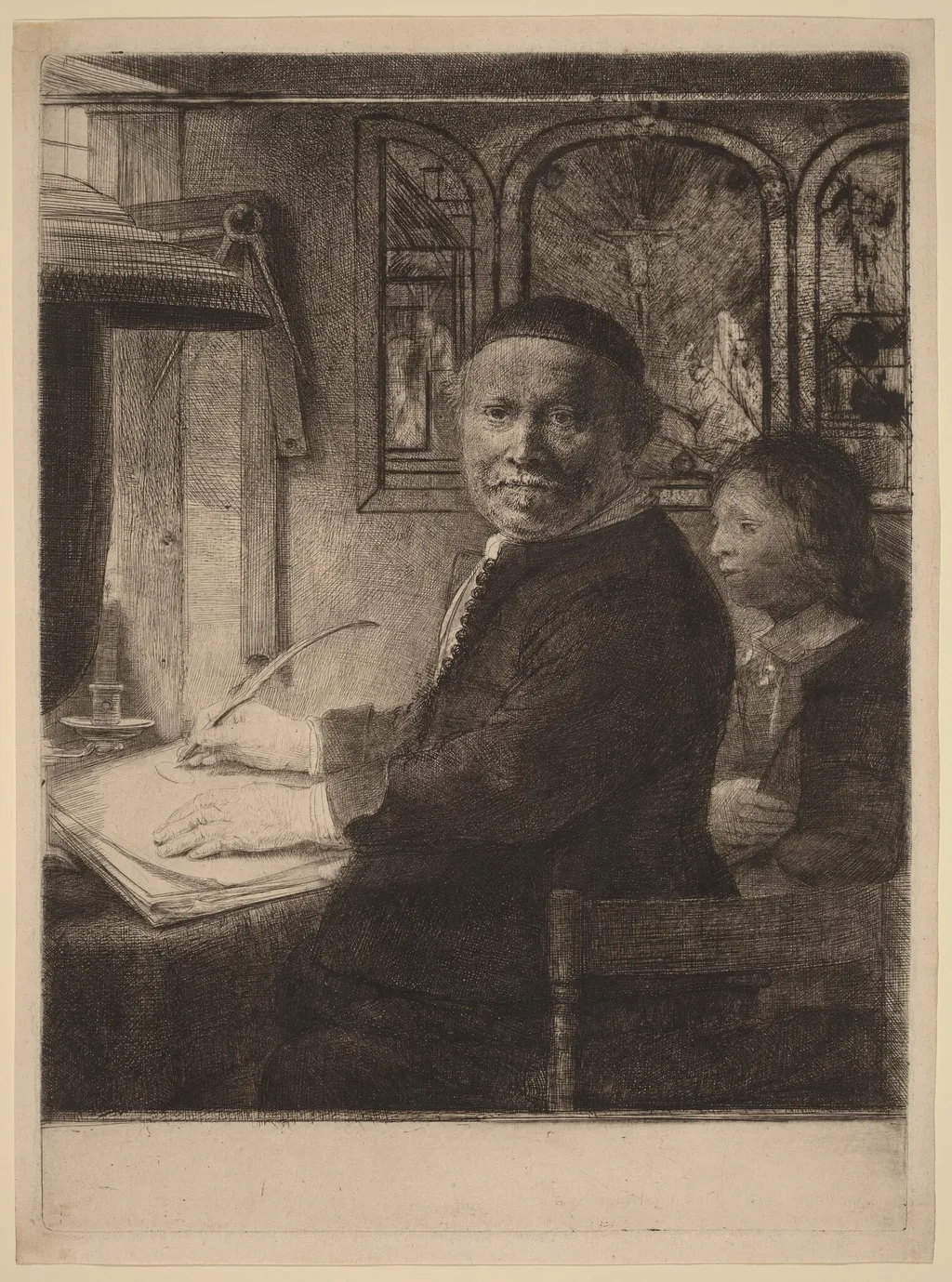
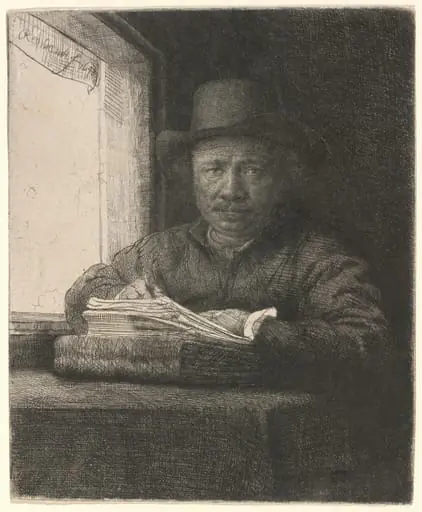
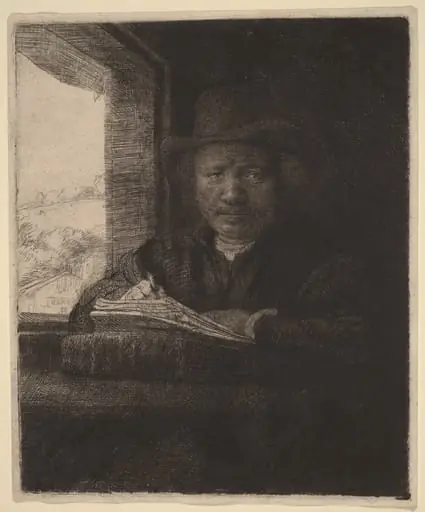
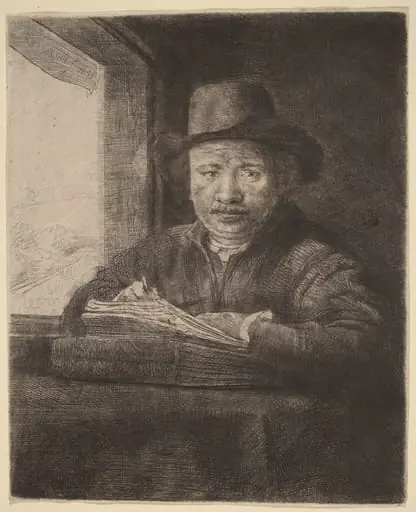
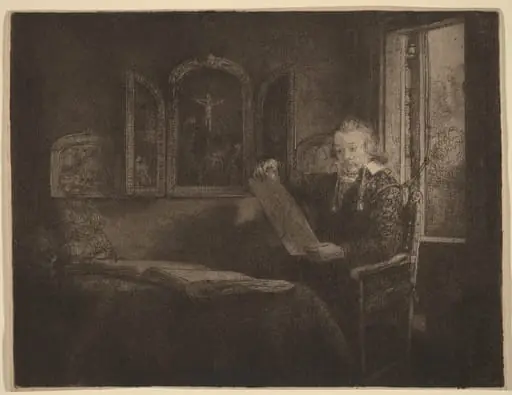
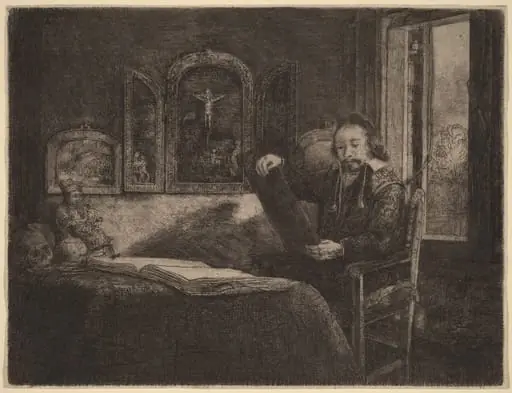
Lieven Willemsz van Coppenol: the Smaller Plate is an ink print by the Baroque artist Rembrandt. It dates from 1658 and is held in the collection of the National Gallery of Art.
About this work
Overview
Lieven Willemsz van Coppenol: the Smaller Plate is a print created by Rembrandt van Rijn around 1658, utilizing a combination of etching, drypoint, and burin techniques.
Subject & Meaning
The print depicts a serene domestic scene: a man, identifiable as Lieven Willemsz van Coppenol, sits at a table writing with a pen, accompanied by a curious child standing beside him. The setting, complete with tall curtained windows, bookshelves, and a candle, conveys a sense of quiet, focused activity.
Technique & Style
Rembrandt employed a trio of printmaking techniques to achieve depth and detail. Etching provided the foundational lines, while drypoint and burin were used to add finer textures and deeper, richer shadows, characteristic of Rembrandt's expressive printmaking style.
History & Provenance
Created circa 1658, specific details regarding the print's early ownership and exhibition history are not provided in the available information.
Context
This work reflects Rembrandt's interest in capturing everyday moments with depth and emotion, situating it within his broader exploration of light, shadow, and human interaction in 17th-century Dutch life.
Legacy
While specific legacy details for this piece are not outlined, it contributes to Rembrandt's renowned body of printworks, highlighting his mastery of multiple techniques to evoke intimacy and narrative.
Artist & collection
Artist
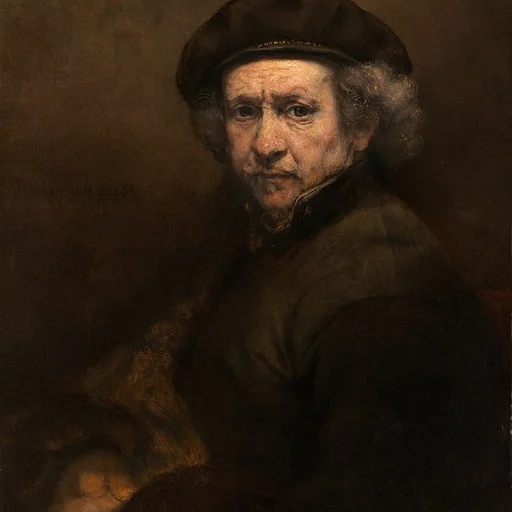
Rembrandt Harmenszoon van Rijn (15 July 1606 – 4 October 1669), known mononymously as Rembrandt, was a Dutch Golden Age painter, printmaker, and draughtsman.