Artwork
Self-Portrait Etching at a Window
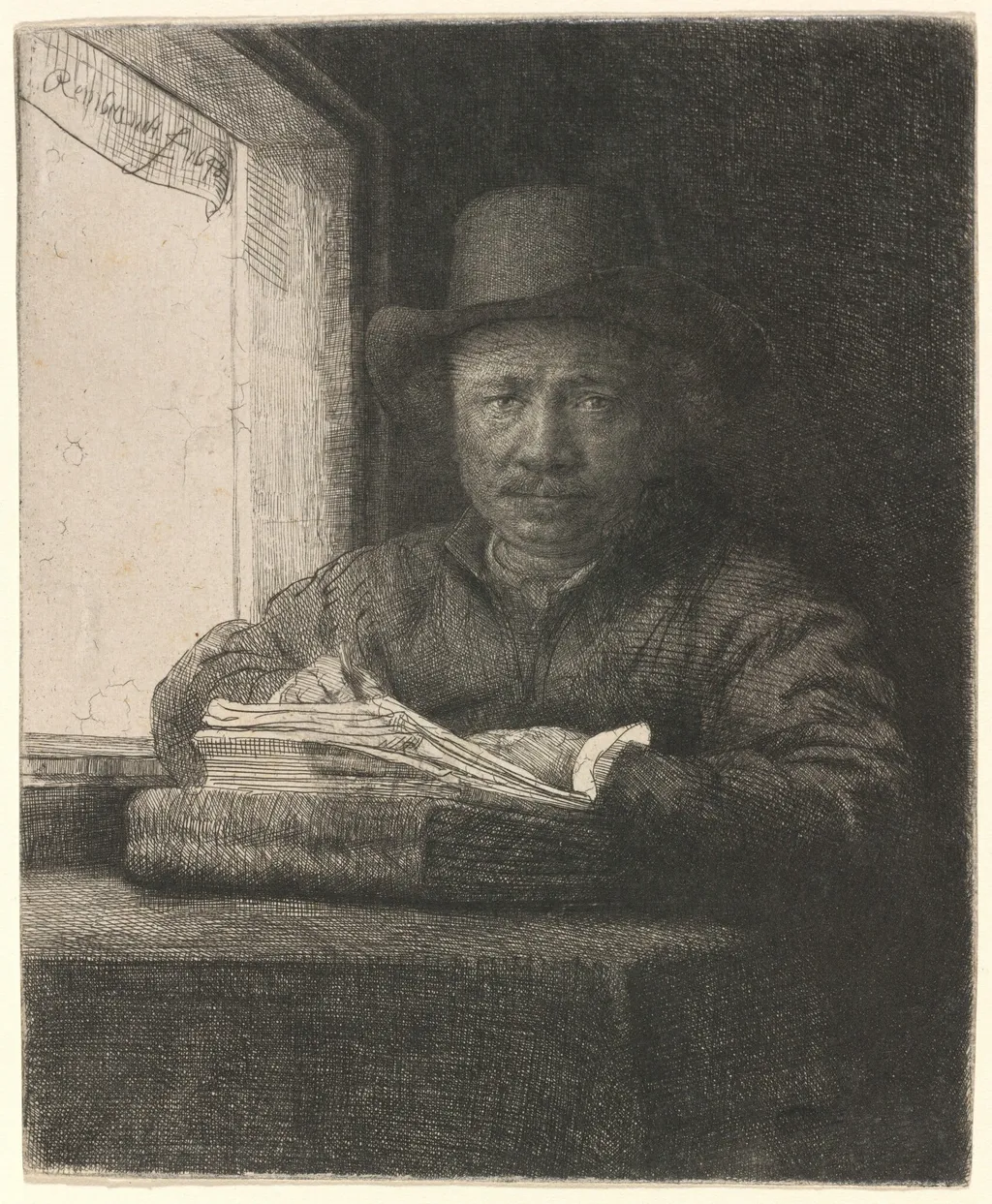
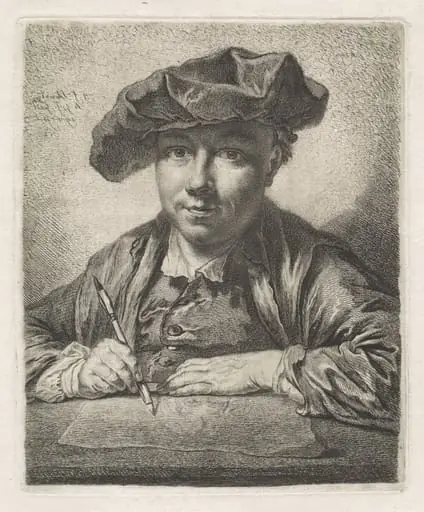
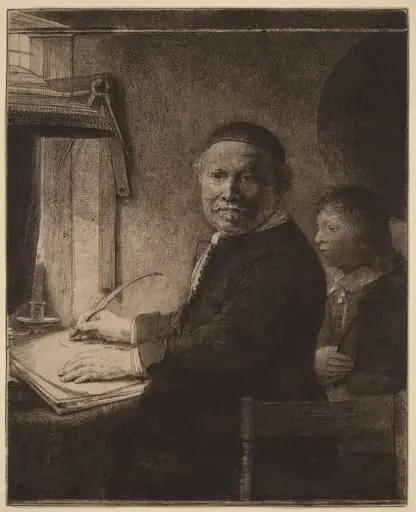
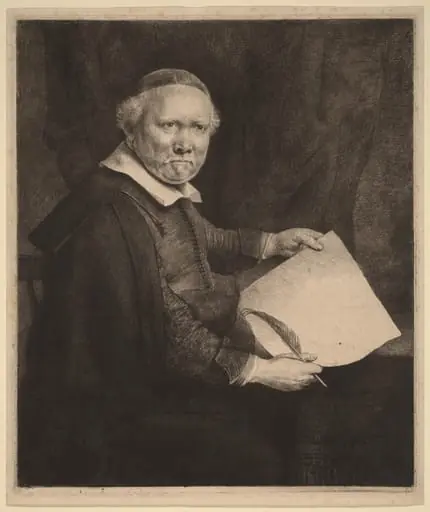
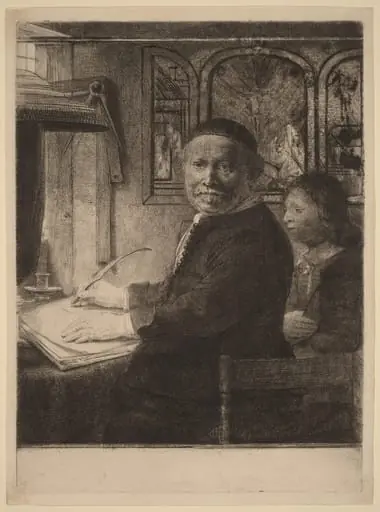
Self-Portrait Etching at a Window is an ink print by the Baroque artist Rembrandt. It dates from 1648 and is held in the collection of the National Gallery of Art.
About this work
Overview
The work belongs to a series of introspective prints made during his later years, reflecting a shift toward personal and technical experimentation.
Created in 1648, this print by Rembrandt van Rijn is a self-portrait executed in etching, drypoint, and burin on laid paper. Unlike painted portraits, it relies on incised lines to capture form and atmosphere. The artist depicts himself at a window, engaged in quiet contemplation, with no theatrical gesture or adornment. The work belongs to a series of introspective prints made during his later years, reflecting a shift toward personal and technical experimentation.
Subject & Meaning
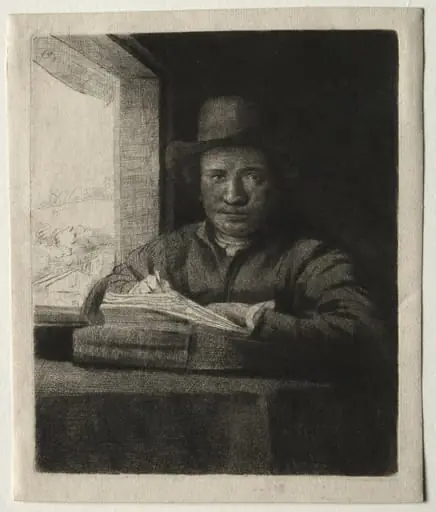
Rembrandt portrays himself leaning against a windowsill, face partially shadowed by a broad-brimmed hat. His hands rest on the ledge, suggesting stillness rather than action. The gaze is direct but unassuming, avoiding idealization. The window frame and distant building hint at the external world, yet the focus remains inward. The image conveys solitude and self-scrutiny, characteristic of his mature phase, where identity is explored through quiet presence rather than grandeur.
Technique & Style
Using etching, drypoint, and burin, Rembrandt layered fine lines and textured strokes to model light and depth. Drypoint’s soft, fuzzy lines enhance the shadow under his hat and the texture of his clothing, while burin adds sharp definition to the ledge and window frame. The paper’s laid texture subtly interacts with the ink, softening contrasts. The composition avoids broad tonal areas, relying instead on the precision and variation of incised marks to evoke volume and mood.
History & Provenance
The print was made during Rembrandt’s financially strained years in Amsterdam, when he increasingly turned to printmaking as a means of artistic and personal expression. It was likely produced for private circulation among collectors and fellow artists rather than public sale. Early impressions survive in major European collections, with provenance tracing through 18th-century Dutch and German collectors before entering institutional holdings in the 19th century.
Context
In the late 1640s, Rembrandt moved away from commissioned portraiture toward intimate, self-directed subjects. This print aligns with a broader trend among Dutch artists to explore individual psychology through print media. Unlike public portraits, such works were personal, often circulated among peers. The window motif, common in Dutch interiors, here becomes a metaphor for introspection, bridging inner life and the visible world beyond.
Legacy
This etching influenced later generations of printmakers through its emotional restraint and technical innovation. Its use of varied line quality to convey psychological depth became a model for 19th-century artists like Degas and Whistler. Unlike grand historical or religious prints, it affirmed the value of the private, unadorned self-portrait, expanding the possibilities of print as a medium for personal expression.
Artist & collection
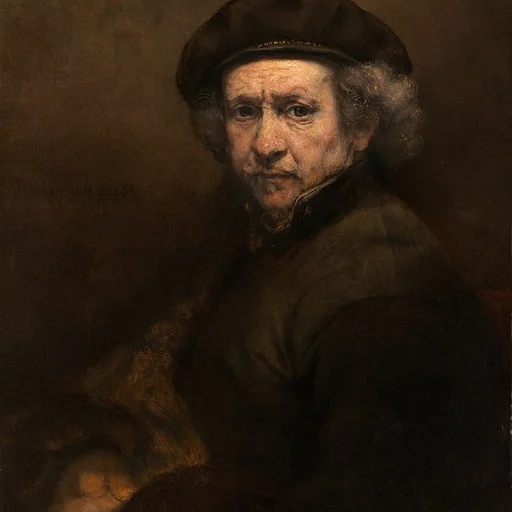
Artist
Rembrandt Harmenszoon van Rijn (15 July 1606 – 4 October 1669), known mononymously as Rembrandt, was a Dutch Golden Age painter, printmaker, and draughtsman.