Artwork
Old Man Seen from Behind, Profile to Right
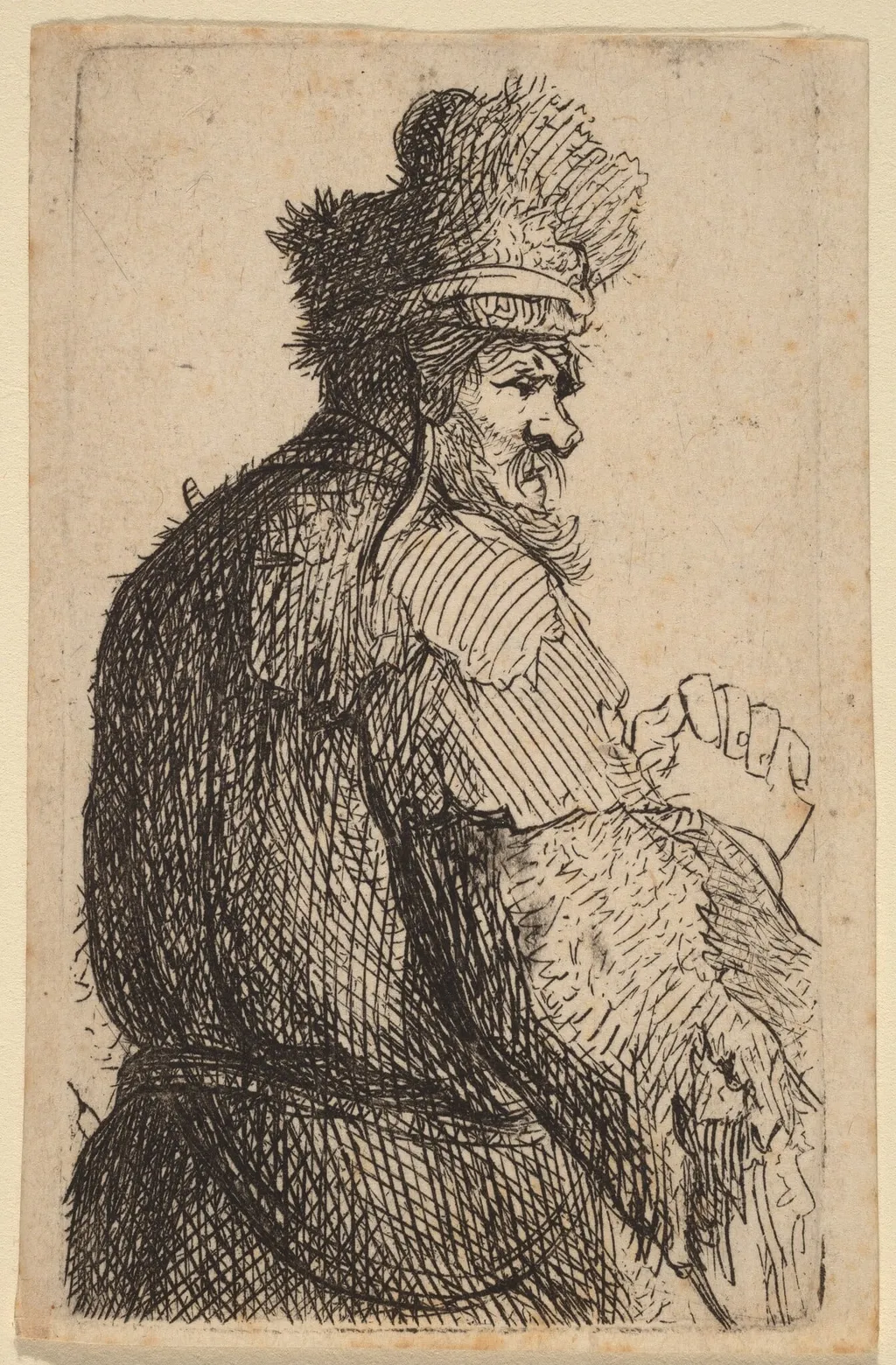
Old Man Seen from Behind, Profile to Right is an ink print by the Baroque artist Rembrandt. It dates from 1631 and is held in the collection of the National Gallery of Art.
About this work
Overview
Created around 1631, this etching by Rembrandt van Rijn captures a solitary male figure viewed from behind, his face turned slightly to the right.
Created around 1631, this etching by Rembrandt van Rijn captures a solitary male figure viewed from behind, his face turned slightly to the right. Rendered in black ink on paper, the composition focuses on posture and texture rather than facial expression. The man’s fur-lined coat and hat are rendered with fine, deliberate lines, emphasizing materiality and quiet dignity. The work belongs to Rembrandt’s early period of printmaking, when he explored intimate, unidealized subjects.
Subject & Meaning
The figure is anonymous, lacking identifying features or context, which invites contemplation rather than narrative. His stance—hand on hip, head turned—suggests pause or reflection. The absence of emotion or setting shifts focus to the physical presence of the man and the weight of his attire. This treatment reflects Rembrandt’s interest in ordinary individuals, portraying them with gravity without resorting to symbolism or grandeur.
Technique & Style
Rembrandt employed fine, varied etching lines to model form and suggest texture, particularly in the fur-lined garments. Cross-hatching and controlled dot work create depth and volume, while the contrast between dense shadows and open areas enhances the figure’s solidity. The technique avoids theatrical lighting but still conveys a sense of spatial presence, aligning with Baroque sensibilities through tactile realism rather than dramatic illumination.
History & Provenance
The print was made during Rembrandt’s formative years in Leiden, before his move to Amsterdam. It was likely produced for private collectors rather than public display, as was common with his early etchings. Several impressions survive in major collections, including the Rijksmuseum and the British Museum, indicating its early circulation among connoisseurs of printmaking.
Context
In early 17th-century Holland, etching was gaining popularity as a medium for artistic experimentation. Rembrandt’s focus on everyday subjects, rendered with psychological nuance, diverged from idealized portraiture common elsewhere in Europe. This work reflects a broader Dutch interest in observing human character through quiet, unadorned moments, grounded in the material world.
Legacy
This etching exemplifies Rembrandt’s early mastery of the medium and his commitment to portraying humanity with unembellished honesty. It influenced later printmakers who valued expressive line and emotional restraint. Though not widely exhibited, its quiet intensity continues to be studied for its technical precision and understated humanity.
Artist & collection
Artist
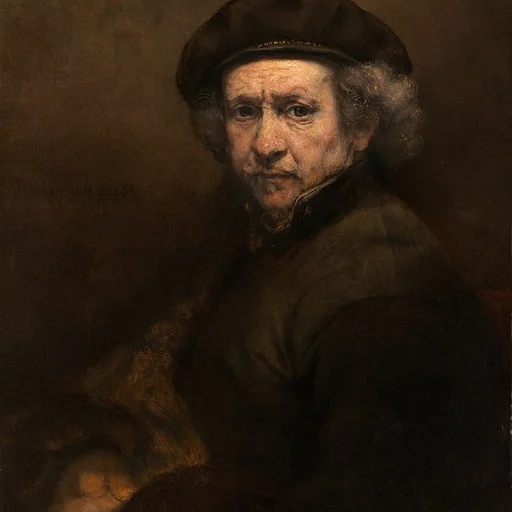
Rembrandt Harmenszoon van Rijn (15 July 1606 – 4 October 1669), known mononymously as Rembrandt, was a Dutch Golden Age painter, printmaker, and draughtsman.

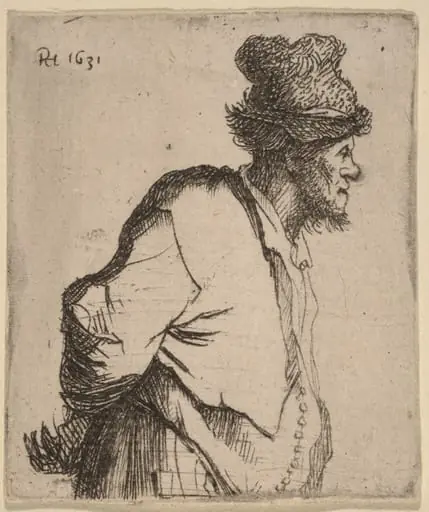 Peasant with His Hands behind His Back
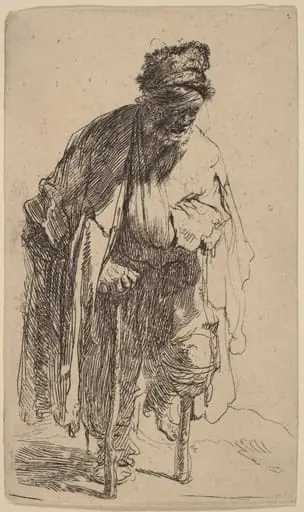 Beggar with a Wooden Leg
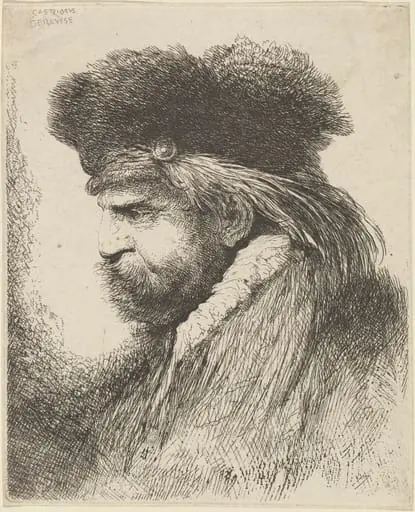 Bearded Man in a Fur Cap, Facing Left
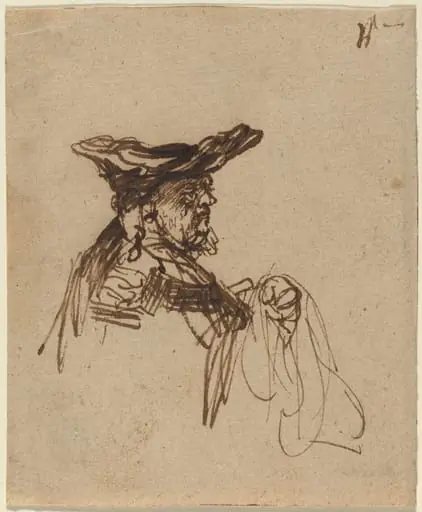 Bust of an Elderly Man in a Flat Cap
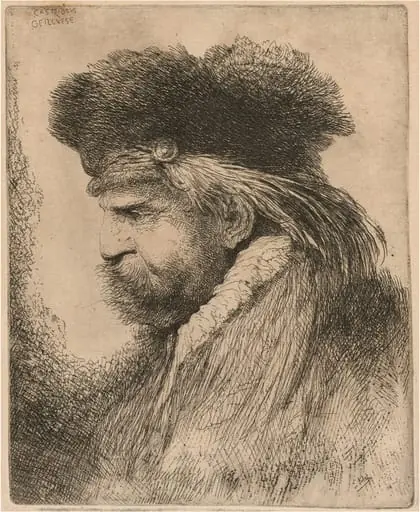 Bearded Man in a Fur Cap, Facing Left
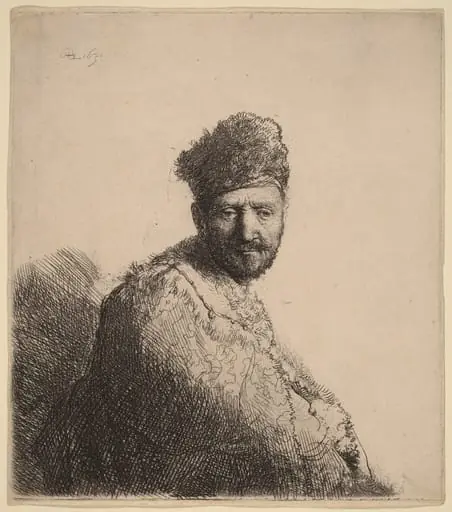 Bearded Man, in a Furred Oriental Cap and Robe: the Artist's Father
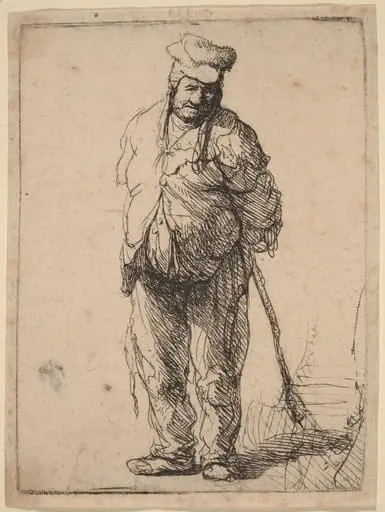 Ragged Peasant with His Hands behind Him, Holding a Stick
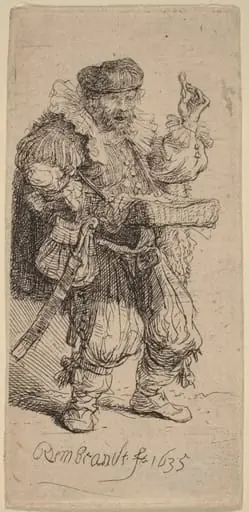 The Quacksalver
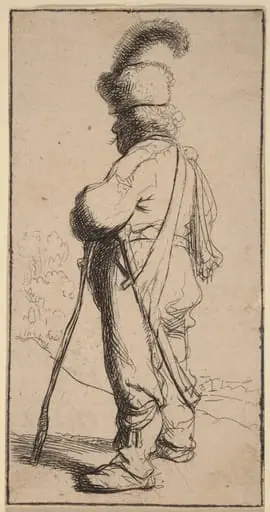 Polander Leaning on a Stick
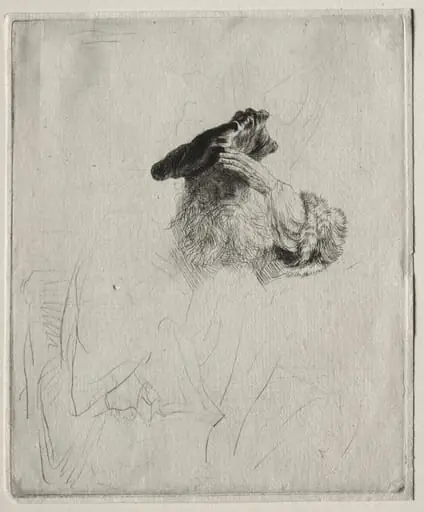 Old Man Shading his Eyes with His Hand
 The Persian
 Bust of an Old Man in Profile, Facing Right