Artwork
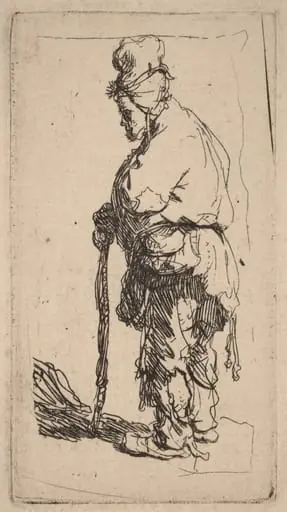
Ragged Peasant with His Hands behind Him, Holding a Stick
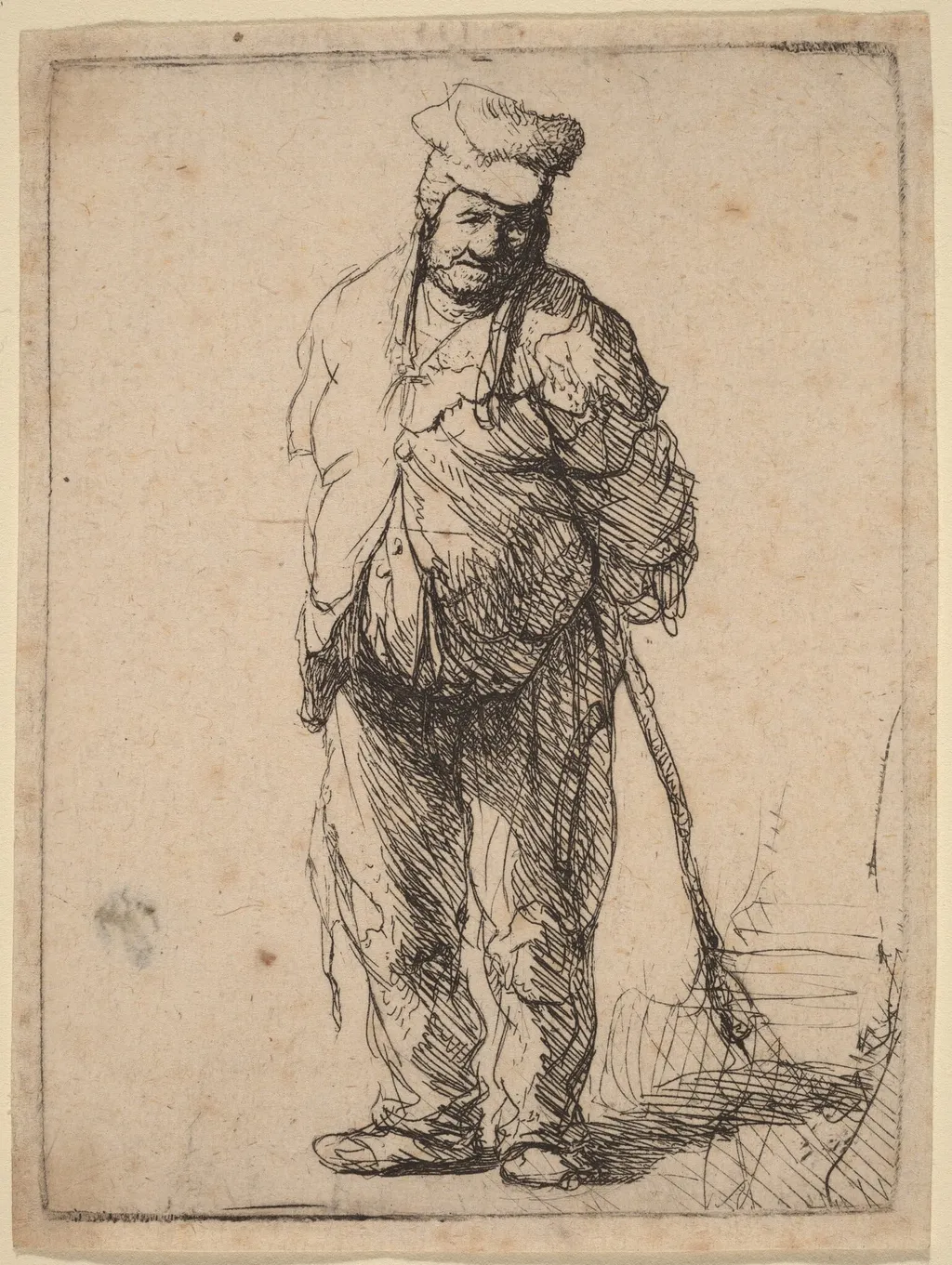
Ragged Peasant with His Hands behind Him, Holding a Stick is an ink print by the Baroque artist Rembrandt. It dates from 1630 and is held in the collection of the National Gallery of Art.
About this work
Overview
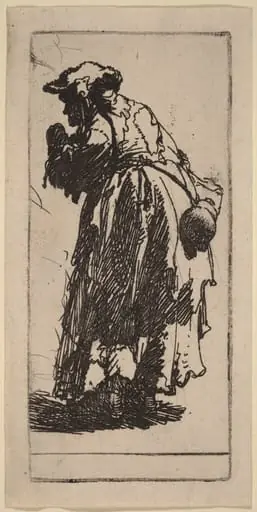
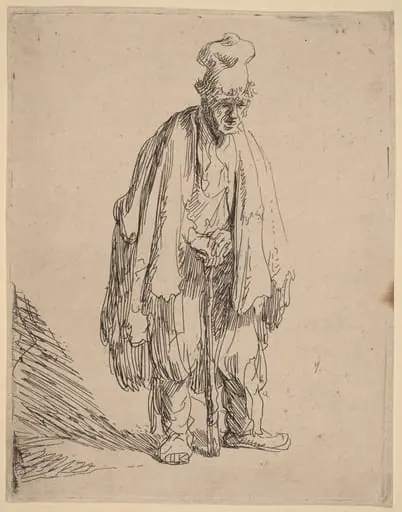
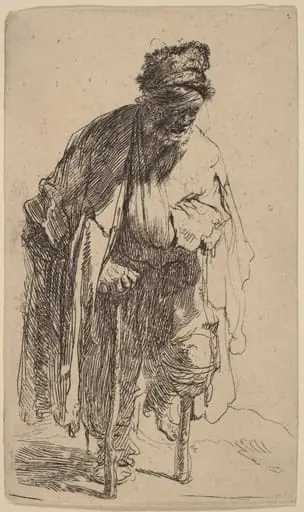
Created around 1630, this print by Rembrandt van Rijn combines etching with occasional dry‑point lines. The work presents a solitary figure, a peasant whose ragged garments and subdued demeanor convey a moment of introspection. The composition is restrained, focusing on the subject’s posture and the subtle play of light across his weathered features.
Subject & Meaning
The central figure is a man in tattered clothing, his hands clasped behind his back while he holds a simple stick in his right hand. A loosely fitted hat rests on his head, and a long coat hangs off one shoulder. His expression is muted, suggesting fatigue or resignation, inviting contemplation of the hardships of rural life.
Technique & Style
Rembrandt employs traditional etching for the overall image, enhancing specific areas with dry‑point to achieve richer, velvety blacks and delicate textures. The careful modulation of light and shadow creates depth, emphasizing the folds of the peasant’s attire and the lines of his face. These technical choices contribute to a tactile sense of the subject’s worn condition.
History & Provenance
The print dates to the early 1630s, a period when Rembrandt was exploring social subjects and refining his printmaking skills. While specific ownership records are scarce, the work is documented in catalogues of Rembrandt’s prints and has appeared in several museum collections dedicated to Dutch Golden Age graphic art.
Artist & collection
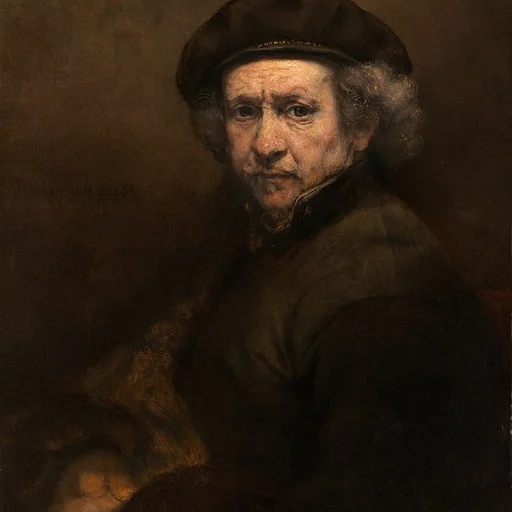
Artist
Rembrandt Harmenszoon van Rijn (15 July 1606 – 4 October 1669), known mononymously as Rembrandt, was a Dutch Golden Age painter, printmaker, and draughtsman.