Artwork
Samuel Menasseh ben Israel
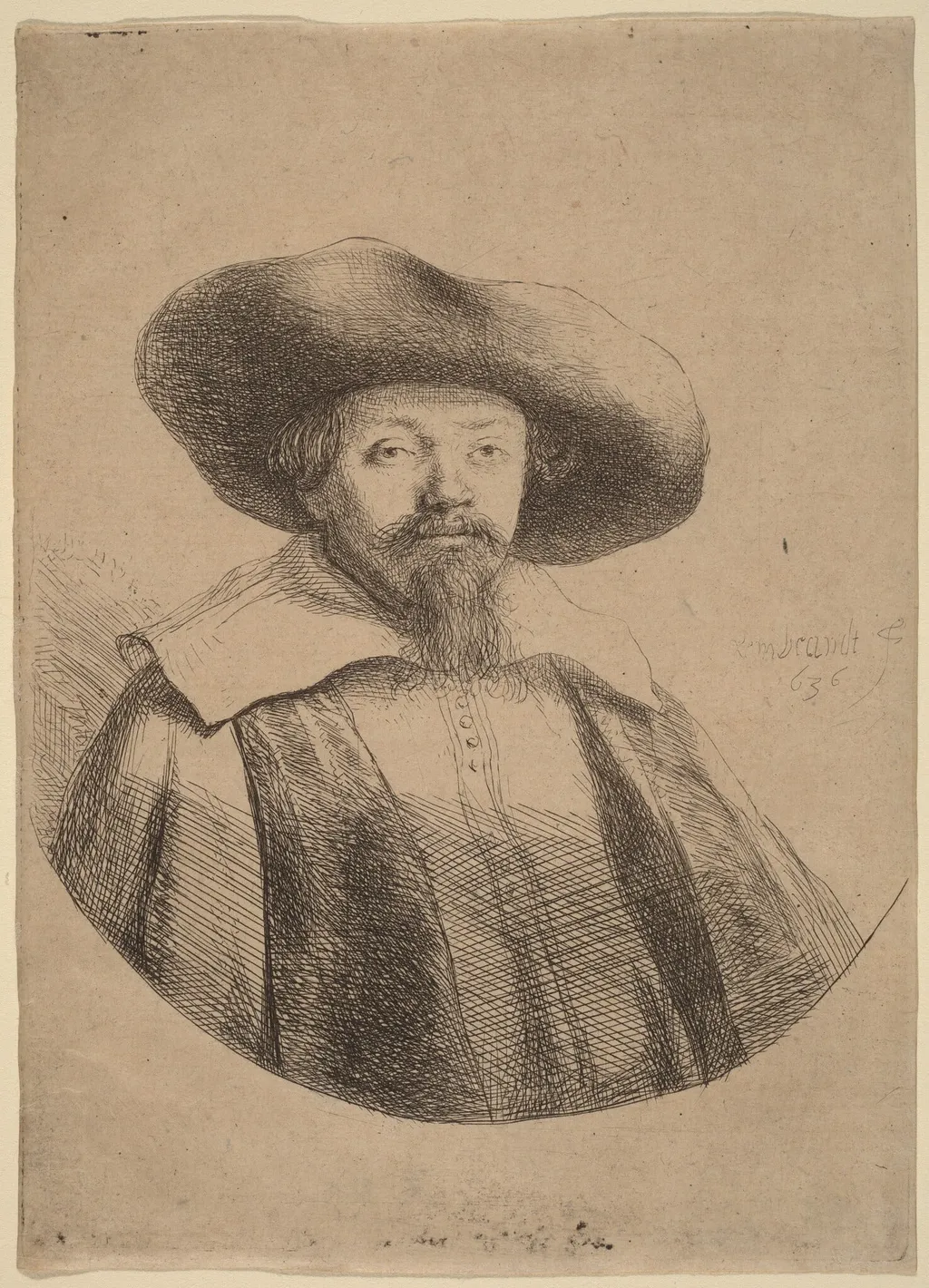
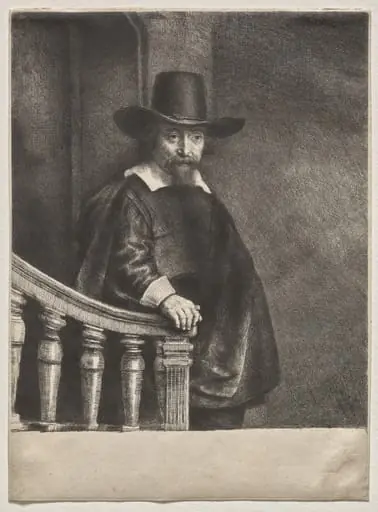
Samuel Menasseh ben Israel is an ink print by the Baroque artist Rembrandt. It dates from 1636 and is held in the collection of the National Gallery of Art.
About this work
Overview
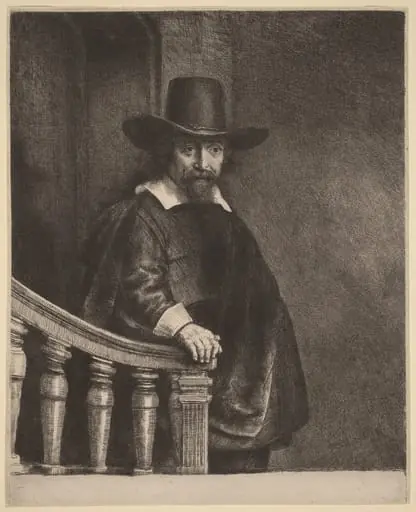
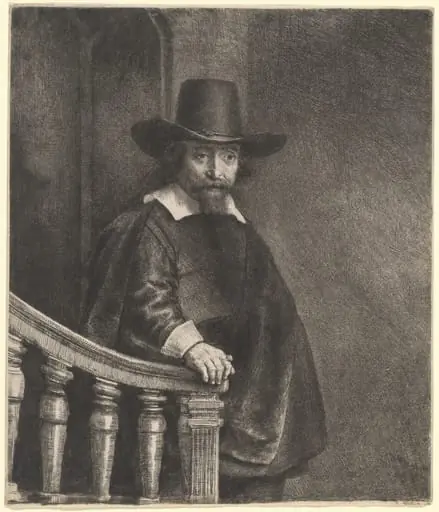
Created in 1636, this etching by Rembrandt van Rijn portrays Samuel Menasseh ben Israel. Executed in the artist’s characteristic black‑line manner, the print presents a solitary figure against an unadorned light ground, allowing the viewer to focus on the sitter’s facial expression and attire.
Subject & Meaning
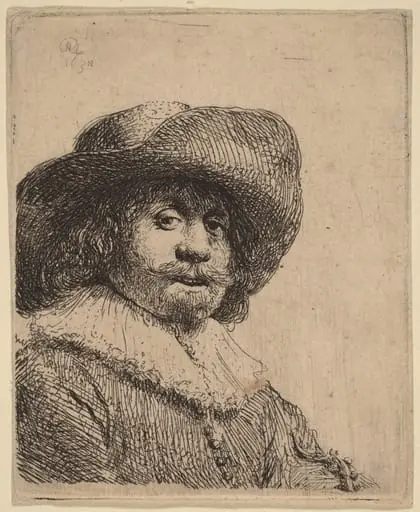
The portrait depicts a bearded man wearing a broad‑brimmed hat and a loose, high‑collared shirt. His right arm is bent, the hand resting on his shoulder, and his gaze is directed inward, suggesting a contemplative demeanor. The simplicity of the composition emphasizes the sitter’s dignified presence and personal gravitas.
Technique & Style
Rembrandt employed the etching process, incising fine lines into a copper plate and printing them on paper. The work features delicate hatching and cross‑hatching that model the folds of clothing and the texture of the beard, while subtle tonal gradations give depth to the face without resorting to heavy chiaroscuro.
History & Provenance
The print was produced during Rembrandt’s early Amsterdam period, a time when he was establishing his reputation as a portraitist. Though specific ownership records are limited, the etching has been catalogued among the artist’s oeuvre and appears in several 19th‑century collections of his prints.
Artist & collection
Artist
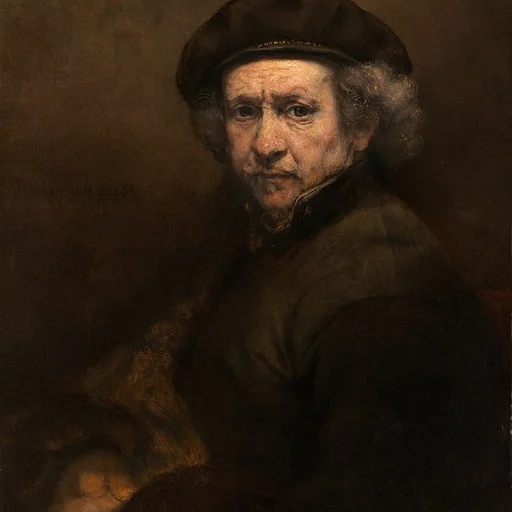
Rembrandt Harmenszoon van Rijn (15 July 1606 – 4 October 1669), known mononymously as Rembrandt, was a Dutch Golden Age painter, printmaker, and draughtsman.